

Henrietta Swan Leavitt
Historical Profile
Introduction
History often remembers those who stood at the telescope, announced a discovery, or transformed the world's understanding of the universe with dramatic declarations. Far less often does it remember the quiet observer whose painstaking work made those discoveries possible in the first place.
Henrietta Swan Leavitt never built a telescope, travelled to distant observatories, or became a household name during her lifetime. She rarely appeared before audiences, never sought fame, and spent much of her career examining tiny black dots on photographic glass plates inside an office at Harvard College Observatory.
Yet her work fundamentally changed astronomy.
Before Leavitt, astronomers could describe the heavens in extraordinary detail, but they struggled to answer one of the most important questions in science:
How far away are the stars?
Without reliable distances, the universe remained largely a mystery. Astronomers could observe nebulae, clusters, and countless stars, but they had little idea of their true scale. Were these objects nearby or unimaginably distant? Was the Milky Way the entire universe, or merely one small part of something much larger?
Henrietta Swan Leavitt provided the answer—not by inventing a new instrument, but by recognising a hidden pattern that countless others had overlooked.
Through years of meticulous observation, she discovered that a particular type of variable star behaved according to a remarkably simple rule: the brighter the star truly was, the longer it took to complete its cycle of brightening and dimming.
That relationship—today known as Leavitt's Law—became astronomy's first reliable cosmic measuring stick.
Using her discovery, later astronomers measured the distances to galaxies millions of light-years away, proved that the Milky Way was not the whole universe, and eventually discovered that the universe itself is expanding.
It is difficult to imagine modern astronomy without Henrietta Swan Leavitt.
Yet for decades, her contribution remained largely invisible.
Like many women working in science during the late nineteenth and early twentieth centuries, she carried out research that others built upon, often receiving only a fraction of the recognition her discoveries deserved. Her story is not simply one of scientific brilliance but of extraordinary patience, intellectual discipline, and quiet perseverance.
In many ways, Henrietta Leavitt represents a different kind of scientific hero. She reminds us that history is not shaped only by dramatic breakthroughs or celebrated geniuses. Sometimes the greatest revolutions begin with someone willing to spend years looking carefully enough to notice what everyone else has missed.
Early Life and Education
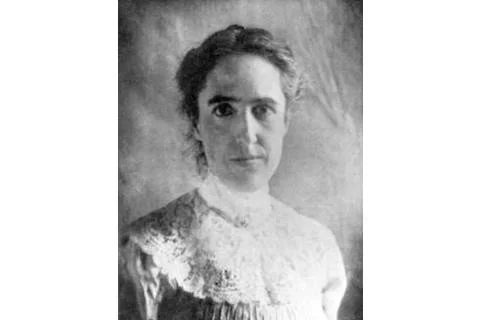
Henrietta Swan Leavitt was born on 4 July 1868 in Lancaster, Massachusetts, during a period of enormous change in the United States. The American Civil War had ended only three years earlier, and the country was entering an era of rapid industrialisation, scientific advancement, and educational reform.
She was the daughter of George Roswell Leavitt, a Congregational minister, and Henrietta Swan Kendrick Leavitt. Her father's work meant that the family moved several times during her childhood, exposing Henrietta to different communities and educational opportunities.
Growing up in a household that valued learning, discipline, and service, she developed an early interest in education. Like many educated women of the nineteenth century, however, she faced significant barriers that had little to do with ability and everything to do with opportunity.
Universities remained overwhelmingly male institutions. Although attitudes were slowly changing, women were still expected to pursue domestic roles rather than scientific careers. Those who wished to study mathematics or astronomy often had to do so through separate women's colleges or affiliated institutions rather than the universities themselves.
Leavitt first attended Oberlin College in Ohio, one of the earliest American colleges to admit women. She later transferred to the Society for the Collegiate Instruction of Women, an institution that would eventually become Radcliffe College.
Radcliffe existed because women were not permitted to study as full students at nearby Harvard University. Female students could receive instruction from Harvard professors, but they remained officially separate from the university itself.
It was here that Leavitt encountered astronomy.
The subject captivated her.
Astronomy during the late nineteenth century was changing rapidly. For centuries astronomers had relied primarily on visual observation through telescopes. By the time Leavitt entered the field, photography was transforming scientific research.
Instead of relying on memory or hand-drawn sketches, astronomers could now capture permanent images of the night sky on glass photographic plates. These plates preserved astonishing amounts of detail, allowing scientists to compare images taken weeks, months, or even years apart.
The universe itself had become something that could be recorded, archived, and studied repeatedly.
Leavitt graduated in 1892 after completing coursework equivalent to a Harvard education, although women were still denied Harvard degrees.
She had found her calling.
She simply did not yet know how profoundly it would change science.
One event during her early adulthood may also have shaped both her career and her character.
After an illness—possibly scarlet fever—Leavitt suffered significant hearing loss. By middle age she was almost completely deaf.
Rather than ending her scientific ambitions, this disability may have encouraged the intense concentration that characterised her work. Long hours spent examining photographic plates demanded extraordinary patience and attention to detail—qualities for which she would become renowned.
Ironically, the woman who would one day help humanity measure the vastness of the universe lived much of her adult life in increasing silence.
Joining Harvard College Observatory
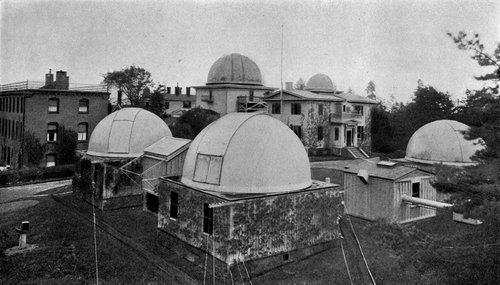
In 1895 Henrietta Leavitt began volunteering at Harvard College Observatory under the directorship of astronomer Edward Charles Pickering.
At first, she received no salary.
Like many educated women of the period, she was expected to contribute scientific work without the professional status granted to male researchers.
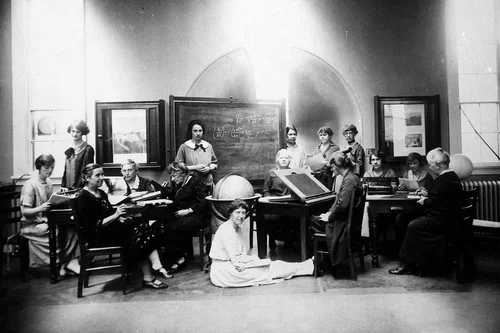
Eventually she became a paid member of a remarkable group of women who would later become known collectively as the Harvard Computers.
The word computer had a very different meaning in the nineteenth century.
Before electronic machines existed, a computer was a person who performed calculations.
The Harvard Observatory housed one of the world's largest collections of astronomical photographs. Every clear night, telescopes captured images of thousands of stars onto large glass plates. These images then had to be analysed, catalogued, measured, and compared.
This immense task fell largely to women.
The Harvard Computers included extraordinary scientists such as Williamina Fleming, Annie Jump Cannon, Antonia Maury, Florence Cushman, and Henrietta Leavitt herself.
Although history often portrayed them as assistants, many made original discoveries that fundamentally changed astronomy.
Their working conditions reflected the contradictions of the era.
Women were considered meticulous, patient, and suited to repetitive analytical work. They were also significantly cheaper to employ than male astronomers.
Most earned only a fraction of a man's salary despite performing highly skilled scientific research.
They were generally not permitted to operate the observatory's telescopes.
Instead, they worked indoors for hours each day, seated at desks covered with photographic plates, magnifying lenses, measuring devices, notebooks, and catalogues.
To outsiders, the work may have appeared monotonous.
To Leavitt, it became an opportunity to uncover patterns hidden within thousands of stars.
While others searched the heavens through telescopes, she searched them through data.
And in doing so, she began asking questions that no telescope alone could answer.
Searching the Sky
When Henrietta Swan Leavitt joined Harvard College Observatory, astronomy was entering a new age.
For thousands of years, astronomers had relied almost entirely on what they could see through a telescope. Every observation had to be recorded by hand. If another astronomer wished to verify the result months later, the sky itself had often changed. A star might appear brighter or dimmer, a comet might have moved, or clouds might prevent observation altogether.
Photography changed everything.
By the late nineteenth century, long-exposure photographic plates could capture thousands of stars simultaneously with remarkable precision. Every plate became a permanent snapshot of the heavens—a frozen moment that could be examined repeatedly.
The observatory soon accumulated hundreds of thousands of these fragile glass negatives.
Each one contained a wealth of information.
To most people, they looked almost identical.
To Henrietta Leavitt, they became pages in a vast cosmic book.
Rather than pointing telescopes at the sky herself, Leavitt spent countless hours comparing these plates under magnifying lenses. She carefully noted which stars remained constant and which appeared to brighten or fade over time.
This work demanded extraordinary concentration.
A tiny variation that another observer might dismiss as an imperfection in the photograph could represent an important astronomical event. Every plate had to be compared with others taken days, weeks, months, or even years apart.
It was slow, meticulous work.
Yet Leavitt possessed exactly the qualities it required.
She was methodical rather than hurried, patient rather than impulsive. Instead of looking for spectacular discoveries, she concentrated on recording accurate measurements.
Ironically, those very qualities would lead to one of astronomy's greatest discoveries.
Variable Stars
Among the countless stars scattered across the night sky, Leavitt became particularly interested in variable stars.
Unlike our Sun, whose brightness remains relatively stable, variable stars change in brightness over time.
Some brighten dramatically before fading again.
Others pulsate in regular cycles, almost as though they are breathing.
Astronomers already knew such stars existed, but relatively little was understood about why they behaved this way.
Some varied unpredictably.
Others followed remarkably precise rhythms.
One particular group attracted Leavitt's attention.
These were Cepheid variables, named after the star Delta Cephei, whose changing brightness had first been identified decades earlier.
Cepheids expand and contract repeatedly.
As they expand, they cool slightly and become dimmer.
As they contract, they become hotter and brighter.
The result is a predictable cycle of light.
Some complete this cycle in only a few days.
Others take several weeks.
At first glance these changing stars appeared to be little more than scientific curiosities.
Leavitt suspected there was something more.
The Magellanic Clouds
One decision proved especially important.
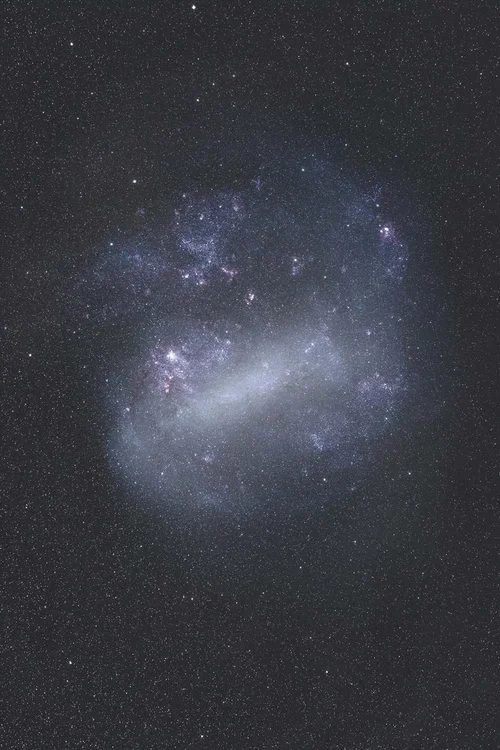
Rather than studying stars scattered throughout the Milky Way, Leavitt concentrated on two faint objects visible from the Southern Hemisphere: the Large Magellanic Cloud and the Small Magellanic Cloud.
Today we know these are dwarf galaxies orbiting the Milky Way.
During Leavitt's lifetime, however, astronomers were still uncertain about their true nature.
What mattered to Leavitt was something much simpler.
Almost every star inside each Magellanic Cloud lay at approximately the same distance from Earth.
That fact removed one of astronomy's greatest difficulties.
Imagine standing on a hillside at night looking towards a town.
A bright streetlamp in the distance might appear no brighter than a nearby candle.
Without knowing their distances, it would be impossible to judge which produced more light.
Astronomers faced exactly the same problem with stars.
A bright nearby star and an enormously powerful distant star might appear equally bright from Earth.
Normally, there was no reliable way to separate distance from true brightness.
The Magellanic Clouds largely solved that problem.
Because their stars were effectively all the same distance away, differences in apparent brightness were almost entirely due to differences in the stars themselves.
Leavitt had unknowingly found the perfect natural laboratory.
Discovering the Pattern
For years Leavitt patiently catalogued variable stars.
Every observation was recorded.
Every change in brightness measured.
Every cycle timed.
By 1908 she had identified more than 1,700 variable stars within the Magellanic Clouds.
The sheer scale of the catalogue was astonishing.
Most researchers would have considered the catalogue itself an impressive achievement.
Leavitt looked further.
As she arranged her observations, she began noticing something curious.
The stars that took longer to complete their cycles also appeared brighter.
At first the relationship was only a suggestion.
Many scientists might have ignored it as coincidence.
Leavitt continued measuring.
More stars followed the same rule.
Long-period Cepheids were consistently brighter than short-period Cepheids.
In 1908 she cautiously published her initial observations, suggesting there appeared to be a relationship between a Cepheid's period and its brightness.
Rather than making bold claims, she allowed the evidence to speak for itself.
Over the following years she gathered more data.
By 1912, the pattern had become unmistakable.
The relationship was almost perfectly regular.
Once the period of a Cepheid variable was known, its true luminosity could be calculated.
It was an astonishing discovery.
The stars themselves carried information about their own brightness.
No one had realised this before.
Leavitt had uncovered one of nature's hidden mathematical laws.
Today astronomers know it simply as Leavitt's Law.
Measuring the Universe
At first glance, Leavitt's discovery might seem like little more than an interesting piece of stellar physics.
Its true importance lay elsewhere.
Suppose an astronomer observes a Cepheid variable star.
By watching it over several weeks, they determine that it brightens and dims every ten days.
Using Leavitt's Law, they can immediately calculate how luminous that star truly is.
Next they compare that true luminosity with how bright it appears from Earth.
If it appears much dimmer than expected, it must be extremely distant.
The mathematics is straightforward.
The implications were revolutionary.
For the first time in history, astronomers possessed a reliable method for measuring enormous distances across space.
Cepheid variables became known as standard candles.
Just as sailors once judged distance from the known brightness of coastal lighthouses, astronomers could now use Cepheid stars as fixed points of reference across the universe.
The universe finally had a ruler.
And Henrietta Swan Leavitt had created it.
Opening the Cosmos
The full significance of Leavitt's discovery became clear only after other astronomers began applying it.
Among them was the American astronomer Edwin Hubble.
During the early twentieth century, astronomers fiercely debated whether mysterious spiral nebulae were small objects within the Milky Way or entirely separate "island universes."
The question could not be answered without measuring their distances.
Hubble identified Cepheid variable stars within the Andromeda Nebula.
Using Leavitt's Law, he calculated that Andromeda lay far beyond the boundaries of the Milky Way.
The result transformed astronomy.
The Milky Way was not the whole universe.
It was only one galaxy among countless others.
Humanity's picture of the cosmos expanded overnight.
Every modern map of the universe traces part of its lineage back to the careful measurements Henrietta Leavitt made while quietly studying photographic plates in a Harvard office.
Without her discovery, one of the greatest revolutions in scientific history might have been delayed by decades.
Recognition During Her Lifetime
Although Henrietta Swan Leavitt's discovery would eventually reshape astronomy, recognition came slowly during her own lifetime.
Unlike many celebrated astronomers of the early twentieth century, Leavitt did not travel the world presenting lectures or directing observatories. Her work remained largely within the Harvard College Observatory, where she continued analysing photographic plates with the same quiet dedication that had characterised her career from the beginning.
Her colleagues recognised both her precision and her reliability. In an era when astronomy was becoming increasingly dependent upon accurate measurements rather than simple observation, Leavitt had established herself as one of Harvard's most trusted researchers.
Her growing reputation eventually led to her appointment as Head of Stellar Photometry, a position reflecting her expertise in measuring the brightness of stars. Although this represented an important professional achievement, it was still far removed from the status afforded to many of her male contemporaries.
Like the other Harvard Computers, she remained part of a scientific system that relied heavily upon women's intellectual labour while rarely placing them at the forefront of public recognition.
Many scientific papers produced at Harvard Observatory during this period were associated primarily with Edward Charles Pickering or other senior male astronomers, despite depending heavily upon the painstaking work carried out by women like Leavitt, Annie Jump Cannon, Williamina Fleming and Antonia Maury.
Leavitt herself seemed largely unconcerned with personal fame.
Those who worked alongside her described her as modest, thoughtful and exceptionally conscientious. Rather than seeking attention, she concentrated upon accuracy. Every catalogue entry, every measurement and every calculation reflected her belief that careful science demanded patience above all else.
Unfortunately, her scientific career would be cut tragically short.
During the final years of her life, Leavitt suffered from cancer. Despite periods of ill health, she continued working whenever possible.
She died on 12 December 1921, at the age of just fifty-three.
At the time of her death, few outside professional astronomy appreciated the true importance of her discovery.
Ironically, the greatest impact of her work would emerge only after she was gone.
Building Upon Her Discovery
Scientific progress rarely happens in isolation.
One discovery becomes the foundation for another, each generation standing upon the work of those who came before.
Henrietta Swan Leavitt's work became exactly such a foundation.
In the years following her death, astronomers around the world began applying Leavitt's period–luminosity relationship to increasingly distant stars.
Among the first was the Danish astronomer Ejnar Hertzsprung, who recognised that Leavitt's work could be calibrated to produce actual stellar distances.
Soon afterwards, American astronomer Harlow Shapley used Cepheid variables to estimate the size of the Milky Way. His work dramatically expanded humanity's understanding of our own galaxy, revealing it to be far larger than previously believed.
Then came perhaps the most famous application of Leavitt's discovery.
In the early 1920s, Edwin Hubble identified Cepheid variable stars within what was then called the Andromeda Nebula.
Applying Leavitt's Law, he calculated that Andromeda lay over 900,000 light-years away—a figure later refined to more than two million light-years.
The conclusion was revolutionary.
Andromeda could not possibly lie inside the Milky Way.
It was an entirely separate galaxy.
For the first time, humanity understood that the Milky Way was not the universe itself but only one member of a vast population of galaxies stretching across unimaginable distances.
This discovery fundamentally altered our place in the cosmos.
Only a few years later, Hubble made another extraordinary observation.
The more distant a galaxy appeared, the faster it seemed to be moving away from us.
The universe itself was expanding.
That conclusion ultimately led to the development of the Big Bang Theory, modern cosmology and our current understanding of the evolution of the universe.
Every one of these breakthroughs depended upon accurate distance measurements.
Every one of those measurements depended upon Leavitt's Law.
Barriers She Faced
Henrietta Swan Leavitt's achievements become even more remarkable when viewed against the limitations placed upon women during her lifetime.
When she entered astronomy, women were generally excluded from senior scientific positions.
Few universities awarded them degrees equal to those granted to men.
Research posts were rare.
Leadership roles rarer still.
Even when women possessed exceptional ability, they were often employed as assistants rather than independent investigators.
The Harvard Computers represented both progress and inequality.
Edward Pickering deserves credit for recognising women's scientific abilities at a time when many institutions refused even to employ them.
Without his willingness to hire female researchers, Leavitt might never have entered professional astronomy.
Yet the system remained unequal.
The women carried out highly skilled analytical work while receiving lower salaries than male colleagues performing comparable duties.
They were rarely permitted to use the observatory's telescopes themselves.
Instead, they worked from photographic plates collected by others.
This arrangement reflected broader assumptions within society.
Observation under the night sky was viewed as the work of astronomers.
Measurement, cataloguing and calculation were viewed as clerical tasks—even when those calculations transformed science.
Leavitt never publicly campaigned against these inequalities.
Instead, she allowed the quality of her work to speak for itself.
History has since shown that her scientific contribution equalled, and in many cases exceeded, that of many better-known astronomers of her era.
Her story therefore reminds us that barriers to recognition do not necessarily reflect barriers to ability.
Often they reflect only the assumptions of the society in which a person lives.
A Nobel Prize That Never Came
One of the most poignant episodes in Leavitt's story occurred several years after her death.
In 1925, Swedish mathematician Gösta Mittag-Leffler, a member of the Royal Swedish Academy of Sciences, considered nominating Henrietta Swan Leavitt for the Nobel Prize in Physics.
By then, astronomers increasingly recognised that her discovery had become one of the foundations of modern astrophysics.
Before the nomination could proceed, however, Mittag-Leffler learned that Leavitt had died four years earlier.
The Nobel Foundation does not award prizes posthumously.
The nomination was therefore abandoned.
Whether she would ultimately have received the prize can never be known.
What remains clear is that many leading scientists regarded her contribution as worthy of one of science's highest honours.
Legacy
More than a century after her discovery, Henrietta Swan Leavitt remains central to modern astronomy.
Every generation of increasingly powerful telescopes has relied upon the principles she uncovered.
The Hubble Space Telescope used Cepheid variables to refine measurements of distant galaxies.
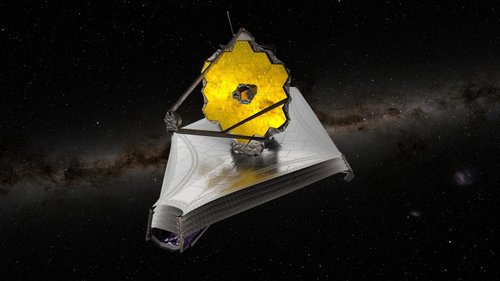
Today, the James Webb Space Telescope continues that work with even greater precision, allowing astronomers to study galaxies formed shortly after the Big Bang.
Leavitt's Law also plays an essential role in calibrating Type Ia supernovae, enabling astronomers to measure distances across billions of light-years.
Those measurements have helped reveal that the expansion of the universe is accelerating—a discovery recognised with the 2011 Nobel Prize in Physics.
Even contemporary debates over the Hubble Tension—the disagreement between different methods of measuring the universe's expansion rate—depend upon distance measurements ultimately rooted in Leavitt's work.
Few scientific discoveries have remained so influential for so long.
Her contribution reaches from the nearby stars of the Milky Way to the most distant galaxies ever observed.
She did not simply catalogue stars.
She gave humanity a way to understand the scale of the universe itself.
Why Henrietta Swan Leavitt Matters
Henrietta Swan Leavitt reminds us that some of history's greatest discoveries emerge not through dramatic flashes of inspiration but through years of patient observation.
She did not invent new technology.
She did not command expeditions.
She did not seek public acclaim.
Instead, she looked carefully enough to recognise a pattern hidden among thousands of stars.
That single insight transformed astronomy.
Her story also reflects one of the central themes of this archive.
History often celebrates those who announce discoveries while overlooking those whose work made those discoveries possible.
Without Leavitt, Edwin Hubble could not have demonstrated that galaxies existed beyond the Milky Way.
Without accurate cosmic distances, modern cosmology would have developed far more slowly.
The expanding universe, the cosmic distance ladder and much of our understanding of the cosmos all trace part of their history back to a quiet office where a woman patiently compared photographic plates.
Henrietta Swan Leavitt did not merely study the stars.
She taught humanity how to measure the universe.
Timeline
Born in Lancaster, Massachusetts, USA.
Entered Oberlin College.
Transferred to the Society for the Collegiate Instruction of Women (later Radcliffe College).
Graduated after studying astronomy.
Began work at Harvard College Observatory.
Published her first study identifying the relationship between Cepheid brightness and period.
Published the refined period–luminosity relationship now known as Leavitt's Law.
Appointed Head of Stellar Photometry; died later that year.
Edwin Hubble used Leavitt's Law to determine the distance to Andromeda.
Considered for Nobel Prize nomination, which could not proceed because she had already died.
Did You Know?
Did You Know?
• Henrietta Leavitt identified over 2,400 variable stars during her career.
• She carried out most of her work without ever operating Harvard's great telescopes.
• She became almost completely deaf during adulthood, yet continued making precise astronomical measurements.
• Her discovery became known as Leavitt's Law, one of the cornerstones of observational astronomy.
• Every modern measurement of distant galaxies relies, directly or indirectly, on the cosmic distance ladder that began with her work.
Further Reading
- David H. DeVorkin, The Harvard College Observatory and the Women Who Measured the Stars
- George Johnson, Miss Leavitt's Stars
- Jeremy Bernstein, A Short History of Astronomy
- American Astronomical Society – Henrietta Swan Leavitt
- Harvard University Archives – The Harvard Computers
Image Credits
Henrietta Swan Leavitt: Public domain portrait.
Harvard College Observatory: Historic image, public domain.
Harvard Computers (“Paper Doll”): © Harvard University Archives, via Wikimedia Commons. Licensed under CC BY-SA 4.0.
Large Magellanic Cloud: © Eckhard Slawik / ESA–Hubble.
James Webb Space Telescope: Image courtesy of NASA.
Explore Related Profiles
Help Keep These Stories Alive
If you enjoyed reading this profile and believe more forgotten voices deserve to be heard, you can help fund future research, writing, and free educational resources.
Every contribution—whether a one-off donation or monthly support—helps create new historical profiles, downloadable materials, and articles that remain freely available to everyone.
Thank you for helping history reach more people.
