

Queen Nzinga
Historical Profile
Introduction
Queen Nzinga Mbande ruled during one of the most dangerous periods in Central African history.
The Portuguese had established themselves on the Angolan coast and were pressing inland, seeking territory, political influence, and control over the growing traffic in enslaved people. Local kingdoms faced a changing world in which diplomacy, warfare, trade, religion, and survival were increasingly bound together.
Nzinga did not inherit a stable throne.
She inherited crisis.
Over the course of a long and turbulent life, she negotiated with Portuguese governors, challenged rival claimants, rebuilt her authority after defeat, formed alliances with African and European powers, and transformed Matamba into a major political base. She survived not because she relied on one strategy, but because she adapted repeatedly.
She was a diplomat when diplomacy offered advantage. She was a military commander when war became unavoidable. She was a ruler who understood that power was expressed not only on the battlefield, but in ceremony, negotiation, religion, trade, symbolism, and memory.
Today, she is remembered as one of Africa’s greatest rulers — not simply because she resisted Portugal, but because she endured.
Why She Matters
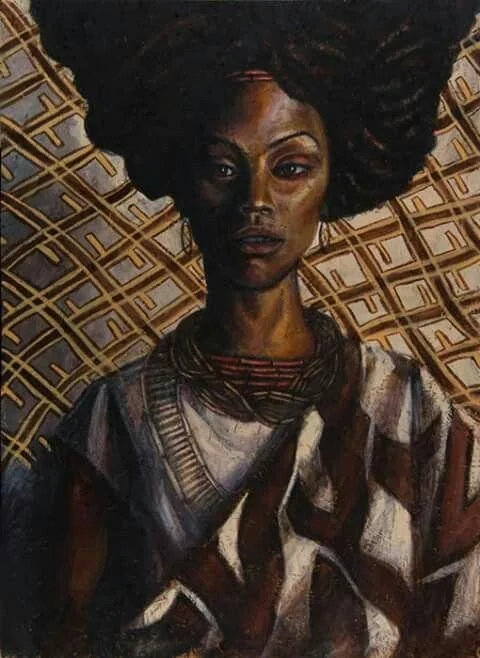
Queen Nzinga matters because her life challenges one of the most persistent distortions in historical memory: the idea that African societies were passive recipients of European expansion.
Her story reveals the opposite.
Ndongo and Matamba were not empty spaces waiting to be entered by European powers. They were political worlds with rulers, diplomats, armies, customs, alliances, rivalries, commercial networks, and long traditions of authority. Nzinga moved within those worlds with extraordinary skill.
She also matters because she expands our understanding of female leadership. Nzinga was not a symbolic queen or a ceremonial figure. She governed, negotiated, commanded, punished, rewarded, allied, retreated, returned, and rebuilt. Her authority was contested, but it was real.
She does not fit comfortably into simple categories. She was not a modern anti-colonial nationalist, because that language did not exist in her world. She was not outside the violent systems of her age, including the trade in captives. Nor was she merely the ruthless figure portrayed by hostile Portuguese sources. She was a seventeenth-century ruler acting within a brutal political landscape, using the tools available to preserve sovereignty and power.
That complexity is precisely why she matters.
Historical Context
Nzinga was born into the royal family of Ndongo, a Mbundu kingdom located inland from Luanda in present-day Angola. The title of its ruler, ngola, is the origin of the name Angola.
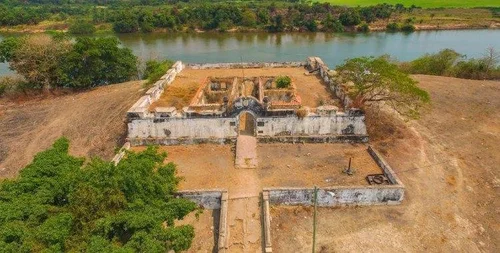
By the time Nzinga came of age, Ndongo had already been drawn into decades of conflict with Portugal. Portuguese influence in the region had grown from trade and missionary contact into military intervention and territorial ambition. Luanda, founded by the Portuguese in the late sixteenth century, became both a coastal stronghold and a gateway into the interior.
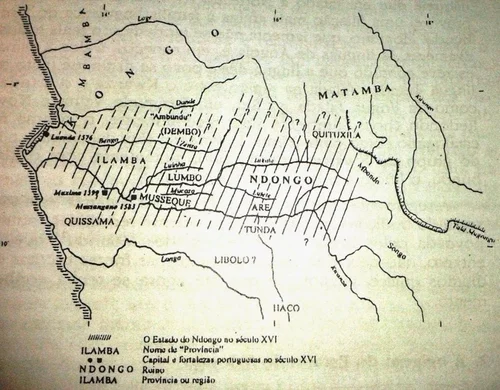
For Ndongo, this created an existential problem. Portuguese governors did not merely seek friendship or exchange. They increasingly demanded submission, tribute, military cooperation, and access to captives. Their campaigns destabilised neighbouring communities, empowered rival factions, and created conditions in which local rulers were forced to decide whether to resist, negotiate, or collaborate.
Nzinga’s life cannot be understood apart from this instability.
She was not ruling in a peaceful world interrupted by foreign aggression. She was born into a political landscape already shaped by war, rival claimants, shifting alliances, and the expanding Atlantic economy. The choices available to her were never clean. Treaty-making might buy time but also risk dependence. War could defend sovereignty but devastate populations. Conversion to Christianity could open diplomatic doors but might be read as submission. Alliance with one foreign power could help resist another but create new dangers.
Nzinga’s genius lay in recognising that survival required movement between these options.
She repeatedly refused to let one defeat define her. When Ndongo became impossible to hold securely, she shifted her base. When Portuguese pressure intensified, she sought allies elsewhere. When Christianity became useful diplomatically, she used it. When military resistance required new forms of organisation, she adopted them.
This adaptability was not weakness. It was the foundation of her power.
Early Life
Nzinga Mbande was born around 1583, though some accounts give slightly different dates. Her father was Ngola Kiluanji Kia Samba, ruler of Ndongo. Her mother’s status is less certain, and later accounts vary in how they describe her. This uncertainty matters because royal legitimacy in Ndongo could be contested through maternal as well as paternal lines.
That issue would later become politically important.
Little can be stated with certainty about Nzinga’s childhood. Much of what is repeated about her early brilliance comes from later tradition rather than contemporary evidence. However, the world in which she was raised makes certain things likely. As a royal daughter, she would have been exposed to court politics, diplomacy, ritual authority, military affairs, and the complex relationships between Ndongo’s central monarchy and its regional leaders.
She grew up watching a kingdom under pressure.
Her father’s reign faced Portuguese expansion and internal tension. Royal children in such an environment did not grow up isolated from politics. They witnessed negotiations, disputes over tribute, military planning, ceremonies of legitimacy, and the constant balancing act required to hold authority together.
Later sources describe Nzinga as intelligent, observant, and forceful. While such descriptions may be shaped by retrospective admiration or hostility, they fit what her adult life demonstrates. By the time she appears clearly in the historical record, she already understands diplomacy, symbolism, language, hierarchy, and power.
She was not learning politics for the first time in 1622.
She had been shaped by it for decades.
The Famous Embassy of 1622
Nzinga first appears securely in the written record as an ambassador.
In 1622, her brother, Ngola Mbande, sent her to Luanda to negotiate with the Portuguese governor João Correia de Sousa. Ndongo needed relief from Portuguese pressure. Portugal wanted influence, captives, and political advantage. The meeting was therefore not a polite ceremonial exchange. It was a high-stakes negotiation between a kingdom fighting for survival and a colonial power seeking domination.
The most famous story from this embassy concerns a chair.
According to later Portuguese accounts, no seat was provided for Nzinga when she entered the governor’s chamber. In diplomatic terms, this mattered. Seating was not a trivial courtesy. It communicated status. To sit lower than the governor would suggest inferiority. To remain standing while he sat would imply submission.
Nzinga is said to have solved the problem by having one of her attendants kneel on the floor, forming a human seat so that she could conduct negotiations at eye level.
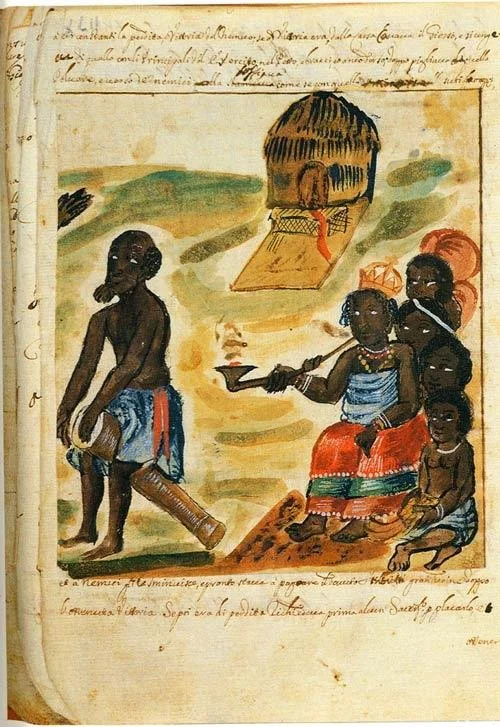
Whether every detail occurred exactly as later retold is uncertain. Stories like this often grow in symbolic power over time. Yet the episode has endured because it captures something consistently visible throughout Nzinga’s life: she understood that authority had to be performed as well as possessed.
She knew that diplomacy was theatre.
Where one sat, how one spoke, what name one used, what religion one adopted, what gifts were exchanged — all of these things carried meaning. In Luanda, Nzinga refused to let Portuguese ceremony define her as subordinate. She presented herself as the representative of a sovereign power.
The negotiations produced a treaty. Prisoners were exchanged, and Portugal temporarily recognised Ndongo’s position. Nzinga also accepted baptism, taking the Christian name Dona Ana de Sousa.
This baptism has often been debated. Was it sincere? Was it political? Was it both?
The safest answer is that it functioned diplomatically. In the seventeenth century, religion was deeply tied to political legitimacy in Portuguese eyes. By accepting baptism, Nzinga entered a language of negotiation that the Portuguese recognised. It allowed her to deal with them not merely as an African envoy, but as a Christian noblewoman within their own symbolic framework.
That did not make her submissive.
It made her strategic.
Rise to Power
Nzinga became ruler after the death of her brother in 1624.
The circumstances remain disputed. Some Portuguese sources accused her of involvement in his death or of eliminating rivals, including possible heirs. Other traditions suggest her brother died by suicide or despair after military defeat and political pressure. Modern historians treat these accounts cautiously because many were written by hostile observers who had strong reasons to undermine her legitimacy.
What is clear is that her claim to power was contested.
She faced opposition because she was a woman, because succession politics were unstable, and because Portuguese authorities preferred rulers they could influence. Her maternal background may also have been used against her by rivals.
Nzinga did not simply inherit uncontested authority. She had to seize, defend, and continually justify it.
Her adoption of the title ngola was therefore significant. It was not merely a name. It was the title of sovereignty in Ndongo. By claiming it, Nzinga asserted that she was not a temporary regent or placeholder. She was ruler in her own right.
Portugal responded by supporting rival claimants.
This pattern would define much of her political life. Nzinga was not only fighting Portuguese armies. She was fighting Portuguese attempts to decide who had the right to rule African kingdoms.
Her resistance was not only military.
It was constitutional, dynastic, and symbolic.
She fought for the right of Ndongo and Matamba to determine their own authority.
Leadership and Statecraft
Nzinga’s leadership was marked by flexibility.
Some rulers are remembered for a single victory or reform. Nzinga is remembered because she repeatedly changed course when survival demanded it.
After Portuguese pressure made her position in Ndongo increasingly difficult, she did not simply disappear into exile. She rebuilt. She gathered followers, attracted displaced communities, incorporated soldiers, and eventually established Matamba as the centre of her power.
This was one of the most important achievements of her career.
Losing secure control of Ndongo could have ended her political life. Instead, she transformed displacement into opportunity. Matamba gave her a new base from which to govern, negotiate, and resist. It allowed her to survive beyond the immediate crisis of succession and to become more than a defeated claimant to a lost throne.
Her court became a place of refuge for people displaced by war. This was humanitarian in one sense, but also political. Refugees became subjects. Soldiers became military strength. Displaced communities became part of a rebuilt state.
Nzinga understood that power depended on people.
Territory mattered, but a ruler without followers was vulnerable. By attracting those who had been uprooted by conflict, she strengthened her legitimacy and expanded her resources.
Her statecraft also involved managing identity. To Portuguese officials she could appear as Dona Ana de Sousa, a Christian ruler willing to negotiate. To her own followers she remained Nzinga, sovereign of an African political world with its own traditions of authority. To military allies she was a commander. To rivals she was a threat.
She moved between these identities without being reduced to any one of them.

Military Leadership
Nzinga’s military reputation was earned over decades.
She did not defeat Portugal permanently. No honest account should claim that. But she prevented Portuguese domination from proceeding smoothly, cheaply, or uncontested. She forced governors, commanders, missionaries, and rival rulers to reckon with her presence for most of the seventeenth century.
Her military strategy relied on mobility, alliance-building, and adaptation.
When direct confrontation was too costly, she withdrew. When alliances became possible, she pursued them. When Portuguese-backed rivals threatened her legitimacy, she resisted them politically and militarily. When Matamba offered a stronger base, she shifted her centre of operations there.
She also made use of forces familiar with both African and Portuguese methods of warfare. Central Africa at this time was not divided neatly between “European” and “African” military systems. Firearms, fortifications, mercenaries, local warrior groups, and shifting alliances all shaped conflict. Nzinga understood this mixed military world and used it to her advantage.
Her alliance with the Dutch after their capture of Luanda in 1641 was one of her boldest moves. Portugal and the Dutch Republic were enemies, and Nzinga recognised that European rivalry could be exploited. By aligning with the Dutch, she gained support against Portugal and helped intensify pressure on Portuguese positions.
This was not naïve idealism. The Dutch had their own interests. Nzinga knew that. But she also knew that Portugal’s weakness was her opportunity.
In 1647, her forces and allies achieved an important victory at Kombi. Yet the following years also brought setbacks. Portugal regained Luanda in 1648, weakening the Dutch alliance and forcing Nzinga once again to recalibrate.
This pattern — advance, defeat, recovery, adaptation — runs throughout her life.
Her greatness lies not in uninterrupted victory, but in resilience.
Religion and Political Strategy
Nzinga’s relationship with Christianity changed over time, and those changes have often been misunderstood.
She was baptised in 1622 as Dona Ana de Sousa during her embassy to Luanda. Later, as relations with Portugal deteriorated, she appears to have distanced herself from Christianity. In her later years, especially during peace negotiations, she again engaged more openly with Catholic missionaries and Christian ritual.
Some writers have treated this as inconsistency. Others have seen it as evidence that her conversion was never sincere. Both interpretations may be too simple.
In Nzinga’s world, religion and politics were closely connected. Christianity was not merely a private belief system; it was a diplomatic language. It shaped how Portuguese officials classified rulers, how treaties were framed, and how alliances were imagined. Accepting baptism could create political possibilities. Rejecting or neglecting Christianity could signal independence from Portuguese expectations.
Nzinga appears to have understood this from the beginning.
That does not mean she felt nothing spiritually. We cannot know the private content of her belief. What we can say is that she used religion intelligently within the political realities of her time.
Her later return to Catholic practice also had practical value. It helped stabilise relations with Portugal, supported negotiations for peace, and shaped succession planning. Missionaries at her court became observers, mediators, and chroniclers.
As with so much in Nzinga’s life, religion was not separate from statecraft.
It was part of it.
Women, Authority and Kingship
European observers were fascinated, unsettled, and sometimes scandalised by Nzinga’s authority.
They often described her in terms that emphasised gender transgression. Some accounts claimed she dressed as a man, took male titles, kept male concubines dressed as women, or demanded to be addressed as king rather than queen. These accounts have been repeated frequently in modern popular culture, sometimes without sufficient caution.
The evidence should be handled carefully.
It is clear that Nzinga adopted forms of authority normally associated with male kingship. But this does not necessarily mean what modern readers may assume. In many political cultures, sovereignty itself was gendered. If power was imagined as male, a female ruler might adopt masculine royal symbols not because she rejected womanhood, but because she needed to occupy the recognised language of command.
Nzinga’s use of masculine titles or symbols therefore makes political sense.
She was ruling in a world where enemies could use her sex against her. By claiming the title and performance of kingship, she challenged the argument that only men could rule.
This does not mean we should erase her as a woman. Nor should we force modern categories onto a seventeenth-century African ruler. The most balanced interpretation is that Nzinga used every available symbol to strengthen her legitimacy.
Her gender made her rule more contested.
Her political intelligence made it possible.
Later Years
By the 1650s, Nzinga had spent decades in conflict.
She was no longer a young ruler fighting to establish herself. She was an experienced sovereign who had outlasted governors, rivals, enemies, and changing political circumstances.
Her later years were marked by diplomacy, consolidation, and concern for succession.
Peace with Portugal became increasingly practical. Both sides had reasons to negotiate. Portugal had failed to eliminate her. Nzinga had preserved her authority but understood the costs of constant war. A settlement could bring stability, trade, recognition, and the return of important family members.
The 1656 peace agreement with Portugal was therefore one of the most significant achievements of her later reign.
It did not make her powerless. It recognised the political reality that she could not be ignored or easily conquered. After decades of struggle, Nzinga had forced Portugal to deal with her as a ruler.
In Matamba, she focused on stability. She encouraged settlement, trade, and the rebuilding of political order after years of upheaval. These achievements are less dramatic than battlefield victories, but they are essential to understanding her.
A ruler who can fight may become famous.
A ruler who can rebuild after fighting becomes historically significant.
Death
Queen Nzinga died on 17 December 1663.
She was probably around eighty years old, an extraordinary age for someone who had lived through decades of warfare, displacement, political crisis, and negotiation.
Her sister Mukambu, known in Christian sources as Dona Bárbara, succeeded her, although the succession was not without later instability. Nzinga had tried to shape the future of Matamba beyond her own lifetime, but no ruler could fully control what followed.
Her death was widely noted because her life had been impossible to ignore.
For more than forty years she had remained at the centre of Central African politics. Portuguese officials had tried to defeat her, negotiate with her, convert her, contain her, and replace her. None succeeded completely.
She died still remembered as sovereign.
Legacy
Nzinga’s legacy has changed across time.
To many Portuguese writers, she appeared as a dangerous and troublesome enemy. Missionary accounts sometimes presented her as morally shocking before her later Christian reconciliation. Colonial histories often emphasised violence, cruelty, or exoticism, using her life to support European assumptions about African “barbarism.”
Modern historians read those sources more critically.
Today, Nzinga is recognised as a ruler operating within the violent realities of the seventeenth century. Her actions were often harsh, but so were the actions of the Portuguese governors, military commanders, African rivals, Dutch traders, and other rulers around her. Singling her out as uniquely ruthless says more about the bias of older sources than about the period itself.
In Angola, Nzinga became a powerful symbol of resistance and national identity. She is remembered as a defender of sovereignty against foreign domination. Statues, institutions, books, films, and public memory have all helped establish her as one of the great figures of Angolan history.
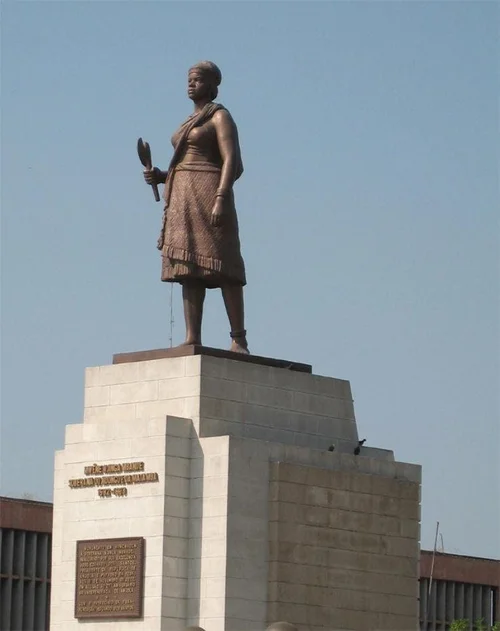
Yet her legacy should not be simplified into pure heroism.
She lived in a world connected to slavery, war, captivity, diplomacy, and survival. She resisted Portuguese domination while also participating in systems of captivity and exchange common to the political economy of her time. That complexity does not diminish her significance. It makes her historical rather than mythical.
Nzinga should be remembered neither as saint nor monster.
She should be remembered as a ruler.
Myths and Historical Evidence
Nzinga’s life has attracted many stories, some well supported, others uncertain.
The famous chair incident from the 1622 embassy is one of the best known. It may contain embellishment, but it remains valuable because it reflects how contemporaries and later writers understood her refusal to accept inferior status.
Claims about her private life, court rituals, and supposed cruelty require greater caution. Many come from European missionary or colonial accounts written by people who viewed African political and religious customs through hostile assumptions. Some details may preserve real observations; others may reflect exaggeration, misunderstanding, or moral condemnation.
The most reliable approach is to distinguish between what is firmly documented and what remains uncertain.
Firmly Documented
• Nzinga was a royal woman of Ndongo.
• She led a major embassy to Luanda in 1622.
• She became ruler after her brother’s death.
• Her authority was contested.
• She resisted Portuguese expansion for decades.
• She established Matamba as a major base of power.
• She formed alliances, including with the Dutch.
• She negotiated peace with Portugal in later life.
• She died in 1663 after a long reign.
More Uncertain
• The exact circumstances of her brother’s death.
• The full accuracy of the chair incident.
• Details of her private religious beliefs.
• Some sensational claims about court customs.
• The precise meaning of her use of masculine royal titles.
This uncertainty does not weaken the profile. It strengthens it.
Responsible history does not hide uncertainty.
It shows readers where the evidence is strongest and where caution is needed.
Historical Confidence
Existence and political importance: ★★★★★
Nzinga’s existence, role in Ndongo and Matamba, diplomacy with Portugal, resistance, and death in 1663 are historically secure.
Biographical detail: ★★★★☆
Her adult political life is relatively well documented for the period, although many details are shaped by hostile or external sources.
Legendary and sensational traditions: ★★☆☆☆
Some famous stories and claims about her court, private life, and symbolic behaviour require careful handling because they come through European accounts shaped by colonial and missionary assumptions.
Timeline
Born into the royal family of Ndongo.
Grows up during a period of increasing Portuguese pressure on Ndongo.
Sent by her brother as ambassador to negotiate with the Portuguese governor in Luanda.
Baptised as Dona Ana de Sousa.
Becomes ruler after the death of her brother, Ngola Mbande.
Faces Portuguese-backed rivals and increasing military pressure.
Rebuilds her authority after setbacks and displacement.
Establishes Matamba as her main base of power.
Allies with the Dutch after their capture of Luanda.
Achieves an important victory with allied forces at Kombi.
Portuguese forces recapture Luanda, weakening the Dutch alliance.
Moves increasingly toward negotiation and diplomatic settlement.
Concludes peace with Portugal, securing recognition and stability.
Dies on 17 December after one of the most remarkable reigns in Central African history.
Selected Sources
Selected modern scholarship includes Linda M. Heywood’s Njinga of Angola: Africa’s Warrior Queen; John K. Thornton’s A History of West Central Africa to 1850; John K. Thornton’s “Legitimacy and Political Power: The Case of Queen Njinga”; and Joseph C. Miller’s Kings and Kinsmen: Early Mbundu States in Angola.
Important early source traditions include António de Oliveira de Cadornega’s História Geral das Guerras Angolanas and Giovanni Antonio Cavazzi da Montecuccolo’s Description of the Three Kingdoms of Congo, Matamba and Angola.
Museum and public-history references include the Metropolitan Museum of Art’s entry on Ana Nzinga, Queen of Ndongo.
Historical Significance
Historical Significance
★★★★★
Queen Nzinga Mbande ranks among the most important rulers of early modern Africa.
Her significance lies not only in resisting Portugal, but in the range of skills she used to do so. She was a negotiator, military strategist, political survivor, state-builder, religious diplomat, and master of symbolic authority.
She reveals a Central African political world that was complex, adaptive, and internationally connected. She also demonstrates that women’s leadership, though often contested, could become decisive in moments of crisis.
Her life forces us to move beyond simple stories.
She was not merely a warrior queen.
She was not merely a victim of colonial expansion.
She was not merely a symbol.
She was a ruler whose decisions shaped the history of Ndongo, Matamba, Angola, and the wider Atlantic world.
Closing Reflection
Queen Nzinga Mbande lived in an age when survival required more than courage.
It required judgement.
She had to know when to negotiate and when to fight, when to retreat and when to return, when to use religion, ceremony, alliance, kinship, military force, and diplomacy. Her power came not from one quality, but from the rare combination of many.
That is why she endures.
European expansion is often told through the names of explorers, governors, merchants, missionaries, and soldiers. Nzinga reminds us that those men did not enter a silent world. They encountered rulers with their own ambitions, strategies, traditions, and political intelligence.
Her story does not ask us to romanticise the past.
It asks us to see it clearly.
In Nzinga, we find a woman who refused to let others define the limits of her authority. She met empire across the negotiating floor, on the battlefield, through religious diplomacy, and in the long struggle over memory itself.
And more than three centuries later, she still stands where she insisted on standing in Luanda:
not below,
not behind,
but level.
Explore Related Profiles
Help Keep These Stories Alive
If you enjoyed reading this profile and believe more forgotten voices deserve to be heard, you can help fund future research, writing, and free educational resources.
Every contribution—whether a one-off donation or monthly support—helps create new historical profiles, downloadable materials, and articles that remain freely available to everyone.
Thank you for helping history reach more people.
