

Ibn al-Haytham
Historical Profile
The Scholar Who Taught Light to Speak
“The seeker after truth is not one who studies the writings of the ancients and, following his natural disposition, puts his trust in them, but rather the one who suspects his faith in them and questions what he gathers from them.”
— Ibn al-Haytham
Introduction
Every civilisation has produced great thinkers. Some preserved knowledge. Others organised it. A few transformed it so completely that later generations came to see the world differently.
Ibn al-Haytham belongs firmly in the last of those groups.
Living during the remarkable intellectual flowering now known as the Islamic Golden Age, he became one of history's greatest investigators of light, vision and the natural world. His writings on optics shaped scientific thought for centuries, while his insistence that theories should be tested against observation helped establish principles that remain central to scientific enquiry today.
Yet his significance extends far beyond the study of light.
Ibn al-Haytham represents a turning point in humanity's pursuit of knowledge.
Before him, scholars often began with authority. Ancient writers such as Aristotle, Euclid, Galen and Ptolemy were studied with immense respect, and their ideas formed the foundations of education across much of the known world.
Ibn al-Haytham respected those foundations.
He also questioned them.
Rather than asking Who said this?, he increasingly asked How do we know this is true?
That seemingly simple shift transformed science.
His experiments demonstrated that light travels from objects into the eye rather than rays leaving the eye to touch objects. His careful investigations of reflection, refraction and perception became the foundation of modern optics. More importantly, his method of combining mathematics, observation and repeatable experiment offered later generations a powerful model for investigating nature itself.
Nearly a thousand years later, every laboratory, observatory and scientific institution still depends upon principles that Ibn al-Haytham helped champion: observe carefully, question assumptions, test ideas, and allow evidence—not authority—to decide.
For that reason, his story is not simply about one remarkable scholar.
It is about the evolution of human curiosity.
Early Life in Basra
Ibn al-Haytham was born around 965 CE in the city of Basra, in present-day Iraq.
At the time, Basra was one of the most important cities of the Islamic world. Situated near the Persian Gulf, it linked trade routes stretching from East Africa and the Arabian Peninsula to Persia, Central Asia and India. Merchants, scholars and travellers carried not only goods but also languages, philosophies and scientific ideas.
For a young scholar, it was an extraordinary place to grow up.
His full name was:
Abū ʿAlī al-Ḥasan ibn al-Ḥasan ibn al-Haytham
Like many Arabic names of the period, it recorded family relationships rather than functioning as a simple surname.
- Abū ʿAlī was his kunya, an honorific meaning "Father of Ali."
- al-Ḥasan was his given name.
- ibn al-Ḥasan means "son of Hasan."
- ibn al-Haytham means "grandson (or descendant) of Haytham."
Today, historians usually refer to him simply as Ibn al-Haytham, following modern scholarly convention.
Little is known with certainty about his childhood.
Unlike rulers or military leaders, scholars often left few detailed personal records. Medieval biographers concentrated far more on their writings than on their daily lives.
Even so, it is clear that Ibn al-Haytham received an exceptional education.
He studied mathematics, astronomy, geometry, philosophy and theology. These subjects were not isolated disciplines but interconnected ways of understanding creation. Mathematics explained proportion; astronomy revealed celestial order; philosophy examined reason; theology explored humanity's place within the universe.
For Ibn al-Haytham, these fields would remain inseparable throughout his life.
The World He Inherited
One of the greatest misconceptions about medieval history is that scientific progress somehow paused after the fall of the Western Roman Empire before suddenly reappearing during the European Renaissance.
The reality is far richer.
By the tenth century, centres of learning across the Islamic world had become places where knowledge from many civilisations was translated, debated and expanded.
Greek works by Aristotle, Euclid, Archimedes, Galen and Ptolemy had been translated into Arabic.
Persian astronomy contributed sophisticated observational traditions.
Indian mathematicians introduced numerical systems and astronomical methods that transformed calculation.
Earlier knowledge from Egypt and Mesopotamia also remained influential.
But this was never simply an exercise in preservation.
Scholars criticised what they read.
They corrected errors.
They proposed new explanations.
Knowledge was not being stored.
It was growing.
That distinction is essential.
Ibn al-Haytham inherited one of the richest intellectual traditions in history—not because it belonged to a single civilisation, but because it brought many traditions together.
He would become one of its greatest innovators.
The House of Wisdom—and a Common Misunderstanding
Many popular accounts connect Ibn al-Haytham with the famous House of Wisdom (Bayt al-Hikma) in Baghdad.
The House of Wisdom has become almost legendary. Founded under the Abbasid Caliphate, it served as a centre for scholarship, translation and intellectual exchange. Works from Greek, Persian, Sanskrit and Syriac traditions were translated into Arabic, creating one of the medieval world's greatest collections of knowledge.
Its importance to history cannot be overstated.
However, there is no reliable evidence that Ibn al-Haytham himself worked there.
By the time he reached adulthood, the House of Wisdom had already existed for generations, and although he undoubtedly benefited from the scholarly culture it helped create, historians cannot confidently place him among its scholars.
This distinction matters.
History is strongest when it separates evidence from assumption.
Ironically, Ibn al-Haytham himself would almost certainly have approved.
He repeatedly argued that claims should be supported by evidence rather than accepted because they were widely repeated.
In that sense, refusing to place him at the House of Wisdom without proof honours his own approach to historical truth.
Why Is He Sometimes Called "Alhazen"?
Readers exploring older books on the history of science will often encounter Ibn al-Haytham under a different name:
Alhazen.
This was not the name by which he knew himself.
Rather, it emerged centuries later as his writings travelled westward.
During the twelfth and thirteenth centuries, scholars in centres such as Toledo translated hundreds of Arabic scientific works into Latin. These translations introduced European readers to advances in medicine, astronomy, mathematics and philosophy that had developed across the Islamic world.
In the process, many Arabic names were adapted into forms that fit Latin pronunciation and spelling.
Ibn al-Haytham became Alhacen, which gradually evolved into Alhazen.
He was not alone.
The physician Ibn Sina became Avicenna.
The philosopher Ibn Rushd became Averroes.
The mathematician al-Khwarizmi became Algorithmi, a name from which the modern word algorithm ultimately derives.
These changes reflected medieval translation practices rather than deliberate attempts to erase cultural identity. Latin served as the scholarly language of much of medieval Europe, and translators routinely adapted names from Arabic, Greek and Hebrew into forms familiar to their readers.
Today, historians generally prefer Ibn al-Haytham, recognising it as the name closest to that used during his lifetime.
The Latinised name survives mainly in historical texts and in mathematical terms such as Alhazen's Problem.
In many ways, the existence of both names reflects the extraordinary journey of his ideas.
Born in Basra.
Written in Arabic.
Translated into Latin.
Read across Europe.
Still shaping science today.
A Scholar's Reputation Reaches Egypt
By the beginning of the eleventh century, Ibn al-Haytham had established a reputation as an accomplished mathematician and natural philosopher. His work had attracted attention beyond Basra, eventually reaching one of the most powerful rulers of the age: the Fatimid caliph al-Hākim bi-Amr Allāh.
The Fatimid Caliphate, centred in Cairo, was among the great powers of the medieval Mediterranean. Founded in North Africa before expanding eastward into Egypt, it governed a prosperous kingdom that controlled vital trade routes linking Africa, the Middle East and the wider Mediterranean world.
Its capital, Cairo, was still a comparatively young city.
Founded in 969 CE, it had rapidly grown into one of the greatest centres of learning, commerce and administration anywhere in the world. Libraries contained hundreds of thousands of manuscripts, scholars debated philosophy and mathematics, and architects, physicians and engineers were encouraged to solve practical problems alongside theoretical ones.
Among those problems, none was more important than the River Nile.
Egypt's Lifeline
To understand why Ibn al-Haytham was invited to Egypt, we must first understand the Nile itself.
Ancient Egypt had always depended upon its annual flood.
Each summer, rains falling hundreds of miles away in the Ethiopian Highlands swelled the Blue Nile. As the waters reached Egypt, they overflowed their banks, spreading nutrient-rich silt across the surrounding floodplains.
Without these floods there would have been no Egyptian civilisation.
Too little flooding meant famine.
Too much meant destruction.
For thousands of years, Egyptians had learned to live with this annual cycle, constructing canals, reservoirs and irrigation systems to guide the waters where they were needed.
Yet the dream remained the same:
Could the Nile itself be controlled?
If its floods could be regulated, agriculture might become more predictable, famine reduced and prosperity increased.
It was an engineering challenge unlike any other.
A Bold Claim
According to later medieval historians, Ibn al-Haytham declared that, if given the opportunity, he could devise a way to regulate the Nile's flooding.
Whether these were his exact words is impossible to know.
Some historians suggest he may simply have expressed confidence that mathematical engineering could improve irrigation. Others believe later writers exaggerated his claim into something more dramatic.
Whatever the precise circumstances, the story reached Caliph al-Hākim.
Rather than dismissing the scholar's confidence, the caliph invited him to Egypt.
If Ibn al-Haytham truly possessed such knowledge, it could transform the kingdom.
Accepting the invitation, Ibn al-Haytham travelled to Cairo.
It was an opportunity that must have seemed extraordinary.
Few scholars were ever offered the chance to apply their theories to one of the greatest engineering challenges of the medieval world.
Confronting Reality
Once in Egypt, Ibn al-Haytham travelled south along the Nile to inspect the river for himself.
Most accounts place him near the region of Aswan, where the river narrows before entering northern Egypt. Today the site is dominated by the modern Aswan High Dam, but a thousand years ago it presented a very different landscape of rocky channels, seasonal currents and immense natural forces.
Only after seeing the river firsthand did Ibn al-Haytham fully appreciate the scale of the challenge.
The mathematics may have been elegant.
The engineering was another matter entirely.
The tools, materials and construction techniques available in the early eleventh century simply could not achieve what the project required.
This was not a failure of imagination.
It was a recognition of reality.
One of Ibn al-Haytham's defining qualities was his willingness to change his conclusions when confronted by evidence.
Rather than stubbornly defending an impossible proposal, he admitted that the task could not be accomplished with contemporary technology.
Ironically, the man remembered for teaching the importance of evidence was already practising it.
The Caliph
Unfortunately, honesty did not necessarily guarantee safety.
The Fatimid ruler al-Hākim bi-Amr Allāh remains one of the most enigmatic figures in medieval history.
Some contemporary writers described him as intelligent and deeply interested in scholarship.
Others portrayed him as unpredictable, severe and capable of sudden changes in policy.
Modern historians caution against accepting the more sensational medieval accounts uncritically, as many were written by hostile observers long after his death. Even so, there is broad agreement that serving under such a ruler required considerable caution.
For Ibn al-Haytham, admitting that the Nile project could not succeed carried obvious risks.
A scholar who disappointed an ordinary patron might lose employment.
A scholar who disappointed a caliph risked far more.
The Story of the Feigned Madness
Here the historical record becomes less certain.
According to later biographies, Ibn al-Haytham adopted an extraordinary strategy.
Realising the danger he faced, he pretended to have lost his sanity.
Under Islamic law, someone judged mentally incapable could not normally be held responsible in the same way as a fully competent adult. Rather than executing him, the authorities reportedly confined him to his home until the caliph's death.
Did this really happen?
Most historians treat the story cautiously.
It appears in medieval sources and has been repeated for centuries, but contemporary evidence is limited.
Whether entirely true, partly true or embellished over time, the account reflects something important about the relationship between scholarship and political power.
Ideas did not exist independently of rulers.
Scientists, mathematicians and philosophers often depended upon powerful patrons whose favour could quickly disappear.
Even if every detail cannot be verified, the broader lesson remains entirely plausible.
Knowledge has rarely been pursued in perfect freedom.
Years Behind Closed Doors
If the traditional account is broadly correct, Ibn al-Haytham spent roughly a decade living under restricted conditions in Cairo.
To many people, such confinement would have represented the end of an intellectual career.
For Ibn al-Haytham, it became its beginning.
Denied the opportunity to undertake ambitious public works, he turned inward.
His room became his workshop.
His desk became his laboratory.
Simple equipment replaced grand engineering.
Instead of attempting to master one of the world's greatest rivers, he began investigating something far more fundamental:
Light itself.
There is something profoundly symbolic about this transformation.
Forced away from public life, Ibn al-Haytham devoted himself to understanding one of nature's simplest and most universal phenomena.
Light entered every home.
It illuminated every landscape.
It allowed every human being to see.
Yet almost nobody truly understood how it worked.
A Room, A Window and A Question
Imagine a small room in Cairo around the year 1015.
Outside, the Egyptian sun blazes across the city.
Inside, the shutters are closed.
Only a tiny hole allows daylight to enter.
On the opposite wall appears a faint image of the outside world.
The buildings are upside down.
People walking through the street appear inverted.
Nothing magical is taking place.
Light is travelling in straight lines through the opening.
Today we recognise this as the camera obscura.
For Ibn al-Haytham, it became one of the most powerful demonstrations in the history of science.
Rather than accepting explanations inherited from ancient authorities, he watched what light actually did.
He varied the size of the opening.
He observed shadows.
He examined reflection.
He studied mirrors.
He investigated transparent materials.
He asked questions.
Then he designed ways of answering them.
One experiment led naturally to another.
Each observation suggested a new test.
The process was slow, deliberate and astonishingly modern.
Writing the Book of Optics
During these years, Ibn al-Haytham began composing the work for which he would become famous:
Kitāb al-Manāẓir—The Book of Optics.
This was not simply a collection of observations.
It was a complete re-examination of how human beings see the world.
Across seven substantial volumes, he brought together mathematics, geometry, physics, anatomy and psychology in an attempt to answer questions that had occupied philosophers for nearly fifteen centuries.
Why do we see?
How does light travel?
Why do mirrors reverse images?
Why do objects appear distorted in water?
Why does the Moon look larger near the horizon?
Why do shadows change shape?
Why are some optical illusions so convincing?
Most remarkably of all, Ibn al-Haytham refused to answer these questions through philosophy alone.
Each explanation had to be tested.
Each conclusion had to agree with observation.
If experiment contradicted authority, then authority—not observation—had to give way.
It was this insistence on evidence that made the Book of Optics unlike anything that had come before it.
It was not merely a book about vision.
It was a new way of investigating nature.
By the time Ibn al-Haytham completed his great work, he had done far more than explain how light enters the eye.
He had demonstrated something equally important:
Knowledge grows strongest when curiosity is disciplined by evidence.
That principle would eventually travel far beyond Cairo, influencing generations of scholars who had never heard his voice but who learned from the questions he dared to ask.
A Question Older Than History
Long before Ibn al-Haytham began writing, people had wondered how vision worked.
It is one of humanity's oldest scientific questions.
Every day we open our eyes and instantly recognise colour, distance, movement and shape. The process feels effortless, almost magical. Yet for thousands of years philosophers struggled to explain what actually happened between the eye and the world.
The ancient Egyptians associated sight with divine power.
Greek philosophers debated the nature of vision for centuries.
Even by the tenth century, there was still no universal agreement.
To Ibn al-Haytham, this was more than an abstract philosophical problem.
If humanity wished to understand nature, it first needed to understand the instrument through which it observed nature.
The eye itself became his laboratory.
Standing on the Shoulders of Earlier Thinkers
One of the reasons Ibn al-Haytham's work proved so influential was that he did not dismiss earlier scholars.
He studied them carefully.
His writings reveal a deep knowledge of Greek mathematics, medicine and philosophy. He admired Euclid's geometry, respected Ptolemy's mathematical precision and recognised Galen's anatomical observations.
But admiration did not mean agreement.
He believed every explanation should be examined critically.
As he himself wrote:
"The duty of the man who investigates the writings of scientists... is to make himself an enemy of all that he reads."
This sentence is often misunderstood.
He was not calling for hostility towards previous scholars.
He was calling for intellectual honesty.
The truth mattered more than reputation.
Even the greatest authority could be mistaken.
That single idea represents one of the most important shifts in the history of knowledge.
Two Competing Theories
When Ibn al-Haytham began his investigations, two broad explanations of vision dominated learned discussion.
Extramission
This theory, associated particularly with Euclid and Ptolemy, proposed that the eye emitted invisible rays.
These rays travelled outward, touched objects and allowed the observer to see them.
At first glance the idea seems strange to modern readers.
Yet it solved several apparent problems.
When we choose to look at something, vision feels active.
Our attention seems to reach outward.
It was therefore understandable that many philosophers imagined something leaving the eye.
The theory remained influential for centuries.
Intromission
A second tradition suggested that vision worked in the opposite direction.
According to Aristotle and later Galen, something from the object entered the eye.
Although closer to modern understanding, these explanations remained incomplete.
They lacked a convincing physical account of how light behaved.
Nor had anyone demonstrated experimentally which theory was correct.
Arguments continued.
Books multiplied.
Opinions differed.
Very few people performed experiments.
That is what made Ibn al-Haytham different.
Observation Before Assumption
Rather than beginning with philosophy, Ibn al-Haytham began with observation.
He asked simple questions.
If rays leave the eye, why does staring at the Sun damage vision?
Why should external light cause pain if seeing originates within us?
Why can we not instantly see objects hidden in darkness?
Why does closing the eyelids stop vision completely?
Each question exposed weaknesses in the prevailing theories.
Instead of defending an ancient authority, Ibn al-Haytham sought evidence.
He darkened rooms.
He allowed narrow beams of sunlight to enter through tiny openings.
He observed shadows.
He examined reflections in polished mirrors.
He watched how light changed direction when passing through transparent materials.
Every experiment built upon the last.
He was not collecting interesting observations.
He was constructing evidence.
The Camera Obscura
Among his most famous investigations was the camera obscura, meaning "dark chamber."
The principle was surprisingly simple.
Imagine a completely dark room.
One small hole is made in one wall.
Outside, sunlight illuminates the surrounding landscape.
Light enters through the tiny opening.
On the opposite wall appears an image of the outside world.
Remarkably, the image appears upside down.
To many observers, this might have seemed mysterious.
To Ibn al-Haytham, it demonstrated something fundamental.
Light travels in straight lines.
Each point on the outside scene sends rays through the opening.
Because those rays cross as they pass through the aperture, the image appears inverted.
This simple experiment carried enormous significance.
It showed that light behaved according to predictable physical laws.
Those laws could be observed.
Measured.
Repeated.
Verified.
Today, every photographic camera ultimately depends upon the same principle.
The camera obscura became one of the earliest demonstrations linking optics with image formation—a concept that would eventually lead to photography itself.
Light Travels to the Eye
After years of investigation, Ibn al-Haytham reached the conclusion for which he is best remembered.
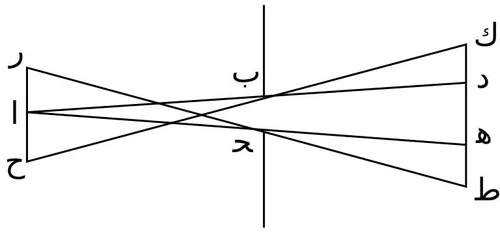
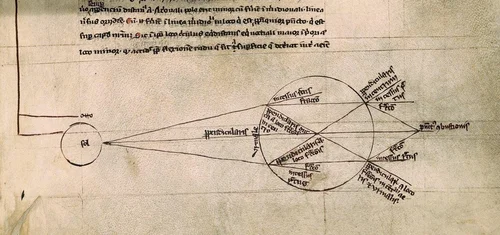
Vision occurs because light reflected from objects enters the eye.
This sounds obvious today.
It was revolutionary a thousand years ago.
His explanation solved many longstanding problems simultaneously.
Objects become visible because light reaches them first.
The reflected light then travels into the eye.
Without external light, vision becomes impossible.
Bright light damages the eye precisely because light enters it.
Darkness prevents sight because insufficient light reaches the observer.
One coherent explanation accounted for all these observations.
Unlike earlier theories, it agreed with experiment.
That distinction mattered enormously.
For perhaps the first time in the history of optics, a comprehensive theory had been built upon systematic testing rather than philosophical speculation alone.
Reflection and Refraction
Ibn al-Haytham also devoted considerable attention to mirrors and transparent materials.
Why does a mirror reverse left and right?
Why do reflections change when viewed from different angles?
Why does a straight stick appear bent when partly submerged in water?
These questions led him into the study of reflection and refraction.
Reflection concerns the behaviour of light striking polished surfaces.
Refraction describes what happens when light passes between different transparent substances such as air, water or glass.
Although later scientists refined the mathematics considerably, Ibn al-Haytham established many of the observational foundations.
He recognised that these phenomena obeyed consistent physical principles rather than arbitrary behaviour.
Nature possessed order.
The task of science was to discover it.
The Mathematics of Nature
Unlike many philosophers before him, Ibn al-Haytham believed mathematics should play a central role in understanding the natural world.
Geometry was not merely an abstract intellectual exercise.
It became a language through which light itself could be described.
Angles of reflection.
Paths of rays.
Curved mirrors.
Perspective.
Each could be analysed mathematically.
This fusion of mathematics with observation became one of the defining characteristics of later science.
Galileo would adopt it.
Kepler would extend it.
Newton would transform it.
But Ibn al-Haytham had already shown how powerful the combination could be.
Beyond Optics
Although history remembers him chiefly for light and vision, Ibn al-Haytham's interests ranged much further.
He wrote extensively on:
- mathematics
- astronomy
- geometry
- mechanics
- engineering
- philosophy
- natural science
More than 200 works have traditionally been attributed to him, although many have not survived.
Among his astronomical writings was Doubts Concerning Ptolemy, in which he criticised aspects of the great Alexandrian astronomer's models.
Again we see the same pattern.
Respect.
Study.
Question.
Test.
Improve.
Knowledge advanced because criticism was treated not as disrespect but as a search for greater accuracy.
Did Ibn al-Haytham Invent the Scientific Method?
This is one of the most common claims made about him.
The answer deserves nuance.
Many popular books describe Ibn al-Haytham as "the inventor of the scientific method."
Professional historians tend to be more cautious.
Science did not emerge from one individual or one civilisation.
Elements of scientific thinking can be found among Greek philosophers, Indian mathematicians, Chinese astronomers and many others.
Likewise, later figures such as Roger Bacon, Francis Bacon, Galileo and Newton each contributed to the development of scientific practice.
What historians generally agree upon is this:
Ibn al-Haytham was one of history's greatest pioneers of experimental science.
His work brought together several principles in an unusually systematic way:
- careful observation
- clearly defined questions
- mathematical analysis
- controlled experimentation
- repeatable results
- willingness to revise conclusions
Those principles remain recognisable within modern scientific research.
Perhaps his greatest contribution was not a single experiment.
It was demonstrating that nature should be questioned through evidence rather than assumed through authority.
A New Way of Knowing
The Book of Optics therefore achieved something remarkable.
It answered questions about light.
It explained vision.
It advanced mathematics.
It influenced astronomy.
But beneath all these achievements lay something even more important.
It offered a new model for acquiring knowledge itself.
Books remained valuable.
Teachers remained valuable.
Ancient scholars remained valuable.
Yet none stood above evidence.
That idea quietly changed the world.
A Book That Crossed Civilisations
When Ibn al-Haytham completed the Book of Optics, he could not have known how far it would travel.
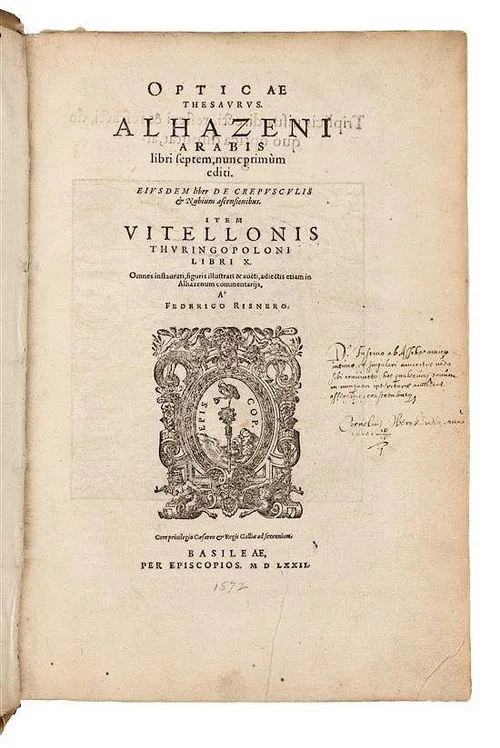
Written in Arabic during the early eleventh century, the work circulated throughout the Islamic world before eventually reaching Europe during the great translation movement of the twelfth and thirteenth centuries.
Scholars in places such as Toledo translated the text into Latin under the title De Aspectibus or Perspectiva.
Once translated, it spread rapidly through Europe's emerging universities.
For many centuries it became the standard authority on optics.
This journey is important because it reminds us that knowledge has never belonged to a single civilisation.
Greek philosophy influenced Arabic scholarship.
Arabic scholarship influenced medieval Europe.
European science later transformed the modern world.
Each generation inherited knowledge, refined it and passed it on.
Ibn al-Haytham stood at one of the most important crossroads in that journey.
Influencing Medieval Europe
Among those influenced by Ibn al-Haytham were some of the greatest scientific minds of medieval Europe.
Roger Bacon
The English Franciscan scholar Roger Bacon admired experimental investigation and drew heavily upon the Book of Optics in his own studies.
Like Ibn al-Haytham, Bacon believed observation should guide understanding rather than unquestioning acceptance of authority.
Witelo
The Polish scholar Witelo produced one of the most influential medieval books on optics.
Much of its foundation rested upon Ibn al-Haytham's work, helping transmit his ideas throughout European universities.
Johannes Kepler
Perhaps the greatest scientific heir to Ibn al-Haytham was Johannes Kepler.
By the early seventeenth century, Kepler expanded optical theory and correctly explained how the eye forms images upon the retina.
His work built directly upon questions Ibn al-Haytham had first explored six centuries earlier.
Without the foundations laid in Cairo, Kepler's advances would have been far more difficult.
Isaac Newton
Even though Isaac Newton is rarely associated directly with Ibn al-Haytham, the connection remains profound.
Newton's revolutionary work on light, colour and optics belongs to the same intellectual tradition that Ibn al-Haytham helped establish.
The chain is not one of simple imitation.
Rather, it demonstrates how scientific knowledge accumulates across generations.
Each scholar extends the work of those before them.
Knowledge Has No Borders
One of the themes running throughout this archive is that history is often richer than the stories we are taught.
Ibn al-Haytham illustrates this perfectly.
Too often, popular histories describe scientific progress as though it moved directly from Ancient Greece to Renaissance Europe.
That narrative overlooks centuries of extraordinary scholarship across the Islamic world.
It ignores the translators who preserved Greek texts.
The mathematicians who expanded geometry.
The physicians who refined medicine.
The astronomers who improved observation.
And the physicists, like Ibn al-Haytham, who transformed entire disciplines.
Recognising these contributions does not diminish Greek or European achievements.
It completes the story.
Knowledge has never respected political borders.
Ideas travel more freely than armies.
The history of science is not the story of one civilisation succeeding another.
It is the story of humanity learning together.
Why His Work Still Matters
Modern science has changed beyond anything Ibn al-Haytham could have imagined.
We possess electron microscopes.
Particle accelerators.
Artificial intelligence.
Space telescopes capable of observing galaxies billions of light-years away.
Yet despite these extraordinary advances, the underlying process remains remarkably familiar.
Scientists still begin by asking questions.
They still gather evidence.
They still test hypotheses.
They still revise conclusions when observations disagree with expectations.
These principles lie at the heart of every scientific discipline.
Although they developed gradually across many centuries and cultures, Ibn al-Haytham stands among the earliest scholars to articulate them so clearly and to apply them so consistently.
That is why historians continue to celebrate his work.
Not because he discovered every scientific principle.
But because he helped demonstrate how scientific knowledge should be pursued.
Recognition Today
Today, Ibn al-Haytham is recognised internationally as one of history's great scientists.
A crater on the Moon bears his Latinised name.
Asteroids have been named in his honour.
Schools, research institutes and scientific awards commemorate his achievements.
In 2015, the International Year of Light, proclaimed by UNESCO and supported by scientific organisations worldwide, celebrated the thousandth anniversary of many of his investigations into optics.
Across exhibitions, lectures and educational programmes, his work was presented to new generations as one of the foundations of optical science.
It was a fitting tribute.
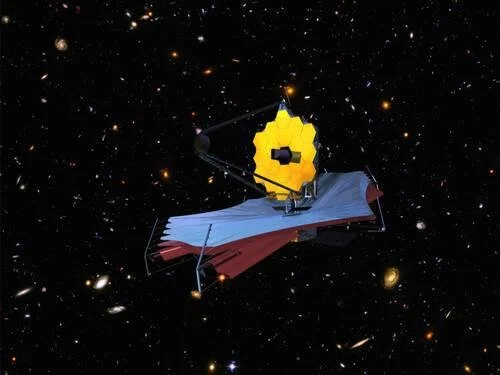
One thousand years after studying sunlight entering a darkened room in Cairo, humanity was using space telescopes to study the first light of the universe itself.
The scale had changed.
The curiosity had not.
Why Ibn al-Haytham Matters
Many historical figures are remembered because they answered an important question.
Ibn al-Haytham deserves to be remembered because he changed how questions themselves should be answered.
He demonstrated remarkable humility before nature.
He accepted that even the greatest authorities could be mistaken.
He believed that truth did not belong to books alone, nor to rulers, nor to famous philosophers.
Truth belonged to evidence.
That principle seems almost obvious today.
It was not obvious a thousand years ago.
His life reminds us that progress often begins not with certainty but with doubt.
Not the destructive doubt that rejects everything.
But the disciplined curiosity that asks:
"How do we know?"
That question lies behind every scientific discovery ever made.
It is the question that led from the camera obscura to the telescope.
From optics to photography.
From medieval astronomy to space exploration.
In many respects, Ibn al-Haytham did not simply study light.
He illuminated the path by which humanity learns.
Key Achievements
Key Achievements
- Wrote the seven-volume Book of Optics (Kitāb al-Manāẓir).
- Demonstrated that vision occurs when light enters the eye.
- Rejected the long-standing extramission theory of sight.
- Developed experimental approaches to studying light, reflection and refraction.
- Advanced the study of the camera obscura.
- Combined mathematics with physical observation to explain natural phenomena.
- Critiqued aspects of Ptolemaic astronomy.
- Influenced generations of scholars across both the Islamic world and medieval Europe.
Key Dates
Born in Basra (modern Iraq).
Studies mathematics, astronomy, philosophy and theology.
Travels to Fatimid Egypt.
Traditionally associated with his confinement following the Nile project.
Writes much of the Book of Optics.
Death of Caliph al-Hākim; Ibn al-Haytham reportedly regains his freedom.
Dies in Cairo.
Book of Optics translated into Latin.
Celebrated internationally during the International Year of Light.
Did You Know?
Did You Know?
- Ibn al-Haytham wrote or was credited with more than 200 works, although many have been lost.
- Medieval Europeans usually knew him as Alhazen.
- His studies of the camera obscura helped lay the foundations of photography centuries later.
- He argued that scholars should question even the most respected authorities if evidence suggested they were mistaken.
- His Book of Optics remained influential in Europe for nearly 600 years.
- A crater on the Moon bears his name.
- UNESCO's International Year of Light (2015) celebrated his contributions to optics and scientific inquiry.
- His work influenced Roger Bacon, Witelo, John Pecham, and Johannes Kepler.
- He believed observation and experiment should work together with mathematics rather than philosophy alone.
- His legacy survives in every scientific discipline that relies on testing ideas against evidence.
Further Reading
- A. I. Sabra — The Optics of Ibn al-Haytham
- Jim Al-Khalili — Pathfinders: The Golden Age of Arabic Science
- Roshdi Rashed — Encyclopedia of the History of Arabic Science
- George Saliba — Islamic Science and the Making of the European Renaissance
- UNESCO — International Year of Light
- The Book of Optics (translated editions)
Image Credits
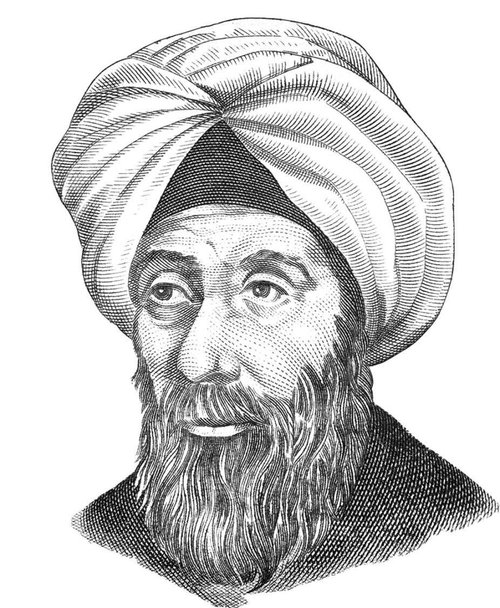
Ibn al-Haytham (imaginary portrait): © Michel Bakni, via Wikimedia Commons. Licensed under CC BY-SA 4.0.
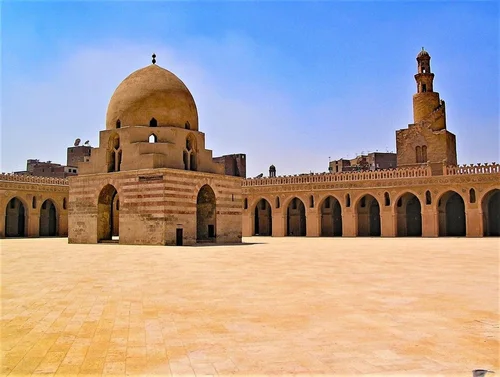
Mosque of Ibn Tulun, Cairo: Photograph © Berthold Werner (2010), via Wikimedia Commons. Licensed under CC BY 3.0.
Opticae Thesaurus (1572) title page: Public Domain.
Optical Ray Diagram from the Book of Optics: Public Domain.
Light Behaviour Through a Pinhole (Camera Obscura Diagram): Public Domain (via Wikimedia Commons).
James Webb Space Telescope: Image courtesy of NASA.
Explore Related Profiles
Help Keep These Stories Alive
If you enjoyed reading this profile and believe more forgotten voices deserve to be heard, you can help fund future research, writing, and free educational resources.
Every contribution—whether a one-off donation or monthly support—helps create new historical profiles, downloadable materials, and articles that remain freely available to everyone.
Thank you for helping history reach more people.
