

Sappho
Historical Profile
The Poet Who Refused to Be Silenced
History often records empires and armies. Sappho recorded the heart — and it survived.
Born on Lesbos around 630 BCE, Sappho became the most celebrated lyric poet of antiquity.
Where epics praised kings and conquest, her poems sang of love, longing, beauty and the charged intimacy of everyday life — often addressed to women.
In a world that rarely preserved women’s voices, hers became unforgettable.
Sappho reminds us that private feeling is not outside history.
It is one of the ways history remembers what it meant to be human.

Life and Setting
Sappho lived on the island of Lesbos during the Archaic Greek period, a time when poetry, music and performance were central to social and religious life.
Lyric poetry was not originally silent text on a page. It was performed, often with the lyre, before audiences who experienced poetry as voice, rhythm and presence.
Later sources place Sappho among circles of women where song, education, ritual and social life may have overlapped. Whether this was a formal school or a looser community remains debated.
What matters is that Sappho’s poetry emerged from a world of performance, memory and direct address.
Her poems feel immediate because they were written for living moments — for voices, listeners and relationships now mostly lost to us.
A Voice Set Apart
Greek epic often looked outward toward war, gods and heroic conflict. Sappho turned inward.
She made intensity itself her subject: love that unsettles the body, beauty that arrests speech, longing that becomes almost physical.
In doing so, she changed what poetry could preserve.
Some ancient writers praised her as the “Tenth Muse.”
The title is later and symbolic, but it shows the scale of her reputation.
Her surviving fragments reveal emotional precision rather than grand narrative. She did not need armies or empires to create significance.
A glance, a voice, a remembered absence — in Sappho’s poetry, these could carry the weight of history.

Erasure and Fragment
Most of Sappho’s work has been lost.
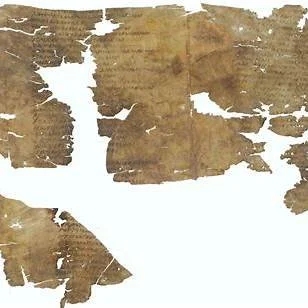
Ancient sources suggest she was once known through collections of poems, but only one poem survives complete, along with fragments preserved on papyrus or quoted by later authors.
Some loss was simply the fate of ancient literature. Scrolls decayed. Libraries changed. Texts stopped being copied.
But Sappho’s survival was also shaped by changing cultural attitudes toward gender, desire and women’s voices.
Later societies often found frank expressions of female desire uncomfortable, especially when addressed to women. Her poetry survived through admiration, quotation, controversy and accident.
We do not possess Sappho whole.
We possess flashes.
Yet the flashes still burn.
Sexualised Reduction
Sappho’s legacy has often been filtered through the anxieties of later writers.
Rather than being remembered simply as one of antiquity’s greatest poets, she was frequently reduced to questions about her sexuality, reputation and supposed scandal.
This does not mean her desire should be erased. Her poems openly express love, admiration and longing, often directed toward women.
The problem is not acknowledging that part of her work. The problem is reducing her whole legacy to it.
Again and again, women in history are remembered through the narrowest available lens. Their intellect becomes personality. Their art becomes gossip. Their emotional life becomes evidence used against them.
Erasure does not always mean silence.
Sometimes it means distortion.

Rediscovery and Influence
From the late nineteenth century onward, archaeological discoveries in Egypt began to recover more fragments of Sappho’s poetry.
Finds from places such as Oxyrhynchus and later papyri discoveries allowed modern readers to hear more of a voice that had once seemed almost entirely lost.
Translation has also shaped Sappho’s modern legacy. Different translators have made different choices: some smooth the fragments into readability, while others preserve the breaks, silences and absences.
Modern poets, scholars and readers have returned to Sappho not only because she was ancient, but because she still feels immediate.
Her influence reaches across literature, feminist history, queer history and the study of how memory survives.

Why Sappho Matters
Sappho matters because she widens the emotional and intellectual record of antiquity.
She reminds us that history is not made only by rulers, battles or public institutions. It is also made by voices that shape how people understand love, longing, beauty and selfhood.
Her survival also exposes how fragile the archive can be.
A poet once celebrated across the ancient world now reaches us mainly through fragments. Yet those fragments were powerful enough to influence literature for more than two thousand years.
The point is not how much survives.
It is what the surviving voice still makes us see.
Sappho’s work challenges any version of history that treats women’s inner lives as secondary or unimportant.
Her poems show that emotion can be rigorous, beauty can be intellectually serious, and a woman’s voice can outlive empires.
Historical Reliability
Sappho is historically well attested as a poet of Archaic Greece, but many details of her life remain uncertain.
Much of what later writers claimed about her biography is difficult to verify. The strongest evidence for her importance comes from the survival of her poetry, ancient references to her reputation, and the continuing transmission of her work in fragments.
Historical Confidence
Evidence: ★★★★☆
Sappho’s existence, poetic reputation and influence are strongly supported by ancient testimony and surviving fragments. However, many details of her personal life, relationships and social role remain uncertain or filtered through later interpretation.
Timeline
Approximate birth of Sappho on the island of Lesbos.
Sappho composes lyric poetry associated with performance, music and emotional intensity.
Her poetry circulates widely and she becomes celebrated as one of the greatest lyric poets.
Most of her work is lost as copying traditions change and surviving texts fragment.
Papyrus discoveries recover additional fragments and renew modern interest in her voice.
Further Reading
- If Not, Winter: Fragments of Sappho — translated by Anne Carson.
- Sappho: A New Translation — translated by Mary Barnard.
- Margaret Reynolds, The Sappho Companion.
- The Oxyrhynchus Papyri and later papyrus discoveries preserving fragments of Sappho.
Explore Related Profiles
Help Keep These Stories Alive
If you enjoyed reading this profile and believe more forgotten voices deserve to be heard, you can help fund future research, writing, and free educational resources.
Every contribution—whether a one-off donation or monthly support—helps create new historical profiles, downloadable materials, and articles that remain freely available to everyone.
Thank you for helping history reach more people.
