

Trotula-of-Salerno
Historical Profile
The Name That Remained, The Author That Didn’t
There is no single, definitive document that proves Trotula of Salerno existed exactly as described.
And yet—
medical texts on women’s health circulated across medieval Europe under her name.
They came from Salerno, one of the most important centres of medical learning in the medieval world. And in early references, “Trotula” is not treated as a myth, or a symbol—but as an authority.
So we’re left with a question.
Not just who she was—
but what happened to her.
A Name Attached to Knowledge
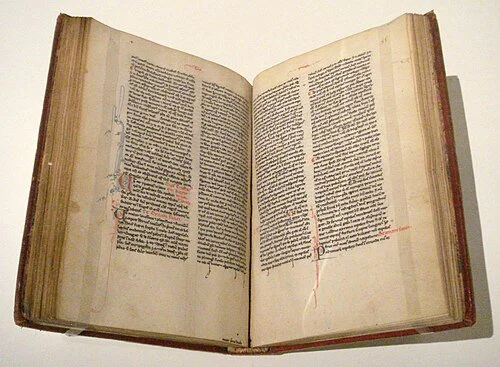
Today, “Trotula” doesn’t refer to a single book. It refers to a collection of three texts:
- De Passionibus Mulierum
- De Ornatu Mulierum
- Practica Secundum Trotam
They weren’t originally written as a single work. They were grouped together later—copied, reorganised, and passed through generations of scribes and scholars.
Which already tells us something.
What we’re looking at isn’t a fixed moment in history.
It’s a process.
Theory or Experience?
The texts themselves focus on women’s health—menstruation, fertility, pregnancy, childbirth. Subjects that, even within medieval medicine, sat slightly apart from the dominant intellectual tradition.
Men did write about women’s bodies at the time. Much of medieval medicine was built on inherited frameworks from figures like Galen and Hippocrates—structured, systematic, and often theoretical.
Does this feel like theory?
Or does it feel like experience?
That’s not a claim—it’s a question.
Because the level of detail, the practical tone, the attention to lived realities… it reads differently. Less like distant observation, more like something grounded in practice.
And if that’s true—even in part—then it raises another possibility: that at least some of this knowledge came from someone working directly with women.
A practitioner. A midwife. A physician operating within the medical culture of Salerno.
Historian Monica H. Green has argued that this may well be the case.
Not definitively.
But plausibly.
Why Salerno Matters
The Schola Medica Salernitana was unusual. It drew on Greek, Roman, and Arabic traditions, and—unlike most institutions of the time—there is evidence that women were not entirely excluded from its world.
They worked as healers. Midwives. Possibly even teachers.
Not equal, perhaps—but present.
Which means, for a brief moment in history, the boundaries around knowledge were not yet fully closed.
Across many societies, women practised medicine—often extensively—but their knowledge rarely entered the structures that preserved it.
What makes Salerno different is not that women were present in medicine—
it’s that, here, some of that knowledge appears to have crossed into the written record.
How a Name Disappears
So how does a name like that begin to disappear?
Not all at once.
As these texts were copied and circulated, they began to fragment. The three works were treated separately. Their shared identity became less obvious.
And with that—
the name itself became unstable.
In some manuscripts, “Trotula” becomes “Trotulus”.
In others, the name disappears entirely.
No dramatic rewriting. No single moment of erasure.
Just small changes—
repeated often enough that they stop being noticed.
The Question of Recognition
The question is not only what happened to one name—but what happens to knowledge when authority becomes more tightly controlled.
As systems of learning became more formalised, the boundaries around who could produce recognised knowledge began to narrow.
Participation did not disappear.
Recognition did.
Knowledge outside official structures—no matter how effective—became harder to attribute, harder to preserve, and easier to reassign.
This does not mean that Trotula’s work was directly tied to later developments such as the European witch hunts.
But it does point to a recurring tension: when authority over knowledge becomes centralised, those outside it can shift from trusted practitioners to uncertain—or even suspect—figures.
Historical Reliability
Trotula is difficult to treat as a conventional biography because the surviving evidence is complicated. The name is attached to influential medical texts, but the relationship between the name, the author or authors, and the later manuscript tradition remains uncertain.
This does not make the subject unimportant. It makes it historically revealing.
Trotula shows how knowledge can survive even when attribution becomes unstable. The texts remained useful, copied and discussed, while the identity behind them became harder to recover.
Historical Confidence
Evidence: ★★★☆☆
The medical texts associated with Trotula are historically important and widely attested in medieval manuscript tradition. The precise identity of “Trotula” remains debated, and the name may refer to one woman, multiple contributors, or a textual tradition shaped over time.
What Remains
What survives here is not a clear biography.
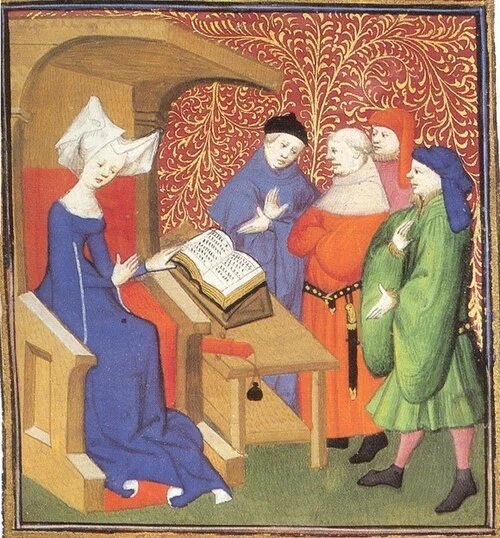
There are no confirmed portraits. No detailed records tying everything neatly together.
Instead, what we’re left with is something quieter—
A name that appears.
A body of knowledge that spreads.
A reputation that once existed.
And then—
a gradual uncertainty.
So was Trotula one woman?
Several?
Or a name that came to represent a body of work shaped by more than one voice?
We don’t know.
But we do know this:
her name was once attached to knowledge that mattered.
And over time, that connection weakened.
Not erased completely—
just… reassigned.
Timeline
Approximate period traditionally associated with Trotula of Salerno.
The Schola Medica Salernitana becomes one of Europe's most important centres of medical learning.
Texts on women’s health circulate under the name Trotula.
The texts are copied, grouped, altered and transmitted across Europe.
Historians reassess Trotula as part of the history of women, medicine and knowledge transmission.
Explore Related Profiles
Help Keep These Stories Alive
If you enjoyed reading this profile and believe more forgotten voices deserve to be heard, you can help fund future research, writing, and free educational resources.
Every contribution—whether a one-off donation or monthly support—helps create new historical profiles, downloadable materials, and articles that remain freely available to everyone.
Thank you for helping history reach more people.
