

Aspasia
Historical Profile
Introduction
History remembers Pericles as one of the greatest statesmen of Classical Athens.
Yet when ancient writers discussed wisdom, rhetoric and persuasive speech, another name appeared again and again.
Aspasia.
She left no surviving writings of her own. Much of what we know about her comes from philosophers, playwrights and later biographers — sources with very different purposes, and not all of them equally reliable.
Even so, one striking pattern emerges. Across genres and across centuries, Aspasia continued to be remembered not simply as Pericles' companion, but as a woman associated with intelligence, conversation and the power of ideas.
Aspasia reminds us that history is not only about recovering forgotten lives.
It is also about recognising the limits of the evidence that survives.
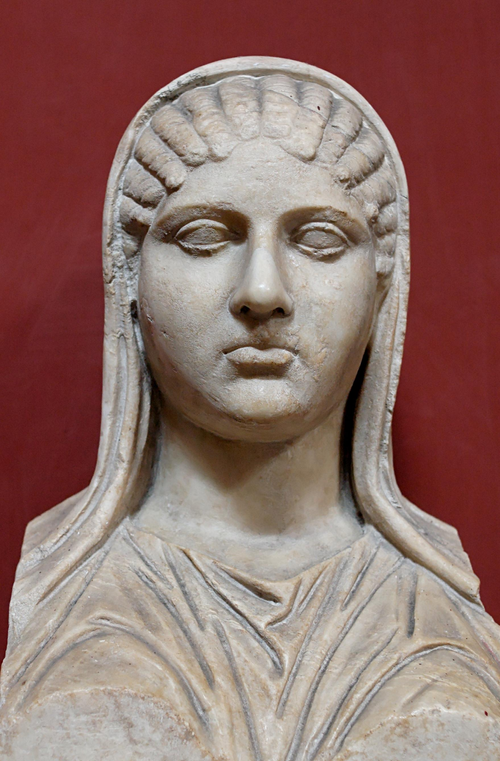
What the Evidence Shows
The surviving evidence allows us to say several things with a high degree of confidence.
Aspasia was from Miletus. Plutarch describes her as Milesian by birth and names her father as Axiochus, while modern reference scholarship continues to treat her Milesian origin as secure.
She lived in Athens and belonged to its world of elite politics and culture. Her presence in Athenian comedy, philosophy and biographical tradition places her firmly in the city's public imagination.
She was closely associated with Pericles. Ancient writers present their relationship as a central feature of Pericles' life, and comic poets repeatedly used that association as a target.
Ancient writers also connected her with rhetorical or intellectual ability. Plato, Xenophon, the Aeschines tradition, Cicero and Plutarch all preserve that reputation in different forms.
What remains uncertain is just as important. Her early life is largely unknown, the legal status of her relationship with Pericles remains debated, and her exact influence on Pericles' speeches cannot be demonstrated.
The evidence does not give us Aspasia whole.
It gives us fragments — but the fragments matter.
The World Aspasia Entered
Aspasia was born in Miletus, one of the great Ionian cities of western Asia Minor.
In the archaic period, Miletus had been a powerful port city, famous for maritime wealth, colonisation and intellectual prestige. Later tradition remembered it as the home of Thales, Anaximander and Anaximenes.
To say that Aspasia was Milesian was therefore to place her in a world that was Greek, eastern Aegean, outward-looking and deeply entangled with wider Mediterranean networks.
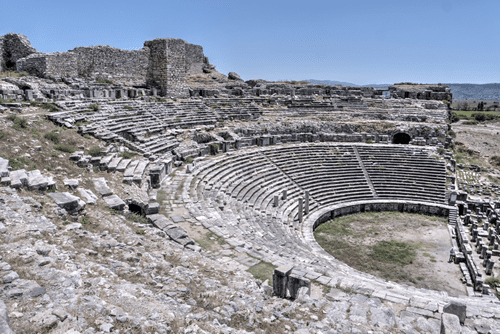
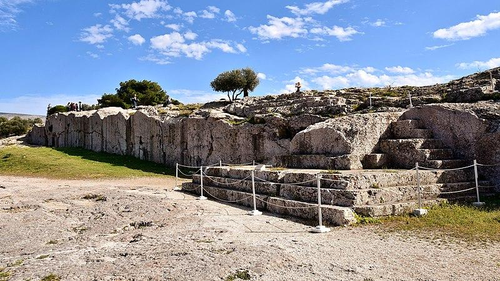
Fifth-century Athens was not an isolated city of local citizens. It was the centre of a maritime empire, a democracy shaped by imperial revenues, and an intellectual hub in which tragedy, political debate, historical writing, philosophical speculation and rhetorical experimentation flourished together.
Aspasia's later reputation makes more sense in such a setting. She was remembered not in spite of Athens' argumentative culture, but because she became part of it.
Aspasia in Athens
Beyond her Milesian birth and her father's name, the early part of Aspasia's life is almost completely lost.
By the mid-fifth century BCE, however, she appears in the orbit of Pericles.
Whatever the legal form of their union, ancient tradition is clear that Aspasia was not a passing figure in Pericles' life. She was his enduring companion, and their association was public enough to become a staple of satire, philosophy and later biography.
The legal context mattered. Pericles' citizenship law restricted political rights to those born of two citizen parents. As a woman from Miletus, Aspasia stood outside that civic boundary, which made her relationship with Pericles especially charged.
Their son later became a legal and political issue after the deaths of Pericles' legitimate sons. That episode underlines how deeply Aspasia's non-Athenian status shaped the way her life was recorded.

Later tradition also makes Aspasia's household significant. Plutarch says that Socrates sometimes visited her with companions and that some men even brought their wives to hear her discourse.
The safest conclusion is not that we can reconstruct a formal “salon” in the modern sense, but that Aspasia's house was remembered as a place associated with conversation, advice and social-intellectual exchange among people close to the Athenian elite.
Voice, Rhetoric and Reputation
Aspasia's most striking ancient association is with rhetoric.
In Plato's Menexenus, Socrates claims that Aspasia instructed him in rhetoric and connects her with the funeral oration associated with Pericles. These claims cannot be read as simple documentary reportage, but they do show that Plato expected readers to recognise Aspasia as rhetorically formidable.
Xenophon also invokes Aspasia as a figure of practical intelligence and judgement. In the Oeconomicus, Socrates says that Aspasia can explain certain matters with more knowledge than he possesses. In the Memorabilia, she is cited in discussions of matchmaking, praise and social judgement.
The Aeschines tradition is equally important. Although the relevant dialogue survives only in fragments and later testimony, it appears to have presented Aspasia as a plausible teacher-character in philosophical prose.
Taken together, these sources do not allow us to say that Aspasia ran a formal school of rhetoric or drafted specific speeches that can be securely identified.
But they do allow a narrower and historically meaningful conclusion:
Aspasia acquired a durable reputation for verbal intelligence, argumentative skill and the ability to instruct or influence others.
Satire and Historical Evidence
If the philosophical tradition helped preserve Aspasia's intellectual reputation, Old Comedy did almost the opposite.
Comic poets turned her into a target. Plutarch preserves hostile traditions that associated her with sexual insult, political manipulation and scandal.
These are not neutral reports. They are political comedy built on caricature, xenophobic suspicion and attacks on Pericles through the woman associated with him.
Modern scholarship increasingly stresses that such comedy cannot be read naively as biography. The most scandalous stories about Aspasia are often the ones with the weakest claim to literal truth.
The alleged impiety trial is a good example. Plutarch reports that Aspasia was prosecuted, but modern historians remain cautious. The safest judgement is not that the trial certainly happened or certainly did not happen, but that it belongs to the most contested part of the tradition.
Comedy wants to wound.
Philosophy wants to stage ideas.
Biography wants to narrate character.
Historical reconstruction must therefore proceed by comparison, not credulity.
Historical Reliability
Aspasia is historically real, historically important and historically elusive.
Her existence, Milesian origin, Athenian residence, association with Pericles and intellectual reputation are all supported by multiple strands of ancient evidence.
But almost everything beyond that core becomes harder to verify. She left no surviving writings of her own. The ancient testimonies are entirely male-authored. Many are indirect. Several are hostile. Some are much later than her lifetime.
Modern scholarship has therefore moved in a more cautious direction, especially when dealing with comic slander and later moralising traditions.
Historical Confidence
Existence and prominence: ★★★★★
Aspasia's existence as a prominent Milesian woman in Classical Athens is not seriously in doubt. Multiple ancient traditions refer to her in ways that presuppose a figure already well known to their audiences.
Biographical detail: ★★☆☆☆
Her early life, route to Athens, legal status with Pericles, later life and many dramatic stories told about her remain uncertain or contested.
Intellectual reputation: ★★★★☆
The combined evidence of Plato, Xenophon, the Aeschines tradition, Cicero and Plutarch makes it historically persuasive that Aspasia was remembered for rhetorical and intellectual ability.
A Lasting Contribution
The surviving evidence does not allow us to reconstruct every detail of Aspasia's life.
It does, however, allow us to reach a meaningful conclusion.
Across comedy, philosophy, biography and rhetorical tradition, Aspasia was remembered as a woman of unusual intelligence whose reputation endured long after her lifetime.
The details of her influence remain debated, but the persistence of that reputation across different kinds of ancient sources is itself historically significant.
Aspasia reminds us that history is not always about certainty.
Sometimes it is about recognising patterns in the evidence that survives, while accepting the limits of what can still be known.
That balance between evidence and uncertainty is not a weakness of history.
It is one of its greatest strengths.
Timeline
Probable birth of Aspasia in Miletus; the exact year is not known.
Aspasia is in Athens and becomes associated with Pericles; the beginning of the relationship cannot be dated securely.
Pericles' citizenship law restricts political rights to those born of two citizen parents, sharpening the civic significance of Aspasia's non-Athenian status.
Comedy, philosophy and political tradition begin attaching Aspasia's name to rhetoric, intellectual conversation and scandal.
After the deaths of Pericles' legitimate sons, ancient tradition says Pericles sought legal recognition for his son by Aspasia.
Pericles dies. Later sources attach Aspasia to Lysicles, but the historicity of that later relationship remains disputed.
Selected Sources
Ancient sources include Plato's Menexenus, Xenophon's Oeconomicus and Memorabilia, Aristotle's Constitution of Athens, Aristophanes' Acharnians, testimonia on Aeschines of Sphettus preserved through Cicero and later authors, and Plutarch's Life of Pericles.
Modern scholarship includes Madeleine M. Henry's Prisoner of History: Aspasia of Miletus and Her Biographical Tradition, Rebecca Futo Kennedy's work on Aspasia and metics, Vincent Azoulay's Pericles of Athens, Francesca Pentassuglio on Aspasia in Aeschines, and modern studies of Plato's Menexenus.
Explore Related Profiles
Help Keep These Stories Alive
If you enjoyed reading this profile and believe more forgotten voices deserve to be heard, you can help fund future research, writing, and free educational resources.
Every contribution—whether a one-off donation or monthly support—helps create new historical profiles, downloadable materials, and articles that remain freely available to everyone.
Thank you for helping history reach more people.
