

Ban Zhao
Historical Profile
Introduction
History often remembers those who conquer kingdoms, command armies or found dynasties.
Far less often does it remember those who preserve the knowledge that allows later generations to understand those achievements in the first place.
Ban Zhao belongs among those remarkable individuals.
Living during China's Eastern Han dynasty, she became one of the most influential scholars of early imperial China and the first known woman to complete one of the world's great official histories.
Her work shaped Chinese historiography for nearly two thousand years, educated members of the imperial family, and demonstrated that scholarship itself could influence the course of civilisation.
Unlike many historical figures remembered for a single achievement, Ban Zhao's legacy spans history, education, literature and political thought. She completed the monumental Book of Han, taught at the imperial court, and wrote Lessons for Women, a work that continues to generate debate among historians today.
Some readers see that text as reinforcing traditional Confucian expectations of women. Others argue that beneath its careful language lies a remarkably progressive idea for the early second century CE — that girls deserved education just as much as boys.
Exactly what Ban Zhao intended can never be known with certainty.
History is not only written by those who witness great events.
Sometimes it is preserved by those who refuse to let knowledge disappear.
China During the Eastern Han Dynasty
Ban Zhao lived during the Eastern Han dynasty, one of the great periods of early imperial China.
By her lifetime, China possessed one of the world's most sophisticated systems of government. Administration depended upon educated officials capable of reading, writing and interpreting classical texts.
Scholarship was therefore not simply an intellectual pursuit. It formed an essential part of governing one of history's largest and most complex states.
History occupied a particularly important position within Han political culture. Official dynastic histories were commissioned not merely to record past events but to preserve lessons for future rulers.
Historians were expected to document success and failure alike, allowing later generations to learn from the experiences of those who came before them. In this sense, history served as both memory and instruction.
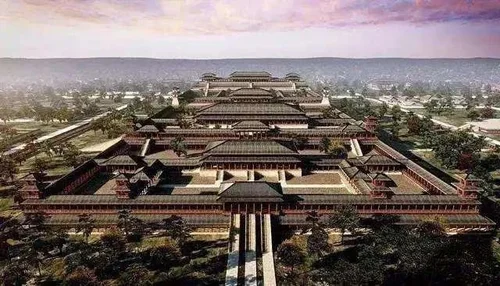
The Han court also fostered advances in astronomy, mathematics, literature and philosophy. Classical learning became closely associated with political legitimacy, and educated scholars often enjoyed considerable influence despite holding no military command.
At the same time, opportunities for women remained limited. Confucian ideals increasingly emphasised family hierarchy, filial duty and clearly defined social roles.
Elite women could sometimes receive private education, but formal scholarship remained overwhelmingly a male profession.
Against this background, Ban Zhao's career was extraordinary.
Rather than remaining on the margins of intellectual life, she became one of the most respected scholars of her generation.
The Ban Family
Ban Zhao was born around 45 CE into one of the most distinguished scholarly families of the Han Empire.
Her father, Ban Biao, had begun compiling a comprehensive history of the Western Han dynasty after recognising shortcomings in earlier historical records. Scholarship therefore surrounded Ban Zhao from childhood.
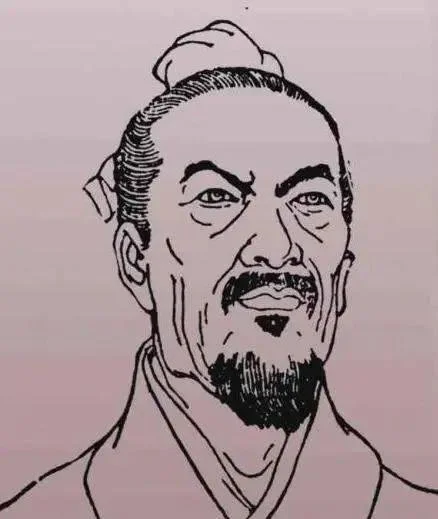
Her eldest brother, Ban Gu, inherited their father's project and developed it into what would become one of China's greatest historical works.
Another brother, Ban Chao, achieved lasting fame as a military commander whose campaigns restored Chinese influence across Central Asia and helped secure the Silk Road.
Growing up within such an exceptional family almost certainly gave Ban Zhao educational opportunities unavailable to most women of the period.
Although almost nothing survives concerning her childhood, later evidence demonstrates that she mastered literature, history, astronomy and the Confucian classics to a level that earned the respect of leading scholars throughout the empire.
She married while still young but was widowed early in life. Unlike many women of her era, she never remarried. Instead, she devoted the remainder of her life to scholarship and education.
History remembers the Ban family not only because of Ban Biao, Ban Gu and Ban Chao.
It also remembers them because Ban Zhao ensured that their greatest intellectual legacy would survive.
Completing the Book of Han
The Ban family's greatest achievement was the Book of Han, or Hanshu, the official history of the Western Han dynasty.
The project began with Ban Biao, who sought to continue the tradition established by Sima Qian while producing a more comprehensive account of the Han Empire.
Following Ban Biao's death, Ban Gu devoted decades to expanding the work. His scholarship transformed the project into an ambitious history covering politics, government, economics, astronomy, geography and the lives of notable individuals.
Then everything changed.
During political turmoil at court, Ban Gu became caught in a dispute, was imprisoned, and died in custody in 92 CE before completing the history.
The empire's most important historical project suddenly stood unfinished.
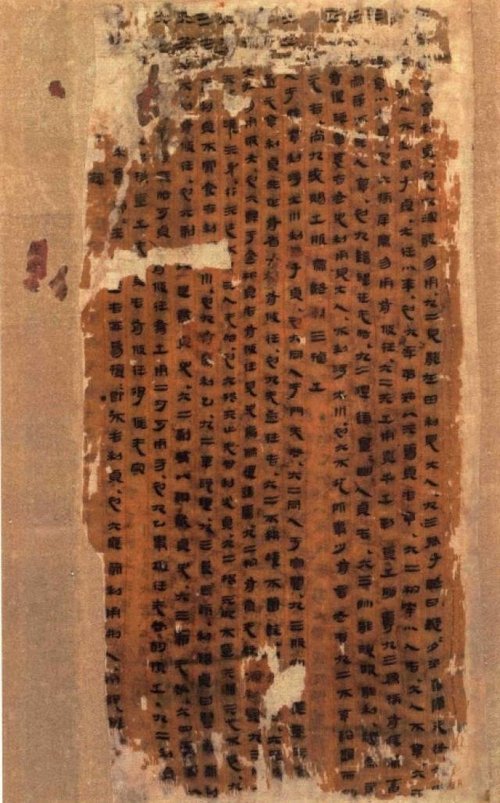
Recognising Ban Zhao's exceptional abilities, the imperial court invited her to complete the remaining sections.
The appointment itself speaks volumes. Official dynastic histories formed part of the intellectual foundation of imperial government. Entrusting such a work to anyone required extraordinary confidence. Entrusting it to a woman in second-century China was almost without precedent.
Ban Zhao organised, edited and completed important sections of the history, particularly those concerning chronology, astronomy and bibliography. She also ensured consistency throughout the enormous work before its official publication.
The completed Book of Han became one of China's celebrated Twenty-Four Histories and established the model that later dynasties would follow when recording their own past.
Historical Interpretation
Exactly how much of the surviving Book of Han was written directly by Ban Zhao remains uncertain.
Most historians agree that Ban Gu authored the majority of the text, while Ban Zhao completed unfinished sections and carried out extensive editorial work.
Because few contemporary records describe the process in detail, the precise extent of her personal authorship continues to be debated.
Sometimes the greatest contribution is not creating something entirely new.
Sometimes it is ensuring that humanity does not lose what has already been created.
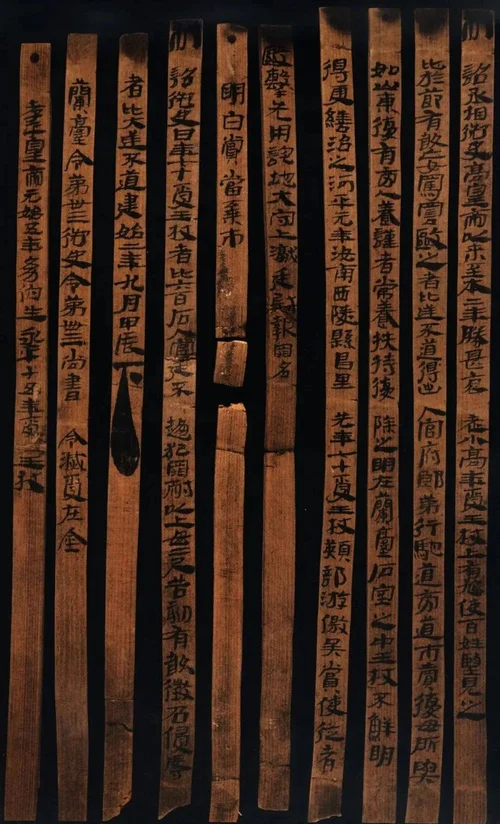
Scholar and Teacher at Court
Ban Zhao's reputation extended far beyond the completion of the Book of Han.
Her scholarship became so highly regarded that she was invited to serve at the imperial court as an educator to members of the ruling family.
Among those she instructed was Empress Deng Sui, one of the most capable female rulers in Chinese history. Following the death of Emperor He, Deng Sui became regent for the young emperor and effectively governed the Han Empire for many years.
Whether Ban Zhao directly influenced Deng Sui's political decisions can never be established with certainty.
What can be said with confidence is that the imperial court considered Ban Zhao sufficiently learned to educate those who stood closest to imperial power.
Teaching within the palace placed her in an unusually influential position. Although she held no official political office, education provided another path through which ideas could shape government.
Throughout history, teachers have often exercised influence not through public authority, but by helping form the judgement of future leaders.
Knowledge does not always influence history through public speeches or political office.
Sometimes it shapes civilisation quietly, one student at a time.
Lessons for Women
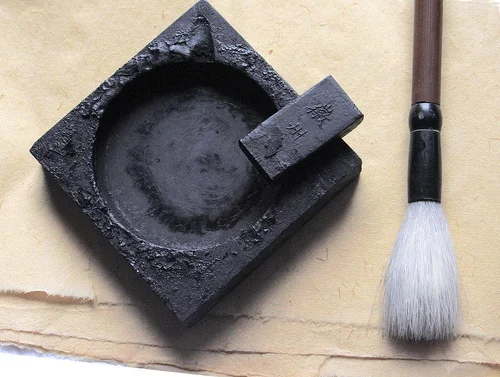
Ban Zhao's most famous independent work is Lessons for Women, or Nü Jie, written as advice for her daughters before their marriages.
Few works associated with Ban Zhao have generated more discussion among modern historians.
On its surface, the text encourages humility, diligence, respect within marriage and harmony inside the household. Many passages emphasise obedience, modesty and the responsibilities expected of women within Han society.
Viewed through modern eyes, some readers understandably find these passages restrictive.
Yet the work deserves to be read within the society in which it was written rather than through assumptions carried back from the present.
Perhaps its most remarkable feature appears not in what it says about obedience, but in what it says about education.
“Only to teach men and not to teach women — is that not ignoring the reciprocal relation between them?”
For a writer living during the early second century CE, this was an extraordinary observation.
Rather than arguing that women should remain uneducated, Ban Zhao insisted that girls deserved instruction alongside boys because both shared responsibilities within family life.
It was not a call for social revolution. Nor was it a rejection of Confucian society.
Instead, it appears to be an argument that education itself benefited everyone.
Interpreting Lessons for Women
Some historians interpret the work primarily as a handbook reinforcing Confucian expectations concerning women and family life.
Others argue that Ban Zhao was working within the realities of her own society and used accepted social language to promote something quietly progressive: greater educational opportunities for women without openly challenging the political order.
Neither interpretation can be proven conclusively. Ban Zhao's private intentions cannot now be recovered.
Whatever her personal motivations, one point remains beyond dispute.
She believed education mattered.
And she believed women should receive it.
Historical Significance
Ban Zhao's achievements extend far beyond the remarkable fact that she was a woman scholar in imperial China.
She helped preserve one of China's greatest historical works. She contributed to the development of Chinese historiography. She educated members of the imperial court. She wrote a text that continues to provoke discussion nearly two thousand years after her death.
Few individuals leave such varied intellectual legacies.
Yet perhaps her greatest contribution lies elsewhere. History often celebrates discovery. We remember inventors, explorers and reformers. Less frequently do we recognise those whose work ensures that knowledge itself survives.
Ban Zhao reminds us that preserving knowledge can shape civilisation just as profoundly as creating it.
Legacy
The influence of Ban Zhao continued long after the Eastern Han dynasty came to an end.
The Book of Han became one of China's canonical historical texts and established the structure followed by later official dynastic histories.
Historians still rely upon it today as one of the principal sources for understanding early imperial China.
Her reputation likewise endured among later generations of scholars.
Although opportunities for female education often remained limited, Ban Zhao demonstrated that intellectual excellence could command respect even within a society that imposed significant restrictions upon women.
Her work also acquired a second life through Lessons for Women. During later dynasties, the text became a standard work for the education of girls. In many cases it was interpreted more conservatively than modern historians believe Ban Zhao herself may have intended.
Today, scholars increasingly emphasise her broader achievements as historian, editor and educator rather than viewing her solely through the lens of that single work.
Ban Zhao reminds us that preserving knowledge is itself an act of creation.
Without historians, civilisations lose their memory.
Without those willing to preserve the past, history itself begins to disappear.
Historical Evidence
Well Supported
• Ban Zhao lived during the Eastern Han dynasty.
• She was the daughter of Ban Biao and sister of Ban Gu and Ban Chao.
• She helped complete the Book of Han following Ban Gu's death.
• She served as an educator within the imperial court.
• She wrote Lessons for Women, which survives today.
Debated
• The precise extent of Ban Zhao's authorship compared with her editorial contribution to the Book of Han.
• Whether Lessons for Women should be interpreted primarily as reinforcing Confucian gender roles or as a careful argument for expanding educational opportunities for women.
• The extent of her political influence through her relationship with Empress Deng Sui and other members of the imperial household.
Unknown
• Much of Ban Zhao's childhood and early education.
• Her private opinions beyond those expressed in her surviving writings.
• The precise day-to-day role she played in completing every section of the Book of Han, as contemporary records provide only limited detail.
Historical Confidence
Historical Confidence
Evidence: ★★★★★
Ban Zhao is exceptionally well documented compared with many ancient women. Multiple contemporary and near-contemporary sources confirm her life, scholarship and role in completing the Book of Han.
Biographical detail: ★★★★☆
Her family background, scholarly role and court reputation are well supported, though much of her childhood, private life and day-to-day working process remain unknown.
Interpretation of legacy: ★★★★☆
Her importance as one of the leading scholars of the Eastern Han dynasty is firmly established, while historians continue to debate the precise extent of her authorship and the meaning of Lessons for Women.
Timeline
Ban Zhao is born into the distinguished Ban scholarly family during the Eastern Han dynasty.
Her father, Ban Biao, dies. Her brother Ban Gu continues work on what becomes the Book of Han.
Ban Zhao marries but is widowed while still young, later devoting herself to scholarship and education.
Following Ban Gu's death in custody, Ban Zhao is invited by the imperial court to complete the Book of Han.
She serves as tutor and adviser within the imperial court, teaching members of the imperial family, including the future Empress Deng Sui.
Ban Zhao writes Lessons for Women, encouraging female education alongside guidance on family life.
Ban Zhao dies after a lifetime devoted to history, education and scholarship.
The Book of Han becomes one of China's Twenty-Four Histories and remains one of the foundational works of Chinese historiography.
Selected Sources
Ancient and early Chinese sources include the Book of Han, Ban Zhao's Lessons for Women, and later biographical traditions preserved in histories of the Eastern Han period.
Modern scholarship discusses Ban Zhao's role as historian, editor, educator and author, as well as the continuing debate over how to interpret Lessons for Women within the social and intellectual world of early imperial China.
Explore Related Profiles
Help Keep These Stories Alive
If you enjoyed reading this profile and believe more forgotten voices deserve to be heard, you can help fund future research, writing, and free educational resources.
Every contribution—whether a one-off donation or monthly support—helps create new historical profiles, downloadable materials, and articles that remain freely available to everyone.
Thank you for helping history reach more people.
