

Cartimandua
Historical Profile
The Queen Who Chose Alliance
Introduction
Cartimandua ruled one of the largest and most powerful political communities in Iron Age Britain.
She did not inherit a peaceful kingdom.
She ruled while Roman armies were advancing across the island, neighbouring leaders were deciding whether to resist or negotiate, and the political balance of northern Britain was being transformed by an empire whose power reached far beyond the battlefield.
Cartimandua chose alliance.
That decision made her valuable to Rome, dangerous to her enemies and deeply controversial in later memory.
She is best known for handing the defeated resistance leader Caratacus over to the Romans after he sought refuge among the Brigantes in approximately 51 CE. Roman writers presented the episode as an act of betrayal. Later retellings frequently repeated that judgement, contrasting Cartimandua’s cooperation with Rome against the armed resistance of figures such as Caratacus and Boudica.
Yet Cartimandua’s position was more complicated than the word traitor allows.
She was not a Roman governor placed over a conquered province.
She was a ruler in her own right, governing a large and potentially diverse federation whose territory lay between the Roman-controlled south and the peoples beyond Rome’s immediate reach.
Her responsibility was not to preserve a later idea of Britain as a united nation.
No such nation existed.
Her responsibility was to maintain her authority, protect her political community and survive within a rapidly changing world.
For roughly two decades, Cartimandua appears to have maintained a client relationship with Rome.
That relationship preserved a degree of local rule while helping Rome stabilise its northern frontier. It also placed Roman military power behind Cartimandua when her authority was challenged from within.
Her former husband, Venutius, eventually became her principal rival.
Their conflict combined personal separation, dynastic struggle, internal division and opposition to Roman influence. Rome intervened more than once to support Cartimandua, but during the civil wars of 69 CE it could no longer provide sufficient force to preserve her kingdom. Roman auxiliaries rescued her, while Venutius gained control of Brigantian territory.
After that moment, Cartimandua disappears from the surviving record.
Almost everything known about her was written by Roman men.
No speech in her own words survives.
No inscription commissioned by her has been identified.
No object can be securely described as her personal possession.
Even the chronology of her reign must be reconstructed from brief passages written for purposes other than recording her life.
Yet those fragments reveal something remarkable.
At a time when Roman political culture formally excluded women from sovereign office, a woman ruled the largest tribal federation in Britain known to Roman observers.
Rome negotiated with her.
Rome relied upon her.
Rome sent soldiers to preserve her rule.
Cartimandua matters not because every decision she made can be defended.
She matters because her life forces us to confront the difference between loyalty, survival and power—and because the surviving record has too often judged her according to standards created long after her world disappeared.
The Brigantes
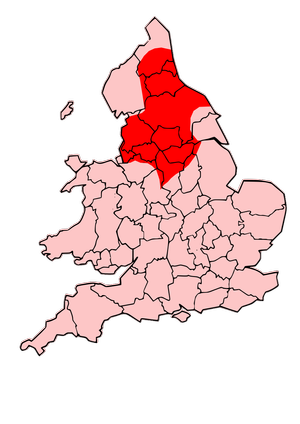
The Brigantes occupied a vast area of northern Britain.
Roman sources use a single collective name, but the Brigantes were probably not a uniform nation governed through a centralised state in the modern sense. They may have formed a federation of related communities, regional elites and subordinate groups whose loyalties had to be negotiated rather than simply commanded.
Their territory is usually associated with much of what is now northern England, extending from coast to coast and possibly reaching into parts of the southern Scottish borderlands.
Modern counties did not exist, and any map of Brigantian territory is necessarily approximate.
The scale of the region nevertheless matters.
Whoever ruled the Brigantes controlled—or attempted to influence—routes connecting the Roman south with the north and west. Brigantian territory included fertile valleys, upland pasture, mineral resources and important lines of movement through the Pennines.
This placed the Brigantes at the centre of Roman strategy.
A stable alliance could protect the northern edge of Roman-controlled Britain.
A hostile Brigantian confederation could threaten communications, shelter resistance leaders and force Rome to commit large armies to an immense landscape.
Cartimandua therefore ruled more than a remote northern people.
She occupied one of the most strategically important positions in Britain.
A Queen in Her Own Right
Tacitus describes Cartimandua as possessing distinguished ancestry and ruling the Brigantes through her own authority.
This is significant.
She was not merely presented as the wife of a king.
Venutius appears in the surviving accounts as her husband and later as her rival, but Cartimandua is consistently treated as the person whose royal position gave legitimacy to the regime.
Her authority may have rested upon lineage, inherited status, elite support and control over networks of obligation within Brigantian society.
We cannot know the precise rules of succession.
It would be unsafe to claim that Brigantian society was generally matriarchal or that power always passed through women. The evidence is too limited. What can be said is that female sovereignty was possible and recognisable among the Brigantes.
Cartimandua was not the only woman to exercise political authority in Iron Age Britain.
Boudica later led the Iceni and their allies in revolt.
Roman writers also commented upon the participation of women in political and military life among several northern European peoples.
But Cartimandua’s rule differed from the dramatic emergency leadership often attributed to a widow during rebellion.
Her reign appears prolonged, diplomatic and institutional.
She governed before, during and after major crises.
She made treaties.
She controlled captives.
She selected political partners.
She appealed for military support.
She remained a ruler for decades.
Rome Enters Britain
Roman armies invaded Britain under Emperor Claudius in 43 CE.
The invasion did not begin a simple struggle between a united Britain and a foreign empire.
Britain contained many peoples, rulers and rival political communities. Some resisted Rome. Some negotiated. Some had existing disputes with neighbours and saw Roman intervention as an opportunity. Others changed policy as circumstances changed.
Rome exploited these divisions.
It offered status, security and material reward to rulers who cooperated. Client kingdoms allowed local elites to remain in power while serving Roman strategic interests. Such arrangements reduced the need for immediate occupation and provided buffers around newly conquered territory.
Cartimandua appears to have entered such a relationship with Rome during the early phase of the conquest.
The exact date and terms are unknown.
Her kingdom was not initially absorbed into a directly administered Roman province. Instead, she retained authority while recognising Roman power and supporting Roman objectives.
This policy may have brought substantial advantages.
Alliance reduced the immediate danger of invasion.
Roman trade and diplomatic gifts may have strengthened elite networks.
Roman recognition could reinforce Cartimandua’s standing against internal rivals.
Most importantly, cooperation bought time.
Yet every benefit carried a cost.
A ruler protected by Rome could be accused of depending upon foreign power.
Roman friendship could alienate groups who opposed conquest.
Once an alliance became essential to survival, independence became increasingly difficult to separate from dependence.
Caratacus Seeks Refuge
Caratacus was one of the most persistent leaders of resistance to Rome during the first years of the conquest.
After fighting in southern Britain, he continued resistance in Wales among the Silures and Ordovices. In approximately 50 or 51 CE, Roman forces under Publius Ostorius Scapula defeated him in a major engagement.
Caratacus escaped.
He travelled north and sought protection from Cartimandua.
Why he chose the Brigantes is unknown.
He may have expected hospitality, political sympathy, kinship connections or support from anti-Roman factions. The scale of Brigantian territory made it a plausible refuge. A powerful northern federation might have allowed him to rebuild resistance beyond the immediate reach of Roman forces.
Cartimandua refused him sanctuary.
She had Caratacus restrained and delivered to the Romans.
The decision secured her value as an ally and prevented her territory from becoming the centre of a renewed war.
For Rome, the capture was a major political victory.
Caratacus had resisted for years and had become a symbol of opposition. He was taken to Rome, where Tacitus attributes to him a speech before Emperor Claudius. His life was spared, and his appearance in the imperial capital became part of Roman triumphal storytelling.
Cartimandua’s role was essential.
Without her decision, Caratacus might have continued resistance.
Because of that, later histories often reduce her reign to a single word:
Betrayal.
Betrayal or Statecraft?
The accusation of betrayal assumes that Cartimandua and Caratacus owed loyalty to a common country.
That assumption is difficult to sustain.
Iron Age Britain was not a unified kingdom. The Brigantes, Catuvellauni, Iceni, Silures and other peoples possessed distinct leadership structures, interests and rivalries. They could cooperate, compete or remain neutral according to circumstance.
Caratacus was resisting Rome.
Cartimandua had chosen alliance.
By entering Brigantian territory, he placed her in an impossible position.
If she protected him, she risked war with Rome and strengthened opponents within her own federation who might prefer a more confrontational policy.
If she surrendered him, she preserved the alliance but associated her authority more closely with Roman power.
Her choice was ruthless.
It may also have been strategically rational.
A ruler is not absolved from moral judgement simply because a decision served political survival. Caratacus came seeking safety and was delivered to an enemy who might have executed him. Cartimandua must bear responsibility for that act.
But historical judgement should begin with the world she inhabited, not with a national loyalty invented centuries later.
She did not betray Britain.
She chose the interests of her own rule and kingdom over those of another leader.
Whether that was wisdom, opportunism or both remains open to debate.
Wealth and Roman Support
Tacitus associates the surrender of Caratacus with increased wealth and influence for Cartimandua.
Roman alliance often worked through reward.
Prestige goods, diplomatic recognition, trade access and military assistance could strengthen rulers whose cooperation benefited the empire. These rewards were not simply personal luxuries. In societies where authority depended upon generosity, display and relationships with other elites, imported objects could become political tools.
Archaeology across northern Britain reveals communities connected to wide networks of exchange long before and during the Roman conquest.
Metalwork, horse equipment, vessels and decorative objects demonstrate technical skill and elite display. Some objects show connections with broader traditions across Britain and continental Europe.
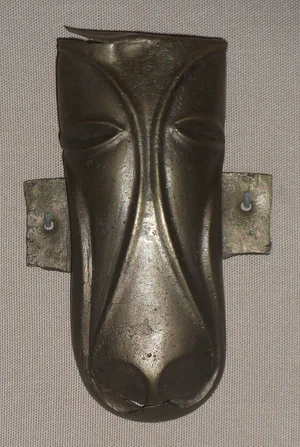
The Stanwick Horse Mask is one surviving example.
Its stylised form and careful metalworking belong to the cultural environment in which Cartimandua ruled. The object may once have been attached to a wooden vessel or another prestigious item.
It should not be described as Cartimandua’s possession.
Its value lies elsewhere.
It reminds us that the Brigantes were not merely names in a Roman military narrative. They inhabited wealthy, creative and politically sophisticated communities whose material culture existed independently of Rome.
Stanwick and the Problem of a Capital
The enormous Iron Age fortifications at Stanwick in North Yorkshire have often been associated with Cartimandua, Venutius or both.
The site enclosed hundreds of hectares and was expanded in stages around the period of the Roman conquest. Its earthworks, entrances and material remains indicate a major centre of power.
Earlier interpretations sometimes described Stanwick as the stronghold of Venutius, constructed for resistance against Rome.
Later excavation and reassessment complicated that picture.
Some archaeologists have argued that parts of the complex may instead reflect the wealth and authority of Cartimandua’s pro-Roman regime. Its scale may have served display, assembly, settlement, exchange and elite control as much as defence.
No surviving inscription names its ruler.
Stanwick cannot be identified with certainty as Cartimandua’s capital.
Indeed, the idea of a single permanent capital may impose a later model upon a federation governed through multiple centres.
Nevertheless, Stanwick demonstrates the resources available within Brigantian territory.
Cartimandua did not rule from a marginal village awaiting civilisation from Rome.
She governed within a landscape capable of sustaining monumental construction, specialist craftsmanship and large political gatherings.
Venutius
Venutius first appears in the surviving record as Cartimandua’s husband.
Tacitus describes him as skilled in war and initially loyal to Rome through the alliance surrounding Cartimandua.
His exact origins remain uncertain.
He may have belonged to another leading group within the Brigantian federation, possibly the Carvetii of the north-west, although this cannot be proved. If so, the marriage may have joined powerful regional interests.
The relationship between Cartimandua and Venutius was therefore probably political as well as personal.
Cartimandua possessed the royal legitimacy.
Venutius possessed military standing.
Together, they may have represented a balance between dynastic authority and warrior leadership.
That balance did not last.
At some point after the surrender of Caratacus, the marriage collapsed and Venutius became Cartimandua’s enemy.
Tacitus presents the conflict through the language of marital scandal.
Cartimandua dismissed Venutius and elevated Vellocatus, described as Venutius’s armour-bearer, into partnership and royal power.
For the Roman historian, this was evidence of sexual and social disorder.
For the Brigantian elite, it may have represented a profound rearrangement of political authority.
Vellocatus and the Politics of Marriage
Vellocatus is known only through the hostile framing of Tacitus.
He is usually described as Cartimandua’s lover and as the former armour-bearer of Venutius. Tacitus emphasises his lower rank and portrays Cartimandua’s preference as both morally corrupt and socially degrading.
That presentation requires caution.
Roman elite writers used accusations concerning sexuality, uncontrolled desire and inappropriate partners to discredit powerful women. The same culture that celebrated male rulers for taking lovers often treated female sexual autonomy as evidence of political unfitness.
Cartimandua may indeed have formed a personal relationship with Vellocatus.
But the surviving account tells us more about Roman attitudes than it does about her private motives.
Elevating Vellocatus may have served a political purpose.
He may have commanded loyalty among warriors formerly attached to Venutius. He may have possessed military expertise or personal influence. By placing him beside her, Cartimandua could have attempted to divide her former husband’s supporters and create a new centre of allegiance.
The decision was dangerous.
It challenged hierarchy.
It alienated Venutius.
It may have offended elites whose support depended upon recognised status and established lineage.
But describing the episode only as romantic scandal turns a struggle over sovereignty into gossip.
The First Conflict
The breakdown of Cartimandua’s marriage produced armed conflict.
Tacitus’s compressed chronology makes the sequence difficult to reconstruct, but Venutius appears to have mobilised opposition and threatened Cartimandua’s rule during the governorship of Aulus Didius Gallus, probably in the 50s CE.
At one stage, Cartimandua captured members of Venutius’s family.
Venutius responded by gathering forces and attacking her position.
Rome intervened.
Auxiliary units initially faced severe fighting, and a legionary force under Caesius Nasica was sent to restore the situation. Venutius was defeated, and Cartimandua remained in power.
This episode reveals the reality beneath the language of alliance.
Cartimandua’s throne was now protected by Roman soldiers.
That assistance preserved her rule, but it also strengthened every accusation that she governed through foreign support.
Venutius could present himself not merely as a rejected husband but as a leader resisting Roman interference.
A personal and dynastic dispute had become inseparable from the wider conquest of Britain.
Between Boudica and Rome
In 60 or 61 CE, Boudica led a major revolt in south-eastern Britain.
The Iceni and their allies destroyed Camulodunum, Londinium and Verulamium before Roman forces defeated them.
Cartimandua’s response is not recorded.
There is no reliable evidence that she joined the rebellion.
Her continuing client relationship suggests that she remained aligned with Rome, but the silence of the sources prevents certainty about how the revolt affected Brigantian politics.
The contrast between Boudica and Cartimandua has often shaped their later reputations.
Boudica resisted and became a national heroine.
Cartimandua cooperated and became a traitor.
Yet the contrast is misleading when treated as a simple test of courage.
Boudica’s revolt followed Roman abuse, confiscation and violence against her family and people. Her political circumstances differed fundamentally from Cartimandua’s.
Cartimandua’s alliance preserved her kingdom outside direct provincial administration for many years.
Boudica chose rebellion after Rome violated the arrangement upon which Iceni security had depended.
Both women made decisions within systems of pressure they did not create.
One challenged Rome through war.
The other attempted to survive beside it.
History needs space for both.
The Year of Four Emperors
In 68 CE, Emperor Nero died.
The Roman Empire entered a period of civil war in which Galba, Otho, Vitellius and Vespasian competed for power. Armies declared loyalty to rival emperors, commanders shifted allegiance and military resources were drawn towards struggles elsewhere.
For Roman allies on the frontiers, imperial instability created danger.
Rome’s promise of protection depended upon its ability to send troops.
Venutius recognised the opportunity.
In 69 CE, he launched another and more successful challenge against Cartimandua.
Tacitus reports that opposition spread and that Cartimandua again appealed to Rome.
This time, the empire could not provide the same level of intervention.
Auxiliary troops were sent and succeeded in rescuing her from immediate danger.
They did not preserve her kingdom.
Venutius gained control.
Cartimandua escaped with her life but lost the authority she had maintained for decades.
Fall from Power
The Roman rescue of Cartimandua in 69 CE is the last securely recorded event of her life.
We do not know where she went.
She may have lived under Roman protection elsewhere in Britain.
She may have entered a military settlement, a client court or a private estate.
She may have died soon afterwards or survived for many years.
No surviving source tells us.
Her disappearance is striking because Rome had once treated her as an important ally.
While she possessed strategic value, historians recorded her decisions.
Once she lost her kingdom, she ceased to matter to the narratives they were writing.
This is a common form of historical erasure.
People do not always vanish because nothing happened to them.
They vanish because the surviving writers stopped looking.
After Cartimandua
Venutius’s victory did not secure lasting independence for the Brigantes.
Once Vespasian established control of the empire, Rome resumed expansion in Britain.
Governors including Quintus Petillius Cerialis campaigned in Brigantian territory during the early 70s CE. Forts and roads extended Roman military power across the north.
The process was not immediate or complete.
Resistance continued, and different Brigantian communities may have responded in different ways. Roman control developed through campaigns, garrisons, negotiation and gradual incorporation.
Cartimandua’s alliance had delayed this direct conquest.
Whether it could ever have prevented it permanently is doubtful.
Client kingdoms were useful to Rome while they served imperial strategy.
They were rarely equal partnerships.
Once local instability threatened Roman interests—or once the empire possessed sufficient military capacity—indirect rule could give way to annexation.
Cartimandua preserved political space for a generation.
She could not control the future of an expanding empire.
Tacitus and the Surviving Record
Most of the written evidence for Cartimandua comes from Tacitus.
He was born around the middle of the first century CE and wrote decades after several of the events he described. His Annals and Histories are indispensable sources, but they are not neutral transcripts.
Tacitus was a Roman senator, historian and moral critic.
He organised events to explore power, corruption, character and imperial decline. His portraits often use dramatic contrasts and moral language. Women who exercised political influence could become symbols of disorder, luxury or uncontrolled desire.
His treatment of Cartimandua reflects these conventions.
He acknowledges her royal authority and strategic importance, yet frames her conflict with Venutius through sexual scandal and betrayal. Venutius is associated with martial courage and hostility to Rome. Cartimandua is associated with wealth, desire and dependence upon foreign arms.
These descriptions may preserve genuine elements of the conflict.
They also shape how later generations see her.
Because no Brigantian account survives to answer Tacitus, his judgement became the foundation of Cartimandua’s reputation.
Reading critically does not mean rejecting him.
It means asking what he knew, why he selected particular details and which assumptions guided his portrayal.
The Problem with “Celtic Queen”
Cartimandua is often called a Celtic queen.
The term can be useful as a broad cultural label, but it can also imply a unity that did not exist.
The peoples whom Roman writers encountered in Britain did not necessarily identify themselves as members of a single Celtic nation. They belonged to particular communities, kinship groups and political networks.
Cartimandua was specifically the ruler of the Brigantes.
That identity tells us more about her political world than a general label applied across much of Iron Age Europe.
Similarly, describing the Brigantes as a tribe can make their society sound smaller or simpler than the evidence suggests.
They may have formed a complex federation covering an area larger than many later kingdoms.
Language matters because labels can quietly reduce the scale of the people being described.
Cartimandua was not a minor chieftainess standing at the edge of Roman civilisation.
She was a major ruler negotiating with the most powerful empire in western Eurasia.
Female Rule and Roman Anxiety
Roman society permitted women to hold wealth, influence households and shape political networks, but formal military and civic offices were overwhelmingly reserved for men.
A ruling queen therefore created discomfort.
Roman writers could admire a powerful woman’s courage while still portraying female sovereignty as unnatural, dangerous or humiliating to men.
Cartimandua’s authority challenged Roman expectations in several ways.
She ruled by hereditary right.
She selected and rejected male partners.
She controlled the fate of a famous warrior.
She commanded loyalty over a vast territory.
Rome needed her cooperation, even while Roman political culture distrusted what she represented.
This tension appears within Tacitus’s writing.
Cartimandua is powerful enough to alter the course of the conquest, but her power is repeatedly explained through moral defect.
Her wealth becomes greed.
Her new alliance becomes lust.
Her diplomacy becomes treachery.
Her request for military aid becomes weakness.
Male rulers also betrayed allies, accepted Roman support, changed partners and fought dynastic wars.
They were not always judged through the same vocabulary.
Political Survival
Cartimandua’s reign can be understood as a sustained attempt at political survival.
She faced pressure from at least three directions.
Rome expected loyalty and strategic cooperation.
Internal elites expected her to preserve legitimacy and distribute power.
Anti-Roman forces could portray alliance as submission.
No decision satisfied all three.
Surrendering Caratacus strengthened Roman support but damaged her standing among opponents of the empire.
Separating from Venutius may have asserted personal and dynastic control but fractured the political coalition sustaining her rule.
Elevating Vellocatus created a new partnership but challenged established status.
Calling upon Roman troops preserved her life and throne in the short term but made dependence visible.
Her strategy succeeded for many years.
That achievement should not be underestimated.
Rome conquered large areas of southern Britain soon after 43 CE. Cartimandua retained rule over the north into 69 CE. She negotiated, adapted and survived through the reigns of Claudius, Nero, Galba, Otho and Vitellius.
Her fall came not because alliance was always ineffective, but because Rome temporarily lost the capacity to uphold it.
Barriers She Faced
Cartimandua ruled during invasion, civil conflict and political fragmentation.
She faced the military pressure of an expanding empire.
She governed a large federation whose internal loyalties were probably uneven.
Her legitimacy depended upon elite support that could shift towards a rival.
Her husband possessed military prestige and later mobilised opposition against her.
Her new political partnership was attacked as socially illegitimate.
Her alliance with Rome gave her protection but exposed her to accusations of dependence.
Her enemies could combine opposition to her personal authority with resistance to foreign conquest.
She had no permanent Roman guarantee.
When imperial civil war redirected military resources, the structure supporting her rule failed.
Finally, her history was preserved almost entirely by writers who were culturally suspicious of female sovereignty and politically invested in Rome’s version of events.
Cartimandua had to survive her own century.
Her reputation then had to survive the judgement of Rome.
Legacy
Cartimandua’s legacy remains divided.
To some, she is the queen who betrayed Caratacus.
To others, she is a pragmatic ruler who protected her people from a war they were unlikely to win.
She has been described as collaborator, diplomat, opportunist, survivor and strategist.
Each label captures part of the story.
None captures all of it.
Her alliance did not preserve complete independence.
Rome’s power shaped her choices and ultimately absorbed Brigantian territory.
But cooperation was not the same as passivity.
Cartimandua used Roman power for her own political purposes just as Rome used her kingdom for imperial security.
The relationship was unequal, but it was still negotiated.
Her career also demonstrates the danger of judging historical women primarily through their relationships with men.
She is remembered as the woman who surrendered Caratacus, rejected Venutius and selected Vellocatus.
Yet behind those three men stood a queen who ruled for decades.
Her reign was not an interruption in their stories.
Their stories intersected with hers.
Why Cartimandua Matters
Cartimandua matters because she disrupts the simple stories often told about conquest.
Empire did not advance only through battles.
It advanced through treaties, rewards, hostages, marriages, trade, military assistance and the calculations of local rulers.
Resistance was not the only form of agency.
Alliance was also a choice, even when made under severe pressure.
That does not make every alliance honourable.
It makes it historical.
Cartimandua also matters because her rule exposes the limitations of later national memory.
Britain often celebrates figures who fought Rome because resistance can be woven into a patriotic story.
A queen who negotiated with Rome is harder to use.
She refuses the role of uncomplicated heroine.
But history does not exist to provide uncomplicated heroes.
It exists to help us understand human decisions.
Cartimandua chose stability over solidarity with Caratacus.
She chose Roman support over reconciliation with Venutius.
She chose a new political partner despite the risk to her legitimacy.
She retained power for years and then lost it when the imperial system upon which she relied became unstable.
Her decisions had consequences for herself, her rivals and the people she ruled.
We should neither excuse those decisions automatically nor condemn them through a myth of national betrayal.
We should examine them.
Cartimandua’s life asks a question that remains relevant whenever a smaller power confronts a stronger one:
When resistance may bring destruction and alliance may bring dependence, what does responsible leadership look like?
There is no answer without cost.
Key Achievements
Key Achievements
- Ruled the Brigantes, one of the largest and most strategically important political federations in Iron Age Britain.
- Exercised sovereignty in her own right rather than merely through marriage to a male ruler.
- Maintained a client alliance with Rome for approximately two decades during the conquest of Britain.
- Preserved substantial local rule in Brigantian territory while much of southern Britain came under direct Roman administration.
- Made the decision to surrender Caratacus to Rome, decisively affecting the course of early resistance to the conquest.
- Survived an internal struggle with Venutius after the collapse of their marriage and retained power with Roman military support.
- Navigated the reigns of several Roman emperors and repeated changes in the military balance of Britain.
- Demonstrated that sustained female sovereignty was accepted within at least some political communities of Iron Age Britain.
- Remains one of the earliest individually documented women rulers in the history of Britain.
Key Dates
Cartimandua is born into a leading Brigantian lineage; her exact date and place of birth are unknown.
Becomes ruler of the Brigantes, apparently through hereditary authority in her own right.
Roman armies invade Britain under Emperor Claudius.
Cartimandua’s client relationship with Rome is established or consolidated; the exact date and terms are not recorded.
Caratacus is defeated by Roman forces in Wales and seeks refuge among the Brigantes.
Cartimandua captures Caratacus and hands him over to Rome.
Her relationship with Venutius collapses, producing a struggle over Brigantian power.
Cartimandua elevates Vellocatus, formerly associated with Venutius, into a position of royal partnership.
Venutius challenges Cartimandua; Roman forces intervene and preserve her rule.
Boudica leads a major revolt in southern Britain. Cartimandua’s direct role, if any, is not recorded.
Emperor Nero dies, beginning a period of Roman civil war.
During the Year of Four Emperors, Venutius launches another challenge against Cartimandua.
Roman auxiliaries rescue Cartimandua, but Venutius gains control of the Brigantian kingdom.
Cartimandua disappears from the surviving historical record; the date and circumstances of her death are unknown.
Roman governor Quintus Petillius Cerialis campaigns against the Brigantes as Rome expands direct control in northern Britain.
Roman forts, roads and military administration spread more deeply through former Brigantian territory.
Tacitus’s surviving works establish the written framework through which Cartimandua will be remembered.
Final Reflection
Cartimandua did not leave us her explanation.
We do not know what she said when Caratacus arrived seeking protection.
We do not know how she justified alliance with Rome to the Brigantian leaders whose support she required.
We do not know whether she believed cooperation would preserve her people, preserve her throne or preserve both.
We do not know what she felt when Venutius became her enemy.
We do not know where she went after Roman soldiers carried her from a kingdom she had ruled for decades.
The silence invites certainty.
Later writers filled it with familiar roles.
The treacherous woman.
The faithless wife.
The Roman puppet.
The queen who chose the wrong side.
But history is rarely divided so cleanly.
Cartimandua ruled before Britain existed as a nation.
She faced an empire that had defeated kingdoms from the Mediterranean to the Atlantic.
She chose accommodation and preserved her authority for a generation.
That choice protected some interests and sacrificed others.
It prevented some wars and helped Rome win another.
It gave her power and made that power dependent upon forces she could not command.
Her story is not a lesson that alliance is wiser than resistance.
Nor is it proof that compromise is cowardice.
It is a reminder that leaders make decisions without knowing how later centuries will arrange them into heroes and villains.
Cartimandua was judged by Rome because Rome wrote the surviving account.
She was judged by later Britain because later Britain wanted ancestors who resisted conquest.
Between those judgements stands the ruler herself:
A woman governing a vast northern federation.
A diplomat negotiating with an empire.
A queen defending her authority against a former partner.
A political survivor who eventually reached the limit of survival.
Cartimandua did not disappear because she was unimportant.
She disappeared because the record followed the men and armies that came after her.
Her history waits in the space between conquest and resistance, where choices are hardest and certainty is least honest.
Did You Know?
Did You Know?
- Cartimandua appears to have ruled the Brigantes in her own right; Venutius’s status derived partly from his relationship with her.
- The Brigantes occupied a vast area across northern Britain, but their precise boundaries cannot be mapped with certainty.
- There was no unified British nation for Cartimandua to betray when she surrendered Caratacus to Rome.
- Her client relationship allowed the Brigantes to retain local rule for years after Rome conquered much of southern Britain.
- Tacitus is the principal written source for her life, but he wrote from a Roman male elite perspective and used moralising language.
- Vellocatus is known only through Tacitus, who emphasised his lower status as part of his criticism of Cartimandua.
- Roman troops intervened more than once to preserve Cartimandua’s authority against Venutius.
- The vast Stanwick fortifications are often associated with Cartimandua or Venutius, but no evidence proves that the site was the permanent capital of either ruler.
- The Stanwick Horse Mask cannot be linked personally to Cartimandua, although it belongs to the material culture of her region and period.
- Cartimandua’s fate after her rescue in 69 CE is completely unknown.
- Her reign lasted far longer than Boudica’s revolt, yet she remains much less familiar in popular history.
- She is among the earliest women known by name to have exercised sustained sovereign authority in Britain.
Further Reading
- Tacitus — Annals, Book XII, especially the accounts of Caratacus and conflict involving Venutius
- Tacitus — Histories, Book III, for the fall of Cartimandua during the Year of Four Emperors
- English Heritage — “Cartimandua, Queen of the Brigantes”
- University of Warwick — “Cartimandua and the Brigantes” and its translated selections from Tacitus
- British Museum — collection record for the Stanwick Horse Mask
- English Heritage — Stanwick Iron Age Fortifications
- David Braund — Ruling Roman Britain: Kings, Queens, Governors and Emperors from Julius Caesar to Agricola
- Nicki Howarth — Cartimandua: Queen of the Brigantes
- Stanwick excavation reports and modern archaeological studies of Brigantian power in northern Britain
Image Credits
Approximate Brigantian territory map: Modern map showing an approximate reconstruction of Brigantian territory against ceremonial county boundaries. The ancient boundaries remain uncertain. Confirm the original creator and reuse terms attached to the source file before publication.
Stanwick Horse Mask: Photograph by Johnbod, 17 September 2010, via Wikimedia Commons. The object is a copper-alloy Iron Age mount in the British Museum, museum number 1847,0208.82. Confirm the current Commons licence and attribution wording before publication.
Explore Related Profiles
Help Keep These Stories Alive
If you enjoyed reading this profile and believe more overlooked voices deserve to be heard, you can help fund future research, writing, and free educational resources.
Every contribution—whether a one-off donation or monthly support—helps create new historical profiles, downloadable materials, and articles that remain freely available to everyone.
Thank you for helping history reach more people.
