

Damiana da Cunha
Historical Profile
The Woman the Colonial State Could Not Replace
Introduction
When Damiana da Cunha returned to São José de Mossâmedes early in 1831, she had been travelling through the interior of central Brazil for approximately eight months. Thirty-two Indigenous people accompanied her, and provincial authorities received the returning expedition with satisfaction because she had once again achieved something the government repeatedly struggled to accomplish without her: she had entered the sertão, spoken with Kayapó communities and persuaded a group of people to accompany her towards a colonial settlement.
The journey, however, had taken a severe physical toll. Damiana arrived seriously ill and died within weeks, probably between early February and early March 1831. She was buried in the church at São José de Mossâmedes, the settlement with which much of her adult life had been associated.
Her death did not merely bring one remarkable life to an end. It exposed how dependent the colonial and early imperial administration had become upon the authority of a single Indigenous woman. Kayapó departures from Mossâmedes increased, and officials discovered that the relationships Damiana had cultivated could not be transferred automatically to another expedition leader or recreated through an administrative appointment.
That aftermath offers one of the clearest indications of her historical importance.
Damiana had been born around 1779 into the Indigenous world that Portuguese settlers and officials described collectively as Kayapó. As a young child, she was baptised into Catholicism and given the Portuguese name by which she is now remembered. Luís da Cunha Menezes, then governor and captain-general of Goiás, became her godfather, and she received his surname.
Through this relationship, Damiana grew up with unusual access to Portuguese colonial society. She learned its language, religious practices and political expectations while retaining the Indigenous language, family connections and cultural knowledge that allowed her to communicate with Kayapó communities. That combination eventually made her one of the most effective political intermediaries in the history of colonial Goiás.
Portuguese and, later, Brazilian authorities wanted Indigenous people to enter aldeamentos: settlements in which missionaries and administrators attempted to concentrate populations, encourage agriculture, impose Catholic instruction and bring Indigenous communities within colonial systems of labour and political control. Many Indigenous people resisted these settlements, while others entered them temporarily before leaving and returning to communities in the interior.
Officials could send soldiers into the sertão, but military expeditions produced violence and resistance. Damiana offered another possibility. She could travel among Kayapó communities, speak in a language they understood and draw upon relationships that no colonial appointment could manufacture. Her expeditions therefore relied upon a mixture of kinship, persuasion, personal reputation and the wider pressure created by an expanding colonial state.
This makes her life historically significant but morally difficult.
Damiana has sometimes been celebrated as an Indigenous diplomat who protected her people by negotiating with colonial power. Older Brazilian histories portrayed her as a Christian heroine who brought supposedly uncivilised communities towards religion and settled life. More critical interpretations have presented her as an agent of colonial assimilation who helped remove Indigenous people from independent communities and place them under administrative control.
Each interpretation identifies something real, but none can explain her completely.
Damiana undoubtedly worked within a system intended to transform Indigenous society, and the aldeamentos she served were instruments of colonial expansion. At the same time, the surviving documents repeatedly show that her authority rested upon Indigenous relationships rather than upon colonial force alone. She was not merely carrying out instructions issued by others; she possessed political influence that governors, soldiers and even her own husbands could not reproduce.
What the surviving record does not preserve is Damiana’s own account of what she believed she was doing. We do not know whether she regarded settlement as a means of protecting Kayapó people from military destruction, whether she sincerely believed that Catholicism and colonial life offered a desirable future, or whether she understood her work as a pragmatic response to circumstances that had already narrowed the choices available to Indigenous communities.
These possibilities need not exclude one another. Damiana may have acted from several motives that changed over time, as people often do.
Her history therefore demands something more difficult than either celebration or condemnation. It asks us to recover an Indigenous woman as a political actor within a colonial world she did not create but learned to navigate with exceptional ability.
Birth, Ancestry and an Indigenous Name Lost to History
Damiana was probably born around 1779 in the Captaincy of Goiás, although neither the precise date nor the exact place of her birth can be established securely. Much of what is known about her early life comes from records created after she had become useful to the colonial administration, and those documents were more interested in her expeditions and political influence than in preserving the circumstances of her childhood.
Her Indigenous name is unknown.
That absence is not a minor biographical gap. The name Damiana da Cunha belongs to the Catholic and Portuguese world into which she was baptised, while the name by which her own family may first have known her was never preserved in the written archive. Her life must therefore be reconstructed through records that begin by renaming her.
Damiana belonged to an important Kayapó family and has traditionally been identified as a granddaughter of Angraí-oxá, a prominent Indigenous leader involved in developing relations with Portuguese authorities in Goiás. The precise details of her parentage are less certain, and claims that assign a definite Portuguese or Indigenous identity to each parent should be treated cautiously unless supported by stronger documentation.
Even the word Kayapó requires explanation.
Portuguese colonial writers used forms such as Caiapó or Cayapó to describe Indigenous populations distributed across a large area of central Brazil. The label did not necessarily correspond exactly to the names communities used for themselves, and colonial officials sometimes grouped together peoples whose identities and political relationships were more complicated than their reports acknowledged.
Modern historians often use the term Southern Kayapó for the communities connected with Damiana’s history, distinguishing them from Kayapó peoples living farther north. Even this is an analytical category rather than a perfect reproduction of eighteenth-century Indigenous identity.
What can be established with greater confidence is that Damiana possessed ancestry and family relationships linking her to the Indigenous political world that the colonial authorities were attempting to influence. She was not a Portuguese emissary who merely learned an Indigenous language before travelling among unfamiliar communities. Her effectiveness depended substantially upon the fact that she was connected to the people with whom she negotiated.
Damiana had a brother named Manoel da Cunha, who also became involved in Indigenous affairs and appears in records alongside her. Both siblings occupied an unusual social position, having been born into a Kayapó family but raised with significant access to Portuguese colonial institutions.
This position began to take shape when Damiana was still a very young child.
Baptism and the Governor’s Household
In 1781, Damiana and her brother were baptised into the Catholic Church. Damiana was probably about two years old, which means she could not have made an informed personal choice about the religious and social identity being created for her.
Her baptismal godfather was Luís da Cunha Menezes, governor and captain-general of Goiás. She received the Christian name Damiana and the surname Cunha, linking her publicly with one of the most powerful officials in the captaincy.
The relationship should not be romanticised as a simple story of a benevolent governor rescuing or adopting an Indigenous child. Baptism possessed profound religious meaning in Portuguese society, but godparenthood also created relationships of patronage, obligation and political alliance. A powerful godfather might offer protection, status and access, while the baptism of a child from an important Indigenous family could strengthen connections between colonial authorities and Indigenous leaders.
Historical accounts suggest that Damiana spent at least part of her childhood within the governor’s household or under his protection. The precise circumstances are not perfectly documented, and later writers sometimes embellished the relationship in order to portray Damiana as a favoured child raised almost entirely within elite Portuguese society.
The broader consequences are much clearer than the domestic details.
Damiana acquired an intimate understanding of the colonial world. She became familiar with Catholic practice, Portuguese language and the forms of behaviour expected by administrators, soldiers and settlers. She learned how authority was expressed within the institutions that were expanding across Goiás.
Yet this upbringing did not erase her Indigenous language or sever her relationships with Kayapó communities. Indeed, the abilities that later made her indispensable depended upon those connections surviving.
Damiana therefore developed knowledge that few colonial officials possessed. She could communicate across political and cultural boundaries because she understood more than one system from within. To Portuguese authorities, she could appear Christian, reliable and familiar with colonial expectations. To Kayapó communities, she was connected through ancestry, language and family relationships that no Portuguese officer could claim.
It is tempting to describe her as living between two worlds, but that familiar expression can be misleading because it suggests two stable societies separated by a clear boundary.
The Goiás of Damiana’s childhood contained no such boundary. Indigenous communities, settlers, missionaries, soldiers and officials already interacted through warfare, trade, negotiation, conversion, flight and family connection. People moved into colonial settlements and later left them; administrators alternated between persuasion and armed intervention; new communities developed in which Indigenous and Portuguese social practices met without becoming equal.
Damiana did not grow up standing between two untouched worlds. She grew up inside a frontier created by their unequal and increasingly violent encounter.
Goiás and the Expansion of Colonial Settlement
The Portuguese presence in Goiás had expanded rapidly after gold was discovered in central Brazil during the 1720s. Mining attracted settlers, generated new towns and intensified Portuguese interest in controlling roads, rivers, agricultural land and labour.
For Indigenous peoples already living in the region, the expansion brought displacement, disease and repeated military conflict. Kayapó warriors resisted the penetration of settlers and attacked roads, farms and mining communities, while Portuguese authorities organised punitive expeditions intended to destroy opposition and make the interior safer for colonial settlement.

By the later eighteenth century, officials increasingly combined military force with policies of attraction and aldeamento. The objective was not simply to end warfare but to incorporate Indigenous populations into a colonial order.
The establishment of São José de Mossâmedes in 1775 formed part of this programme.
An aldeamento was not simply an Indigenous village recognised by the Portuguese administration. It was a settlement created or reorganised so that Indigenous populations could be concentrated in locations where missionaries and officials could supervise them. Residents were expected to accept Catholic instruction, agricultural labour and forms of authority compatible with colonial government.
The stated objectives often included protection, conversion and civilisation. In practice, aldeamentos also provided labour, strengthened Portuguese claims to territory and reduced the ability of Indigenous communities to remain politically independent.
Indigenous people did not respond in a single way. Some entered settlements because of military pressure; some may have regarded them as places of refuge or access to European goods; others moved between an aldeamento and communities in the interior. Many simply left when the conditions became intolerable or when the promises made by officials failed to materialise.
São José de Mossâmedes brought together people from different Indigenous backgrounds. Material shortages, labour demands, disease and tensions between communities contributed to instability, while colonial administrators frequently failed to provide the resources necessary to support the populations they wanted to settle.
From the government’s perspective, the repeated departures represented administrative failure and a threat to colonial security. From the perspective of those leaving, departure could mean escape, family reunion, return to an independent community or rejection of a life imposed upon them.
The surviving records rarely preserve the individual reasons.
Officials wanted people persuaded or compelled to return, and Damiana gradually became the person they trusted to find them.
Marriage and Adult Life at Mossâmedes
Damiana appears to have married for the first time while still very young, probably at about fourteen years of age. Her husband, José Luiz da Costa, was a sergeant connected with colonial military society.
The marriage further embedded Damiana within the institutions surrounding Mossâmedes, although the surviving evidence tells us little about the private relationship between husband and wife. Administrative and ecclesiastical documents preserve marriages because they mattered to church and government, but they rarely provide reliable access to affection, companionship, conflict or the ordinary experiences of domestic life.
Damiana was widowed in 1809. By then she was approaching thirty and had begun to emerge as an important intermediary between colonial officials and Kayapó communities.
She married again in 1822, this time to Manuel Pereira da Cruz, a soldier who appears to have possessed limited personal wealth or political status. His relationship with Damiana later produced one of the most revealing pieces of evidence concerning the balance of authority within their marriage.
When Manuel sought official recognition or compensation associated with an expedition among the Kayapó, the administrative response rejected the idea that he deserved the principal credit. The official record stated, in substance, that Damiana, assisted by one of her nephews, had brought the Indigenous people to the settlement through the influence she possessed over them. Her husband had merely accompanied the expedition and did not possess comparable merit.
For a colonial bureaucracy that generally defined women through their relationships with men, this acknowledgement is striking. Officials might have preferred to describe the success as the achievement of a soldier or husband, but their need to explain how the expedition had actually succeeded forced them to recognise that the decisive influence belonged to Damiana.
Her husbands may have participated in her journeys and supported her activities, but the authority on which those activities depended was her own.
The Beginning of the Expeditions
The precise number and chronology of Damiana’s expeditions are not presented identically in every historical account. Some scholars identify four principal journeys, while others distinguish five expeditions or divide her activities into additional phases. Dates also vary slightly according to whether an author counts the departure, return or administrative preparation for a journey.
Despite these differences, the overall pattern is secure.
From the first decade of the nineteenth century until shortly before her death, Damiana repeatedly travelled into the interior to establish contact with Kayapó communities and encourage people to enter or return to the aldeamentos of Goiás.
The first major expedition is generally placed around 1808 or 1809. Another followed in 1819, with later journeys associated with 1821, 1827 and 1830. The first two expeditions are sometimes credited collectively with bringing approximately seventy Indigenous people towards Mossâmedes, although colonial population totals should always be treated cautiously because officials counted groups for administrative purposes and did not necessarily record individual circumstances consistently.
These expeditions involved substantial physical and political risk. The sertão covered enormous distances, and travellers encountered difficult terrain, uncertain supplies and communities that had many reasons to distrust anyone associated with Portuguese authority.
The violence of earlier colonial expeditions remained part of living memory. Damiana could not assume that Indigenous communities would receive her peacefully merely because she shared ancestry or language with them.
Her survival and repeated success suggest that she possessed a reputation extending beyond the formal titles granted by colonial authorities. She was able to enter regions that Portuguese officials regarded as dangerous and to hold conversations that soldiers could not initiate without creating further conflict.
Her journeys were therefore not simply scouting missions, nor was she functioning merely as an interpreter who translated instructions issued by men. She negotiated, persuaded and drew upon relationships whose precise nature is largely invisible in the written record.
By the early nineteenth century, Damiana had become a political actor in her own right.
Persuasion Beneath the Shadow of Force
The language used to describe Damiana’s expeditions has changed as historians have reconsidered the colonial history of Brazil.
Older accounts often portrayed her as a missionary or civilising figure who persuaded supposedly wild Indigenous people to abandon an inferior way of life and accept Christianity, agriculture and colonial order. This interpretation reproduces the assumptions of Portuguese and Brazilian administrators, who treated Indigenous independence as evidence of backwardness and colonial settlement as inevitable progress.
More recent interpretations have sometimes described her journeys primarily as expeditions to recapture fugitives or deliver Indigenous people into a system of forced assimilation. That description corrects the celebratory language of earlier histories but can also become too simple if it assumes that every person accompanying Damiana experienced precisely the same degree of coercion.
The surviving evidence indicates that persuasion was central to her method, but persuasion occurred within a political landscape already shaped by colonial violence.
Official instructions connected with her final expedition directed her to encourage Kayapó people to enter the settlement. Those who refused were not necessarily to be seized immediately, but they were to be warned against attacks upon colonial farms and travellers. Continued resistance could lead to armed pursuit.
The offer of settlement therefore existed alongside the threat of military action.
Damiana may have told communities that Mossâmedes offered food, trade, religious protection or security from further violence. She may have reminded them of relatives already living there or warned them that refusal could bring soldiers into their territory. She may have appealed to kinship, made promises on behalf of officials or explained conditions in terms that colonial reports never recorded.
Different conversations probably involved different arguments.
We should therefore be cautious about describing every movement towards Mossâmedes either as voluntary migration or as straightforward capture. Some of those Damiana encountered had previously lived within an aldeamento and left it. Others may have belonged to communities that had remained outside direct colonial control. Individuals and families made decisions within circumstances in which colonial expansion was steadily reducing the space available for Indigenous independence.
Damiana helped shape those decisions, but she did not control the wider system surrounding them.
Recognising this does not absolve her of responsibility for her actions, nor does it condemn her according to choices imagined from the safety of a later century. It places those actions within the pressures under which they were made.
Why Kayapó Communities Listened
The colonial government could provide Damiana with official instructions, supplies and escorts, but it could not create the authority that allowed her to speak effectively among Kayapó communities.
Her ancestry was essential. So was her language.
Although Damiana had been baptised as a child and raised with substantial exposure to Portuguese Catholic culture, she retained the ability to communicate in an Indigenous language and remained connected to Kayapó relatives and communities. Her upbringing had not transformed her into a Portuguese woman who merely happened to possess Indigenous ancestry.
The repeated emphasis placed upon her influence in official documents suggests that those connections remained active throughout her adult life.
This raises an important distinction between the sources of Damiana’s authority. Colonial officials could recognise her leadership through titles and appointments, but the government was not necessarily the origin of the influence she exercised in the sertão. That influence came from relationships extending beyond the reach of colonial administration.
To Portuguese authorities, Damiana was a trustworthy intermediary who understood their objectives and could represent them beyond the settlement. To at least some Kayapó communities, she remained a woman whose ancestry, language and family connections entitled her to be heard.
Neither group necessarily understood her role in the same way.
She may have used her standing within colonial society to protect relatives or secure resources for Mossâmedes. She may also have used her Indigenous authority to advance policies that gradually weakened independent communities. The same relationship could serve protective and colonial purposes simultaneously.
This is one reason the modern categories of resistance and collaboration prove inadequate.
Damiana did not occupy a single fixed position between two opposing sides. She moved through a network of relationships in which loyalty, kinship, belief and survival did not always point in the same direction.
Captain-Major of the Indians
Historical accounts associate Damiana with the title capitão-mor dos índios, usually translated as captain-major of the Indians.
The precise administrative history of this title requires caution. It is not always clear when it was formally granted, whether it represented a single documented appointment or how consistently it was used during her lifetime. Later writers may also have regularised a title that functioned more flexibly in practice.
Nevertheless, the association reflects the exceptional political status attributed to her by contemporaries and later historians.
Captain-major was a colonial designation of authority. Applying it to an Indigenous woman indicates that Portuguese administrators attempted to express her leadership through a title their own system recognised. It does not necessarily tell us how Kayapó communities described her position or whether they regarded the colonial title as the source of her legitimacy.
Damiana’s practical authority rested upon several overlapping foundations. She possessed Indigenous ancestry, language and kinship; she understood Portuguese institutions and Catholic practice; she had personal access to colonial officials; and she accumulated decades of experience negotiating in circumstances where misunderstanding could lead to violence.
Formal recognition followed demonstrated ability.
The title may have translated Damiana’s influence into the language of colonial administration, but it could not contain or fully explain the relationships on which that influence depended.
A Woman Leading in the Sertão
Damiana’s gender makes the documentary evidence for her authority particularly significant.
Portuguese colonial society was strongly patriarchal, and formal military, administrative and ecclesiastical positions were overwhelmingly occupied by men. Women could exercise substantial influence through family, property, religious networks and commerce, but official accounts frequently minimised their political agency or attributed their achievements to male relatives.
Indigenous gender systems differed across communities and should not simply be interpreted through Portuguese assumptions. Even so, Damiana appears in colonial records performing roles European officials strongly associated with men: she led expeditions, negotiated with political authorities, travelled through regions considered dangerous and exercised influence over the movement of communities.
Men accompanied her, but the documents sometimes make clear that they were not the reason people listened.
Her history therefore challenges the image of Indigenous women on colonial frontiers as passive intermediaries who merely translated between male leaders. Damiana was herself a leader whose abilities determined whether expeditions succeeded.
This does not make her a feminist in the modern political sense. There is no evidence that she sought to transform the wider position of women or articulated an argument concerning gender equality.
Her importance lies in what she did rather than in a modern ideology attributed to her. She exercised authority in circumstances where the colonial system did not expect women to command expeditions, and that authority became too important for officials to conceal.
When her husband sought credit for work dependent upon her influence, the administration refused to transfer the achievement to him. Colonial bureaucracy, however reluctantly, recorded that Damiana was the person who had made the expedition possible.
Mossâmedes and the Limits of the Aldeamento
The repeated need for Damiana’s expeditions reveals as much about the weakness of São José de Mossâmedes as it does about her personal effectiveness.
If the settlement had offered a consistently secure and desirable future, officials would not have needed to send her repeatedly into the sertão to replace those who had left. Indigenous departures demonstrated that the promises attached to aldeamento were not sufficient to hold communities permanently within the colonial system.
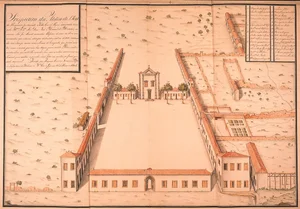
Conditions at Mossâmedes were often difficult. Administrative support fluctuated, resources were limited and residents could face demands for labour and religious conformity. Bringing people from different Indigenous backgrounds into one settlement also created tensions that officials did not always understand.
The colonial government regarded population as a measure of success. An occupied aldeamento secured territory, supplied labour and demonstrated the apparent effectiveness of Portuguese policy. When residents left, officials saw empty houses and declining numbers rather than the decisions of individuals reclaiming autonomy or returning to family.
Damiana could temporarily reverse these losses. Her expeditions brought new groups into the settlement and persuaded some former residents to return, thereby sustaining Mossâmedes during periods of decline.
She could not resolve its structural problems.
The decreasing numbers associated with later expeditions suggest that Kayapó communities became less willing to accept the arrangement, perhaps because those who had already experienced life in the aldeamento carried information back into the sertão. Damiana’s influence remained considerable, but the settlement itself became progressively harder to defend as an attractive option.
This distinction is essential. Her later difficulties do not necessarily indicate that her authority had disappeared. They may show that personal trust could no longer overcome what communities had learned about the colonial system she represented.
From Portuguese Colony to Brazilian Empire
Damiana was born under Portuguese colonial rule and died as a subject of the independent Empire of Brazil.
During her lifetime, the political world surrounding Goiás changed dramatically. The Portuguese royal court transferred to Brazil in 1808 after Napoleon’s forces invaded Portugal. Brazil became part of the United Kingdom of Portugal, Brazil and the Algarves in 1815, and political conflict eventually produced Brazilian independence in 1822.
Pedro I became emperor of the new state, while the former Portuguese captaincies were transformed into Brazilian provinces.
For Indigenous communities in central Brazil, these constitutional changes did not end the pressures created by expanding settlement. Administrators acquired new titles and political allegiance shifted from the Portuguese Crown to an independent Brazilian monarchy, but the desire to control Indigenous land, labour and movement remained.
Damiana’s second marriage occurred in 1822, the year of independence, and her later expeditions were undertaken within the new imperial system. Her continued usefulness across this transition demonstrates how much of colonial Indigenous policy survived the creation of Brazil.
The independent state inherited institutions, assumptions and territorial ambitions developed under Portuguese rule. Indigenous communities were still expected to submit to settlement, accept religious instruction and make room for an expanding population that regarded the interior as territory awaiting development.
The flag changed, but the fundamental struggle over who would control the sertão continued.
Damiana’s life therefore crosses an important political boundary without fitting neatly into a national story of liberation. Brazil’s independence did not represent Indigenous independence, and the woman who had negotiated for Portuguese governors continued to be used by Brazilian provincial authorities.
Later Journeys and Diminishing Returns
Damiana continued to lead or participate in expeditions throughout the 1820s. Major journeys are associated with 1821, 1827 and 1830, although the exact chronology varies slightly across different reconstructions.
The later expeditions appear to have brought progressively smaller groups towards Mossâmedes.
Several explanations are possible. Kayapó communities had accumulated decades of experience with colonial settlements, and those who had left could describe conditions to relatives and allies. The territorial expansion of farms and settlements may also have increased distrust of anyone associated with government policy.
The political landscape had changed, but so had Damiana herself. By 1830, she was probably about fifty years old and had spent much of her adult life travelling through difficult country. Age did not eliminate her influence, but the physical demands of expeditions would have become increasingly severe.
Provincial authorities nevertheless continued to depend upon her because no obvious replacement possessed the same combination of experience, language and relationships.
The administration had institutions, soldiers and regulations, but it still required an individual whose personal authority reached beyond them.
That dependence culminated in her final journey.
The Final Expedition
Around 1830, Damiana departed on what became her last expedition into the sertão.
The journey lasted approximately eight months and was intended to establish contact with Kayapó communities living beyond effective provincial control. Surviving instructions emphasised persuasion, although the wider threat of military intervention remained present if attacks upon colonial settlements continued.
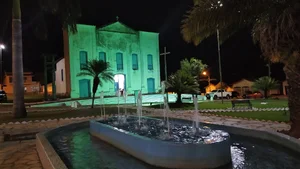
Damiana travelled with companions, including relatives and men connected with the provincial administration, but the political purpose of the expedition centred upon her ability to negotiate.
She returned to São José de Mossâmedes early in 1831 accompanied by thirty-two Indigenous people.
Later accounts describe a formal or celebratory reception attended by provincial and local authorities. After months of uncertainty, the expedition had returned, and Damiana had once again brought a group of Kayapó people towards the settlement.
The achievement came at a devastating cost.
Damiana was gravely ill by the time she reached Mossâmedes. The exact nature of the illness is unknown, and the surviving evidence does not allow a secure diagnosis. Exhaustion, exposure, infection or a combination of conditions may have contributed to her decline.
She died soon afterwards, probably between 2 February and 9 March 1831, and was buried inside or in association with the church of São José.
The setting of her burial possesses an unavoidable symbolic weight. The Indigenous woman whose original name had been lost at baptism was laid to rest within the Catholic heart of the settlement she had spent decades serving.
Yet even here, symbolism should not replace evidence.
We do not know whether Damiana regarded the church as the natural resting place of a sincerely committed Christian, whether others chose the burial for her, or whether she would have distinguished between Catholic and Indigenous belonging in the way later historians do.
The documentary record follows her final expedition, notes her return and records her death, but it does not preserve the thoughts with which she approached the end of her life.
After Damiana
The developments following Damiana’s death reveal that her importance had never rested solely upon an official title.
Kayapó departures from São José de Mossâmedes increased, and the settlement’s Indigenous population continued to decline. Officials could appoint new leaders or dispatch additional expeditions, but they could not recreate the relationships through which Damiana had persuaded people to remain or return.
This does not mean that every Indigenous resident had stayed at Mossâmedes because of personal loyalty to her. The decline of the aldeamento resulted from broader political, economic and social failures that had developed over many years.
Nevertheless, the timing matters.
Damiana had acted as a human connection between a fragile colonial institution and communities that retained the ability to leave it. Once she was gone, the government lost an intermediary whose influence had temporarily concealed how weak the settlement’s foundations had become.
São José de Mossâmedes survived as a place, but its original function as an Indigenous aldeamento diminished. The institution was formally extinguished in 1879.
Damiana had prolonged its operation without solving the contradiction on which it rested: the colonial state wanted Indigenous people to remain within a system from which many repeatedly chose to depart.
Heroine, Collaborator or Political Mediator?
Damiana’s reputation has changed according to the assumptions of those writing about her.
Older Brazilian histories frequently described her as a Christian heroine and civilising leader. In these accounts, her baptism marked an unquestioned improvement, while the movement of Kayapó people into aldeamentos represented progress towards religion, agriculture and national belonging.
Such narratives treated colonial expansion as beneficial and Indigenous resistance as a problem to be overcome. Damiana became admirable because she appeared to demonstrate that an Indigenous person could accept and advance the values of Portuguese or Brazilian society.
Modern historians have challenged this interpretation by placing her actions within the coercive history of aldeamento. These settlements sought to transform Indigenous culture, organise labour and strengthen colonial control over contested territory. Damiana’s expeditions assisted that process, and any responsible account of her life must acknowledge the consequences.
Yet the replacement of “Christian heroine” with “colonial collaborator” does not necessarily bring us closer to her own understanding.
Collaboration assumes that Damiana recognised a clear division between her people and an external occupying power, then deliberately chose the latter. Her life may not have been structured by such a simple choice.
She was baptised in infancy and raised partly within Catholic colonial society. By adulthood, Portuguese expansion had already transformed the region in which she lived. Indigenous communities faced military attack, territorial pressure and deteriorating access to land, while aldeamentos could provide some degree of protection even as they demanded cultural and political submission.
Damiana may have believed settlement offered the least destructive path available. She may have regarded Catholicism as her genuine faith and Mossâmedes as her community. She may have sought status and influence within colonial institutions while remaining committed to Kayapó relatives. She may also have underestimated or accepted the damage the aldeamento system caused to Indigenous autonomy.
These possibilities can coexist because identity and motive are rarely as consistent as later political categories demand.
The strongest interpretation is therefore not to decide whether Damiana was morally innocent or guilty, but to recognise that she acted with agency inside a system of constrained choices.
She was neither a passive victim of colonisation nor a detached official carrying out a foreign policy. Her knowledge, relationships and decisions shaped the history of Mossâmedes and affected the lives of the people she persuaded to accompany her.
To acknowledge her agency is also to acknowledge responsibility, but responsibility does not require us to invent motives the evidence cannot establish.
The Colonial Archive and the Missing Voice
Almost everything written about Damiana depends upon documents created by institutions that wanted something from her.
Governors wanted Indigenous populations settled. Provincial authorities wanted roads and farms protected. Officials needed to explain why expeditions had succeeded or failed. Husbands and soldiers petitioned for payments or recognition. Later biographers wanted exemplary national figures.
These interests shaped what the archive preserved.
Records count the people who returned from expeditions because government needed population totals. They note expenses, instructions and requests for reward because administration required written accountability. They preserve Damiana’s Christian marriage and baptism because church and state recognised those relationships.
The archive records her influence because officials had to explain why Indigenous communities followed her when they would not follow others.
What it does not preserve is equally significant.
It does not record the Indigenous name Damiana received at birth. It does not reproduce the conversations she conducted in an Indigenous language, nor does it tell us what Kayapó families asked before deciding whether to accompany her. It does not explain how she understood her faith, her ancestry or the effects of colonial expansion.
We hear Damiana most clearly when Portuguese or Brazilian authorities find her useful.
This creates the risk of reproducing the colonial view even when attempting to recover her history. If we rely uncritically upon administrative reports, she becomes an instrument who brings populations from the sertão into Mossâmedes. The decisions of those who travelled with her become statistics, while those who refused disappear almost entirely.
Reading the same documents differently reveals another history.
Repeated expeditions demonstrate that Indigenous people repeatedly rejected or left the aldeamento. Official frustration reveals the limits of colonial power. Petitions for reward reveal that men attempted to claim credit for work dependent upon Damiana’s relationships. Instructions emphasising persuasion reveal that armed authority alone could not produce the desired result.
The records were not written to preserve Damiana’s inner life, but they still contain traces of the political space she created.
The challenge is to follow those traces without pretending they amount to a personal memoir.
What We Know — and What We Do Not
What We Know — and What We Do Not
Historical Confidence
Historical Confidence
Existence, Kayapó ancestry and association with Goiás: ★★★★★
Damiana is securely documented in colonial and provincial records and in later historical scholarship. Her Indigenous ancestry, connection with Goiás and political importance are firmly established.
Baptism and relationship with Luís da Cunha Menezes: ★★★★★
Her baptism in 1781 and the governor’s role as godfather are strongly documented. More detailed claims about her domestic upbringing within his household require greater caution.
Leadership and participation in expeditions: ★★★★★
Official records clearly establish Damiana’s repeated role in journeys among Kayapó communities. Contemporary administrative evidence acknowledges that her influence was essential to their success.
Influence among Kayapó communities: ★★★★☆
The fact that Damiana repeatedly persuaded people to accompany her, together with explicit official recognition of her authority, strongly supports this conclusion. The precise Indigenous understanding of her status is not preserved.
Association with the title captain-major of the Indians: ★★★☆☆
The title is widely associated with Damiana in historical scholarship, but its exact administrative date, wording and practical function require careful treatment.
Personal commitment to Catholicism and aldeamento: ★★★☆☆
Her life within Catholic colonial society and continued work for Mossâmedes suggest substantial commitment, but the surviving sources do not reveal the private meaning she attached to either.
Motives for undertaking expeditions: ★★☆☆☆
Protection, religious conviction, political pragmatism, personal advancement and attachment to Mossâmedes are all plausible. None can be established as the single or dominant explanation.
Degree of consent among those accompanying her: ★★☆☆☆
Persuasion was important, but colonial pressure and the threat of military force shaped the environment in which decisions were made. The experience of each individual cannot be recovered.
Private personality and beliefs: ★★☆☆☆
Later writers have described Damiana as heroic, devout, civilising, divided or collaborative, but the documentary record provides insufficient access to her inner life for a detailed psychological portrait.
Historical Assessment
Damiana matters because her life reveals the limits of the categories through which colonial history is often told.
If she is presented only as a heroine of Indigenous resistance, the repeated expeditions bringing Kayapó people towards colonial settlements become difficult to explain. If she is described only as an agent of assimilation, the government’s dependence upon her Indigenous relationships and the authority she retained among Kayapó communities disappear from view.
Her life contained both Indigenous agency and participation in colonial expansion.
The contradiction cannot be removed without making Damiana simpler than the evidence allows.
She was baptised before she could choose the identity given to her, but she later acted decisively within the society into which that baptism introduced her. She accepted positions of colonial authority while continuing to speak an Indigenous language and maintain relationships beyond the settlements.
Her success depended upon belonging to more than one political world, but those worlds were not equal. Portuguese and Brazilian authorities possessed soldiers, law, written administration and an expanding claim to territory. Kayapó communities possessed their own leadership, knowledge and capacity for resistance, yet faced increasing pressure upon their land and independence.
Damiana worked within this imbalance.
Perhaps she believed that accommodation could preserve lives that open resistance would endanger. Perhaps she considered Catholic settlement a genuine improvement. Perhaps her political position allowed her to support relatives and maintain a measure of influence over policies that would otherwise have been implemented entirely by outsiders.
The archive does not tell us which explanation she would have chosen, and history should not manufacture certainty merely because uncertainty is uncomfortable.
What can be recognised is the scale of her political achievement. For decades, governors and provincial officials relied upon Damiana because she could enter places they feared, speak with communities they struggled to understand and produce agreements that military force could not guarantee.
Her death revealed that this influence belonged to her rather than to the office she occupied.
The state survived. Its regulations remained in force and its officials retained their positions, but the Kayapó residents of Mossâmedes increasingly left because the person whose relationships had helped hold the settlement together was no longer there.
That difference is the clearest measure of Damiana’s importance.
Key Contributions
Key Contributions
- Damiana exercised substantial political influence in relations between Kayapó communities and the colonial and early imperial governments of Goiás.
- She led or participated in repeated expeditions through the sertão to contact Indigenous communities beyond the effective reach of colonial administration.
- She used Indigenous language, ancestry, kinship and personal reputation to negotiate with people whom Portuguese and Brazilian officials struggled to approach peacefully.
- Her expeditions contributed to the maintenance of São José de Mossâmedes during periods of continuing Indigenous departure.
- She became one of the most prominent Indigenous intermediaries documented in the history of central Brazil.
- Her leadership received formal or semi-formal recognition through her association with the title captain-major of the Indians.
- Official records acknowledged that the decisive influence behind successful expeditions belonged to Damiana rather than to the men accompanying her.
- Her life provides important evidence of female political and expeditionary leadership within a strongly patriarchal colonial society.
- She demonstrates that Indigenous people were not merely passive subjects of colonial policy but could negotiate, redirect and participate in its implementation for reasons of their own.
- Her history complicates simple divisions between resistance and collaboration.
- Modern reassessment of Damiana has helped restore Indigenous women to the political history of Brazil.
Key Dates
Damiana is born in the Captaincy of Goiás into a family of Kayapó ancestry. Her precise birthplace, date and Indigenous name are unknown.
Damiana and her brother Manoel are baptised. Governor Luís da Cunha Menezes becomes Damiana’s godfather, and she receives the surname Cunha.
Damiana grows up with substantial exposure to Portuguese Catholic society while retaining language and relationships connecting her with Kayapó communities.
At approximately fourteen years of age, Damiana marries Sergeant José Luiz da Costa.
Damiana becomes associated with an early major expedition intended to contact Kayapó communities and bring Indigenous people towards the aldeamento system.
José Luiz da Costa dies, leaving Damiana widowed.
Damiana undertakes or participates in another major expedition into the sertão. Her first two principal expeditions are later associated with approximately seventy Indigenous people, although the recorded totals require caution.
A further expedition is associated with Damiana’s continuing role in relations between Kayapó communities and colonial authorities.
Brazil declares independence from Portugal and becomes an empire under Pedro I.
Damiana marries Manuel Pereira da Cruz.
Her influence continues to receive recognition from officials, who repeatedly rely upon her ability to contact and persuade Indigenous communities.
Damiana is associated with another expedition into the sertão, although the number of Indigenous people returning with later expeditions appears to decline.
Damiana begins her final major journey, which lasts approximately eight months.
She returns to São José de Mossâmedes accompanied by thirty-two Indigenous people and is received by provincial and local authorities.
Damiana dies shortly after returning seriously ill from the expedition. She is buried at the church of São José de Mossâmedes.
Kayapó departures from Mossâmedes increase as the settlement loses the intermediary upon whose influence officials had heavily depended.
The Indigenous aldeamento at São José de Mossâmedes is formally extinguished.
Historians increasingly reconsider Damiana through Indigenous history, gender history and the study of cultural mediation, challenging older portrayals of her simply as a Christian civilising heroine.
Did You Know?
Did You Know?
- Damiana’s Indigenous birth name was not preserved in the surviving written record.
- She received the surname Cunha from Luís da Cunha Menezes, governor of Goiás and her baptismal godfather.
- She was probably only about two years old when she was baptised in 1781.
- Damiana belonged to an important Kayapó family and is traditionally identified as a granddaughter of the leader Angraí-oxá.
- Her brother Manoel da Cunha also became involved in relations between Indigenous communities and colonial authorities.
- Although Damiana grew up with significant exposure to Portuguese Catholic culture, she retained an Indigenous language and connections with Kayapó communities.
- She married for the first time when she was probably about fourteen.
- Damiana repeatedly travelled through the sertão of central Brazil, undertaking journeys that could last many months.
- Some historical accounts identify four major expeditions, while others distinguish five journeys or phases of activity.
- Colonial officials explicitly acknowledged that Indigenous people accompanied Damiana because of the influence she possessed over them.
- When her second husband sought recognition connected with an expedition, an administrative response stated that the principal achievement belonged to Damiana and her nephew rather than to him.
- Damiana is associated with the title captain-major of the Indians, an unusual designation of formal authority for a woman in colonial Brazil.
- Her final expedition lasted approximately eight months.
- Thirty-two Indigenous people accompanied her back to São José de Mossâmedes in 1831.
- She returned seriously ill and died within weeks.
- Kayapó departures from Mossâmedes increased after her death.
- Older histories frequently portrayed her as a Christian heroine who brought civilisation to Indigenous communities.
- Modern scholarship instead examines the more difficult relationship between her personal agency and the colonial system she helped sustain.
- The colonial archive preserved the Portuguese name given to Damiana at baptism but not the Indigenous name with which her life may have begun.
Further Reading
- Suelen Siqueira Julio, Damiana da Cunha: uma índia entre a “sombra da cruz” e os caiapós do sertão (Goiás, c. 1780–1831)
- Suelen Siqueira Julio, “Além do esperado: a trajetória da índia Damiana da Cunha”
- Mary Karasch, “Catequese e cativeiro: política indigenista em Goiás, 1780–1889”
- Mary Karasch, “Damiana da Cunha: Catechist and Sertanista”, in Struggle and Survival in Colonial America
- Maria Meire de Carvalho, “Damiana da Cunha: uma capitã-mor nos sertões dos Goyazes nos séculos XVIII e XIX”
- Odair Giraldin, studies of Southern Kayapó history and Indigenous communities in central Brazil
- Research on São José de Mossâmedes and the history of Indigenous aldeamentos in Goiás
- Studies of Indigenous women, cultural mediation and colonial frontier societies in Portuguese America
- Colonial and provincial administrative correspondence concerning Indigenous expeditions in Goiás
- Nineteenth-century Brazilian biographies of Damiana da Cunha, read critically alongside modern Indigenous historiography
Legacy and Historical Significance
Damiana da Cunha occupies one of the most difficult positions in the history of colonial Brazil because her life cannot be separated either from Indigenous survival or from the expansion of the colonial state.
She has often been described as a bridge between cultures, but a bridge suggests two secure shores and a neutral path between them. Damiana’s world was neither secure nor neutral. Kayapó communities faced military violence, territorial pressure and the increasing intrusion of farms, roads and settlements, while Portuguese and Brazilian authorities used conversion, negotiation and aldeamento to extend political control where warfare alone had failed.
Damiana emerged from within this instability.
Her baptism connected her to one of the most powerful officials in Goiás and gave her a Portuguese name that the written archive would preserve. Her Catholic upbringing allowed her to move confidently within colonial society, communicate with governors and understand the expectations of officials.
None of this, however, explains why Kayapó people listened to her.
For that, the administration depended upon the Indigenous identity it could not completely replace. Damiana retained a language, ancestry and network of relationships extending beyond the settlement, and these allowed her to accomplish what soldiers and administrators repeatedly could not.
The colonial government therefore relied upon her Indigenous connections to advance a policy intended to transform Indigenous life.
That contradiction lies at the centre of her legacy.
Damiana participated in expeditions that brought people into aldeamentos where their movement, labour and religious life could be supervised. Those actions served colonial expansion and cannot be presented simply as humanitarian diplomacy.
At the same time, she may have understood settlement as a form of protection within a world where the alternative could be armed attack, displacement or death. By acting as intermediary, she may have believed she could influence how colonial policy affected her relatives and other Kayapó communities.
The evidence does not allow us to decide confidently which of these considerations mattered most to her.
What it does reveal is that Damiana was not merely used by the colonial state. She also acquired authority within it, negotiated with it and made herself indispensable to officials who could not reproduce her influence.
Her position remained unequal, but it was not powerless.
The declining results of her later expeditions show the limits of that authority. However persuasive Damiana remained, fewer people appear to have been willing to accept life within Mossâmedes. Personal relationships could not permanently overcome the failures of the institution she represented.
Her final journey brought the tensions of her life together. At approximately fifty years of age, she travelled for eight months through the sertão and returned with thirty-two Indigenous people. Authorities celebrated the result, but Damiana arrived gravely ill and died before she could undertake another expedition.
Older historians could transform this ending into Christian sacrifice, presenting her as a woman who gave her life while bringing civilisation to her people. A more critical interpretation might see an Indigenous woman used by the state until the physical demands of its policy destroyed her health.
Neither conclusion can be established fully because Damiana did not leave an account of her final journey or an explanation of the purpose she believed it served.
The aftermath speaks more clearly than any later interpretation.
When Damiana died, the colonial and imperial institutions remained. Officials could issue orders and soldiers could travel into the interior, yet Kayapó people increasingly left the settlement because the relationships that had connected them to Mossâmedes had depended upon a person rather than an office.
Damiana’s authority could not be reassigned.
The written archive remembers her because governments needed her journeys and counted the people who returned. It preserved her baptised name, her marriages and the administrative results of her work, but it did not preserve the words she spoke when persuading a family to leave the sertão or the Indigenous name by which her own relatives may first have called her.
That imbalance allowed later generations to speak for her.
They made her a Christian heroine, a civiliser, an intermediary, a collaborator or a symbol of Indigenous female leadership. Each title captures one aspect of a life that exceeded all of them.
Damiana should be remembered not because she fits comfortably within a modern moral category, but because she forces us to examine the circumstances in which historical choices were made.
She acted in a world already altered by colonial violence. The possibility of remaining untouched by Portuguese or Brazilian expansion had largely disappeared, and every available path carried consequences for Indigenous autonomy and survival.
Within that world, Damiana developed a form of political authority that neither colonial patronage nor Indigenous ancestry alone can explain. She understood the institutions of the expanding state while retaining access to communities beyond its control, and she used that position for purposes whose complete meaning died with her.
The state possessed law, soldiers and written administration.
Damiana possessed language, kinship, reputation and trust.
When she was gone, the difference became impossible to conceal.
Image Credits
Historical view of Goiás: Image from the collection of the Museu Paulista da Universidade de São Paulo, accessed through Wikimedia Commons. Confirm the exact creator, date, public-domain status and attribution wording on the source file page before publication.
Indigenous aldeamento: Historical image accessed through Wikimedia Commons. Confirm the exact creator, date, source collection and current reuse terms on the source file page before publication.
Church of São José, Mossâmedes: Photograph accessed through Wikimedia Commons. Confirm the photographer and current licence attribution on the source file page before publication.
Help Keep These Stories Alive
If you enjoyed reading this profile and believe more overlooked voices deserve to be heard, you can help fund future research, writing, and free educational resources.
Every contribution—whether a one-off donation or monthly support—helps create new historical profiles, downloadable materials, and articles that remain freely available to everyone.
Thank you for helping history reach more people.
