

Fatima al-Fihri
Historical Profile
Introduction
History often remembers those who taught, wrote, ruled or fought.
Less often does it remember those who made learning possible.
Fatima al-Fihri belongs to that quieter but deeply important tradition.
According to Moroccan historical tradition, she was a wealthy woman of Kairouani origin who used her inheritance to found the Mosque of al-Qarawiyyin in Fez in 859 CE. Over time, that mosque became one of the great centres of learning in the Islamic West and later developed into the modern University of al-Qarawiyyin.
For this reason, Fatima is often celebrated as the woman behind one of the world’s oldest continuously operating institutions of higher learning.
Yet her story must be handled with care.
Unlike Ban Zhao, whose life is relatively well documented by ancient Chinese sources, Fatima al-Fihri is known mainly through later tradition. The earliest surviving narrative naming her appears several centuries after the events it describes. Some modern scholars accept the broad outline of the story; others argue that it may preserve a later civic memory rather than a fully secure biography.
That does not make Fatima unimportant.
It makes her historically interesting.
Whether understood as a real ninth-century founder, a remembered patron, or a figure through whom Moroccan tradition preserved the idea of female pious benefaction, Fatima al-Fihri stands at the meeting point of women’s history, Islamic learning, urban memory and the long human effort to build institutions that outlive their founders.
Sometimes history is shaped not only by those who write books.
Sometimes it is shaped by those who build the places where books can be read.
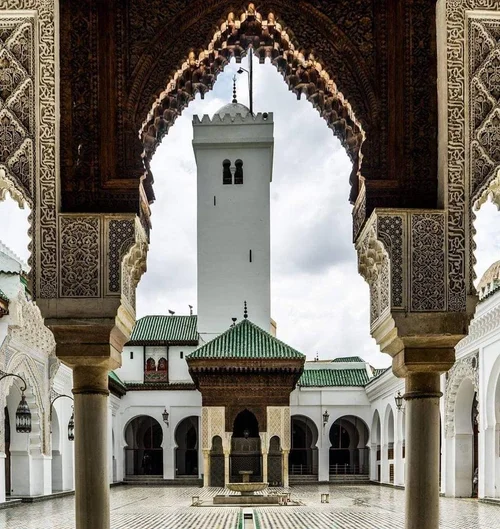
Fez and the Early Islamic Maghrib
Fatima al-Fihri is traditionally associated with Fez, one of the great cities of the Islamic world.
Fez was founded in the late eighth and early ninth centuries under the Idrisid dynasty. UNESCO describes the Medina of Fez as preserving the memory of a capital founded by the Idrisids between 789 and 808 CE, with two early fortified quarters separated by the Fez wadi: one associated with Andalusi migrants and the other with people from Kairouan.
This detail matters.
Fatima’s traditional story places her family among migrants from Kairouan, one of the most important intellectual and religious centres of early Islamic North Africa. If that tradition is broadly accurate, then her family belonged to a world shaped by movement, trade, piety and scholarship.
Fez was not simply a local town. It was a meeting place.
Berber, Arab, Andalusi, Kairouani and Jewish communities all contributed to its development. Over time, it became one of the great urban centres of the western Islamic world.
UNESCO notes that Fez reached its height in the thirteenth and fourteenth centuries under the Marinids, when it replaced Marrakesh as capital and became a major cultural and spiritual centre.
The world Fatima is said to have inhabited was therefore one in which religious foundations were not merely places of worship.
They were anchors of community.
A mosque could gather people, structure neighbourhood identity, support teaching, legitimise urban growth and preserve cultural continuity across generations.
The Traditional Story of Fatima al-Fihri
According to later Moroccan tradition, Fatima al-Fihri was born into a wealthy family originally from Kairouan in present-day Tunisia.
Her father, Muhammad al-Fihri, is said to have migrated with his family to Fez, where they joined the Kairouani community living in the western part of the city.
After her father’s death, Fatima and her sister Maryam inherited considerable wealth.
Rather than using that inheritance for personal luxury, tradition says both sisters invested in religious and civic foundations. Maryam is associated with the Mosque of the Andalusians, while Fatima is associated with the Mosque of al-Qarawiyyin.
The official University of al-Qarawiyyin website states that the mosque was built by Fatima al-Fihri in 245 AH / 859 CE and describes it as both a place of worship and a university of religious learning.
In the traditional account, Fatima purchased land, supervised the building of the mosque and devoted her inheritance to the project as an act of piety.
Later retellings often add that she fasted during the construction and insisted that the materials be taken from the site itself so the foundation would be pure, lawful and uncontaminated by disputed wealth.
Whether every detail is historical cannot be proven.
But the moral shape of the story is clear.
Fatima is remembered as a woman who transformed private inheritance into public benefit.
Her wealth became architecture.
Her piety became institution.
Her name became attached to one of the most enduring centres of learning in the Islamic world.
Founding al-Qarawiyyin
The Mosque of al-Qarawiyyin was, in its earliest form, a congregational mosque.
It served a community of worshippers, but over time it also became a site of teaching, debate and legal scholarship.
This development was not unusual in Islamic history. Mosques often functioned as centres of learning long before education became separated into modern universities with departments, timetables and formal degrees.
Students gathered around teachers in study circles. Knowledge was transmitted through recitation, commentary, legal reasoning, grammar, theology and memorisation. Authority was personal as much as institutional: a scholar’s reputation mattered, and students sought permission or certification through recognised teachers.
Al-Qarawiyyin eventually became especially associated with Maliki law, Arabic language, Qur’anic learning and religious scholarship. The official university website describes its mission as spiritual and educational, forming scholars who serve religion as preachers, guides and teachers, and contributing to Moroccan religious identity through Maliki jurisprudence, Ashʿari theology, Sunni Sufism and the Warsh Qur’anic reading tradition.
The institution’s later fame should not be projected too simply back onto Fatima herself.
She did not found a modern university in the contemporary sense.
She is traditionally remembered as founding a mosque that became, across centuries, a major scholarly institution.
That distinction matters.
It allows us to honour her legacy without forcing the ninth century into modern categories.
From Mosque to Centre of Learning
Al-Qarawiyyin’s transformation into a great centre of learning was gradual.
Its present form is the result of more than a thousand years of expansion, patronage, renovation and institutional change. Later dynasties enlarged the mosque, added architectural decoration, supported scholars and built nearby madrasas.
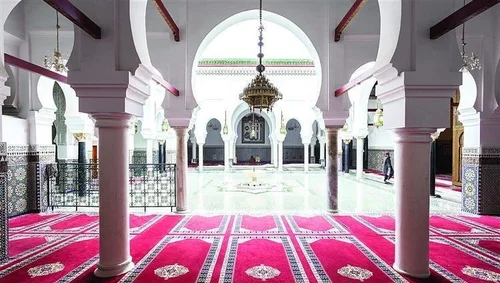
UNESCO notes that the major monuments of Fez’s medina include madrasas, fondouks, palaces, residences, mosques and fountains, many dating from the city’s Marinid high point in the thirteenth and fourteenth centuries.
This matters because al-Qarawiyyin was not the work of one moment alone.
It was the product of many generations.
Fatima’s traditional foundation story belongs to the beginning of that chain. Later rulers, scholars, students, copyists, jurists, librarians and patrons expanded what the original mosque became.
By the medieval period, al-Qarawiyyin had become one of the intellectual landmarks of North Africa.
Scholars associated with Fez and al-Qarawiyyin included figures connected with law, theology, grammar, astronomy, geography and history. Ibn Khaldun, one of the most important historians and thinkers of the medieval world, is among the later figures associated with the institution in Moroccan memory and scholarship.
The point is not that Fatima personally created all of this.
The point is that the place traditionally linked to her became a vessel for centuries of learning.
That is a different kind of legacy — slower, wider and perhaps more powerful.
The Question of Evidence
Fatima al-Fihri’s profile requires more caution than many popular accounts provide.
The traditional story is famous, but the evidence is not simple.
The earliest surviving narrative naming her appears in Ibn Abi Zarʿ’s Rawḍ al-Qirṭās, a fourteenth-century chronicle. That means the main written account comes roughly five centuries after the traditional foundation date of 859 CE.
This does not automatically make the story false.
Many medieval histories preserve older memories, documents or oral traditions now lost.
But it does mean historians must distinguish between tradition and contemporary evidence.
There is also an epigraphic complication. Modern scholarship has discussed an inscription associated with al-Qarawiyyin that gives a date of 263 AH / 877 CE and names Dawud ibn Idris rather than Fatima. Some scholars interpret this as evidence that the earliest secure foundation or reconstruction may have involved Idrisid authority rather than the story preserved in later tradition.
The result is a genuine historical debate.
The Safest Historical Wording
Fatima al-Fihri is the traditional founder of al-Qarawiyyin.
Her association with the mosque is central to Moroccan historical memory.
The precise details of her life, the foundation process and the earliest building history remain debated.
This does not weaken the profile.
It strengthens it.
A historically responsible account should not turn uncertainty into silence, but neither should it turn tradition into fact without qualification.
Historical Interpretation
Fatima al-Fihri can be understood in three overlapping ways.
First, she may have been a real ninth-century patron whose wealth funded the original mosque of al-Qarawiyyin.
Second, she may represent a later civic memory of female benefaction, preserved in Moroccan tradition to explain the origins of one of Fez’s most important religious institutions.
Third, she has become a modern symbol of women’s contribution to Islamic learning.
Each interpretation matters.
If the traditional story is substantially true, then Fatima stands among the most important female patrons of the medieval Islamic world.
If the story is partly legendary, then it still reveals something powerful: Moroccan historical memory considered it meaningful and believable that a woman could found a major religious and educational institution.
That alone is significant.
Legends are not random. They reveal what a society finds admirable, possible and worth remembering.
In Fatima’s case, the remembered virtues are clear: piety, generosity, education, lawful wealth, civic responsibility and the transformation of inheritance into public good.
Women, Wealth and Patronage
Fatima’s story also challenges a common assumption about women in medieval Islamic history.
Women were often restricted in formal political office, but they were not absent from public religious and cultural life.
Across Islamic history, women endowed mosques, schools, fountains, libraries, tombs and charitable foundations. Wealthy women, especially widows or daughters with inheritance rights, could use property to shape the public world.
Islamic inheritance law did not give women equal shares to men in all circumstances, but it did recognise women’s right to inherit and own property. That legal fact created possibilities for female patronage.
Fatima’s traditional biography depends precisely on that possibility.
She inherits.
She chooses.
She builds.
Whether every detail is historically secure, the structure of the story reflects a real social mechanism: women could use wealth to create lasting institutions.
That makes Fatima’s profile valuable not only as biography but as a window into a wider pattern of women’s civic and religious patronage.
Al-Qarawiyyin and the Idea of the “Oldest University”
Fatima al-Fihri is often described as the founder of the world’s oldest university.
This claim needs careful wording.
UNESCO’s page for the Medina of Fez refers to Fez as having the oldest university in the world in some language versions of its description. The official al-Qarawiyyin website also presents the institution as older and more historically rooted than other major Islamic centres such as al-Zaytuna and al-Azhar.
However, the word “university” can be misleading.
A modern university usually implies a legally defined institution with faculties, formal administration, standardised degrees and state recognition.
Al-Qarawiyyin did not begin that way.
It began as a mosque that became a centre of religious and scholarly learning, later evolving through reforms into a modern university structure.
The institution was formally transformed under modern Moroccan educational reforms in the twentieth century. Popular summaries often collapse this long development into a single sentence: “Fatima founded the first university in 859.”
A More Accurate Version
Fatima al-Fihri is traditionally credited with founding the mosque of al-Qarawiyyin in 859 CE. Over time, that mosque became one of the great centres of Islamic learning and later developed into the modern University of al-Qarawiyyin.
This phrasing keeps the achievement intact while avoiding historical exaggeration.
The Library of al-Qarawiyyin
The library associated with al-Qarawiyyin has also become part of Fatima’s modern legacy.
It is often described as one of the oldest libraries in the world, though the major library foundation is usually associated with later Marinid patronage rather than Fatima herself.
This distinction matters because Fatima is sometimes credited not only with founding the mosque, but also with founding the library in its later form. That is not historically precise.
Her traditional role belongs to the mosque foundation.
The library, manuscript collections and scholarly infrastructure developed across later centuries.
Still, the symbolism is understandable.
A woman remembered for founding a mosque that became a centre of learning is naturally associated in modern imagination with books, manuscripts and libraries.
The danger lies only in compressing centuries of institutional development into a single founding moment.
Fatima’s true legacy does not need exaggeration.
It is powerful enough as it is.
Historical Significance
Fatima al-Fihri’s significance lies not in military conquest, political rule or surviving writings.
It lies in patronage.
She represents the kind of historical actor easily overlooked because her contribution was infrastructural rather than textual. She did not leave behind a known book. She did not rule a state. She did not command an army.
Instead, tradition remembers her as someone who created a place.
That place outlived dynasties.
It survived political change, architectural expansion, shifts in curriculum, colonial disruption and modern reform.
Few forms of influence are more durable.
Her profile also complicates simplistic narratives about women and education in Islamic history. Women were often excluded from formal scholarly authority, but they could still shape the institutions through which knowledge moved.
Fatima reminds us that the history of learning is not only the history of teachers and students.
It is also the history of patrons, builders, donors, copyists, librarians and communities.
Knowledge needs walls, lamps, courtyards, endowments and protection.
Someone has to build the room before anyone can teach inside it.
Legacy
Fatima al-Fihri’s legacy has grown far beyond the limited evidence for her life.
In Morocco, she remains attached to one of the country’s great symbols of learning and religious identity.
In global women’s history, she is often celebrated as a reminder that women helped shape educational institutions long before modern campaigns for women’s access to universities.
In Islamic history, she has become a symbol of pious patronage and the relationship between faith, learning and public service.
In modern public discourse, she is sometimes presented too simply as “the woman who founded the first university.” That phrase is memorable, but it needs context.
Her More Accurate Legacy
She is the remembered founder of al-Qarawiyyin.
She represents women’s capacity to shape public religious life through patronage.
She stands at the origin point of a place that became central to Moroccan and Islamic learning.
She forces historians to balance tradition, evidence and meaning.
That last point may be the most important.
Fatima al-Fihri teaches us not only about the past, but about how the past is remembered.
Some lives survive in documents.
Some survive in buildings.
Some survive in the stories communities refuse to let go.
Whether every detail can be proven or not, Fatima al-Fihri reminds us that preserving knowledge can be every bit as influential as creating it.
Historical Evidence
Well Supported
• Al-Qarawiyyin became one of the major religious and educational institutions of Fez.
• Fez was founded in the Idrisid period and became a major cultural and spiritual centre of Morocco.
• The official University of al-Qarawiyyin tradition attributes the mosque’s construction to Fatima al-Fihri in 245 AH / 859 CE.
• Al-Qarawiyyin functioned as both a place of worship and a centre of religious learning.
• The institution developed over many centuries and its current status reflects later historical reforms.
Debated
• Whether Fatima al-Fihri’s biography is historically secure in all details.
• Whether the 859 foundation date reflects the original mosque foundation, later tradition, or a simplified memory.
• How to interpret inscriptional evidence suggesting an 877 date connected with Dawud ibn Idris.
• When al-Qarawiyyin should properly be called a “university” rather than a mosque-school or centre of higher religious learning.
Unknown
• Fatima’s exact birth and death dates.
• Her level of personal education.
• Whether she directly supervised construction as later stories describe.
• The precise nature of her family’s wealth.
• How much of the traditional account derives from older sources now lost.
Historical Confidence
Evidence: ★★★☆☆
Fatima is firmly embedded in Moroccan historical tradition, but the surviving written evidence is late and the earliest building history is debated.
Biographical detail: ★★☆☆☆
Her name, family origin and foundation story are traditional, but there is little secure contemporary evidence for her personal life.
Interpretation of legacy: ★★★★☆
Her importance as a remembered founder, symbol of female patronage and figure in the history of Islamic learning is strong, even where biographical details remain uncertain.
Timeline
Traditional period in which Fatima al-Fihri’s family is said to migrate from Kairouan to Fez.
Traditional date for Fatima al-Fihri’s foundation of the Mosque of al-Qarawiyyin.
An inscription associated with al-Qarawiyyin has been interpreted by some scholars as evidence for early Idrisid involvement in the mosque’s foundation or reconstruction.
Al-Qarawiyyin undergoes architectural expansion and grows in religious importance.
Fez reaches a major high point under the Marinids; madrasas and scholarly institutions expand around the city.
Al-Qarawiyyin becomes one of the major centres of learning in the Islamic West.
The institution is reorganised through modern Moroccan educational reforms and becomes part of the modern university system.
The Medina of Fez is inscribed as a UNESCO World Heritage Site.
Fatima al-Fihri becomes globally recognised as a symbol of women’s contribution to education, Islamic learning and institutional patronage.
Selected Sources
Primary and medieval source tradition includes Ibn Abi Zarʿ’s Rawḍ al-Qirṭās, which preserves the famous account of Fatima al-Fihri and the foundation of al-Qarawiyyin.
Official institutional tradition is represented by the University of al-Qarawiyyin, which attributes the mosque’s construction to Fatima al-Fihri in 245 AH / 859 CE and describes its religious and educational mission.
UNESCO’s World Heritage description of the Medina of Fez provides the broader historical context for Fez as an Idrisid foundation, later Marinid capital and continuing cultural and spiritual centre of Morocco.
Modern scholarship on al-Qarawiyyin focuses on the distinction between traditional biography, architectural evidence, epigraphy and the institution’s gradual development from mosque to centre of learning to modern university.
Explore Related Profiles
Help Keep These Stories Alive
If you enjoyed reading this profile and believe more forgotten voices deserve to be heard, you can help fund future research, writing, and free educational resources.
Every contribution—whether a one-off donation or monthly support—helps create new historical profiles, downloadable materials, and articles that remain freely available to everyone.
Thank you for helping history reach more people.
