

Gargi Vachaknavi
Historical Profile
Introduction
Long before universities awarded degrees or formal academies taught philosophy, intellectual debate flourished in the courts and scholarly gatherings of ancient India.
Among the voices recorded in these discussions is one that continues to stand out more than two thousand years later—not because of wealth, political power, or military achievement, but because she asked questions that reached beyond the visible world itself.
Gargi Vachaknavi is one of the earliest recorded philosophers whose voice survives within the philosophical literature of ancient India, and among the earliest women known to have participated publicly in philosophical debate.
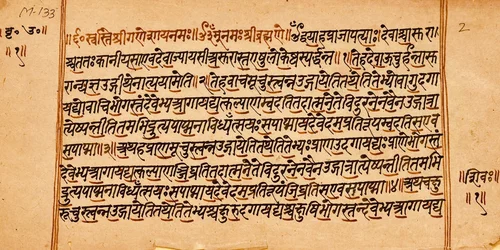
Her name survives within the Brihadaranyaka Upanishad, where she challenges the celebrated philosopher Yajnavalkya during an assembly of scholars convened by King Janaka.
Gargi reminds us that the pursuit of understanding has never belonged to one civilisation, one tradition or one gender.
It has always been part of the shared human experience.
Historical Background
Gargi lived during the Late Vedic period, a transformative era in the history of the Indian subcontinent.
Earlier generations had focused largely upon hymns, rituals and sacrificial ceremonies preserved within the Vedas. By Gargi's lifetime, however, many scholars had begun asking deeper philosophical questions concerning consciousness, existence, ethics and the nature of reality.
These discussions became preserved within the Upanishads, a collection of philosophical texts that remain among the oldest surviving works of speculative thought.
One of the most important centres of learning was the court of King Janaka of Videha. Remembered in Indian tradition as both a ruler and a patron of philosophy, Janaka welcomed scholars from across northern India to debate some of the most challenging questions of their age.
It is within one of these remarkable assemblies that Gargi first enters history.
Early Life
Unlike later historical figures, almost nothing can be said with certainty about Gargi's childhood or family.
Her name, “Vachaknavi,” suggests descent from the sage Vachaknu, leading many historians to believe she belonged to a learned Brahmin family where education in the Vedic tradition was possible.
What is clear, however, is that Gargi possessed an exceptional understanding of Vedic philosophy. Participation in King Janaka's assembly would have required years of study, extensive memorisation of sacred texts, and the confidence to challenge some of the most respected thinkers of her generation.
The Great Debate
The most famous account of Gargi appears during a philosophical gathering hosted by King Janaka of Videha.
According to the Brihadaranyaka Upanishad, King Janaka announced that the greatest scholar present would receive a prize of one thousand cows, each adorned with gold upon their horns.
Before the debate had even begun, the philosopher Yajnavalkya confidently instructed his students to drive the cattle away, declaring them as his own. His confidence immediately provoked objections from the assembled scholars.
It was during this remarkable assembly that Gargi rose to speak.
Rather than challenging Yajnavalkya on matters of ritual or interpretation, she directed her attention towards something much more fundamental: the nature of reality itself.
She asked what the earth was woven upon.
When Yajnavalkya answered, she immediately asked what that, in turn, was woven upon.
Each answer led naturally to another question.
Earth gave way to water.
Water to air.
Air to the heavens.
The heavens to realms beyond ordinary human experience.
With every response, Gargi moved further from the familiar world and closer to a deeper philosophical problem. She was not interested in the individual layers themselves. She wanted to know whether there existed an ultimate foundation beneath them all.
Eventually she asked what everything is ultimately woven upon.
Yajnavalkya's answer pointed towards Brahman, the imperishable and ultimate reality described within the Upanishadic tradition—something beyond ordinary perception and beyond the limitations of the physical world.
At one point he warned Gargi not to continue her questioning. Modern readers have interpreted this exchange in different ways. Some see it as an attempt to silence Gargi because she was a woman. Others argue that it reflects the limits of metaphysical enquiry rather than the identity of the person asking the questions.
The surviving text does not allow us to determine his intentions with certainty, and responsible history should acknowledge that uncertainty rather than replace it with confidence.
Whatever the interpretation, one fact remains beyond dispute.
Gargi was neither an observer nor a student seeking permission to speak.
She participated as a recognised philosopher, challenging one of the foremost intellectual figures of her generation before an audience of respected scholars.
Gargi's Philosophy
Unlike Socrates, Plato or Confucius, Gargi left no known independent writings.
Everything that survives is preserved through the dialogue recorded in the Brihadaranyaka Upanishad. As a result, her philosophy is known not through lengthy treatises but through the questions she asked.
Rather than accepting explanations at face value, Gargi repeatedly asked what lay behind them. Every answer became another beginning rather than a conclusion.
In many ways, her method resembles the search for first principles found across numerous philosophical traditions.
Perhaps that is Gargi's greatest philosophical legacy.
Not that she claimed to possess every answer.
But that she demonstrated the courage to keep asking questions.
Women and Learning in Vedic India
Gargi was not entirely unique.
Ancient Indian literature also records other learned women, including Maitreyi, who likewise appears in the Brihadaranyaka Upanishad. Earlier Vedic hymns are attributed to several female sages, suggesting that women participated in religious, literary and philosophical life to a greater extent than is often assumed.
Exactly how widespread these opportunities were remains the subject of ongoing historical debate.
Gargi's significance therefore lies not in proving that all women enjoyed equal educational opportunities, nor in suggesting that she was entirely alone.
Instead, she demonstrates beyond reasonable doubt that women could and did participate at the highest intellectual levels of Vedic society.
Historical Reliability
Everything known about Gargi comes primarily from the Brihadaranyaka Upanishad, one of the oldest and most important Upanishadic texts.
There are no surviving biographies, personal writings or contemporary inscriptions that allow her life to be reconstructed in detail. Almost everything we know comes from a single philosophical dialogue.
Because the text combines philosophy, theology and literary dialogue, historians cannot determine how literally the recorded debate should be understood.
These uncertainties do not diminish her significance. They remind us that responsible history depends as much upon recognising the limits of our knowledge as celebrating what has survived.
Historical Confidence
Evidence: ★★★★☆
Gargi is known primarily from the Brihadaranyaka Upanishad. Much of her biography remains uncertain, but her philosophical dialogue survives in one of the world's oldest Upanishadic texts.
A Lasting Contribution
For many generations, introductions to the history of philosophy have naturally focused upon the thinkers of ancient Greece before following the development of ideas through Rome and later Europe.
The influence of these traditions upon Western thought is immense and entirely deserving of recognition.
Yet concentrating upon a single intellectual tradition can unintentionally leave another impression—that philosophy itself began in one place before gradually spreading to the rest of the world.
The surviving evidence tells a richer story.
While philosophers in Greece were asking profound questions about knowledge, ethics and reality, thinkers in ancient India were exploring many of the same mysteries through their own intellectual traditions.
Gargi's surviving questions are significant for reasons that extend beyond the history of women, India or even philosophy itself.
They remind us that the desire to understand the world appears to be one of humanity's oldest shared characteristics.
History often introduces Gargi as one of the earliest recorded women philosophers. That description is historically important, because it challenges long-held assumptions about who participated in early intellectual life.
Yet if that becomes the only reason we remember her, we risk overlooking her greatest contribution.
She is remembered because she asked questions that continue to resonate today.
Questions about reality.
Questions about existence.
Questions about what lies beyond the world we can immediately observe.
Perhaps that is Gargi's greatest legacy.
She reminds us that progress does not begin with certainty.
It begins with curiosity.
Timeline
Approximate lifetime of Gargi Vachaknavi.
Develops an advanced understanding of Vedic philosophy during a period of growing philosophical enquiry.
Participates in the celebrated philosophical debate with Yajnavalkya recorded in the Brihadaranyaka Upanishad.
Her dialogue becomes part of one of the world's oldest surviving philosophical texts.
Increasingly recognised as an important figure in the global history of philosophy.
Explore Related Profiles
Help Keep These Stories Alive
If you enjoyed reading this profile and believe more forgotten voices deserve to be heard, you can help fund future research, writing, and free educational resources.
Every contribution—whether a one-off donation or monthly support—helps create new historical profiles, downloadable materials, and articles that remain freely available to everyone.
Thank you for helping history reach more people.
