

Kahupeka
Historical Profile
A Journey Written Across the Landscape
Introduction
Kahupeka was a Tainui ancestress remembered through whakapapa, kōrero tuku iho and the landscape of the North Island. Tradition associates her with a long journey from Kāwhia into the interior after the death of her husband, during which mountains, streams and other places became connected with her name and experiences.
Unlike historical figures known through letters, court records or inscriptions, Kahupeka survives through traditions transmitted across generations. Those traditions are not identical, and some details of her ancestry, relationships and journey differ between published accounts. Yet a persistent outline remains: a woman connected with Tainui, an important inland journey, and a chain of place names preserving her movement through the land.
Modern accounts have also associated Kahupeka with rongoā Māori and the medicinal use of native plants. This part of her story requires greater caution. Her journey and relationship with named places are more consistently preserved than claims that she personally discovered particular remedies. Her importance does not depend upon turning her into the individual founder of a collective healing tradition.
What survives instead is the history of an ancestor whose journey connected grief, movement, environmental knowledge and belonging. Kahupeka left no written map of her travels. Her route was remembered in another way: through whakapapa and whenua.
A Life Preserved Through Whakapapa and Whenua
No contemporary written biography of Kahupeka survives. Her story comes principally from kōrero tuku iho—histories and knowledge transmitted through generations—and from whakapapa connecting her with Tainui ancestors.
Her name appears in several forms, including Kahu, Kahupeka, Kahupekapeka and Kahukeke. Published accounts do not always use these names consistently, and it is possible that some traditions concerning different ancestral women became connected over time. Her approximate placement in the fifteenth century is likewise inferred from whakapapa rather than from a securely dated record.
These limits shape what can responsibly be said about her life. Exact years cannot be supplied for her birth, marriage, journey or death, and the different traditions should not be forced into a single biography where they genuinely disagree.
At the same time, the survival of her story is substantial in a different way. Te Ara describes Kahu’s journey as an important settlement narrative of Tainui and Waikato peoples, connecting her with a route extending from Kāwhia through the Waikato and into the central North Island. Her memory became attached to mountains, streams, forests and other features across that landscape.
For Kahupeka, geography is not merely the setting of the biography. It is one of the principal forms in which the biography survived.
Tainui Ancestry and Kāwhia
One detailed whakapapa preserved by the Tainui scholar Pei Te Hurinui Jones identifies Kahupeka as the daughter of Rangaiho and places her within lines descending from important figures associated with Tainui traditions.
Through Hape and Ngare, she was connected with Rakatāura, the tohunga associated with the Tainui waka. Her ancestry also linked her with Hoturoa, remembered as the leader of the waka. She is said to have grown up near Karioi, the volcanic mountain on the western coast of the North Island, before travelling to Kāwhia.
According to this tradition, Kahupeka married Ue, also called Uenga in some retellings. He too descended from Hoturoa. The couple are said to have had a son, Rakamaomao.
The genealogy recorded by Jones provides the principal narrative followed in this profile, but it is not the only surviving account. Ranginui Walker published a tradition identifying a woman named Kahupeka as the wife of Rakatāura rather than his descendant. That version places her closer to the first generations associated with Tainui settlement.
The difference cannot now be resolved simply by selecting the version that produces the clearest chronology. Similar ancestral names, separate local traditions or the joining of stories over generations may all have contributed to the variations. What remains consistent is Kahupeka’s place within a network of Tainui ancestry and her strong association with the landscape of the central North Island.
Bereavement and Departure
In the tradition recorded by Jones and repeated in Te Ara, the journey for which Kahupeka is best remembered began after the death of her husband.
The couple had lived at Kāwhia, an important centre of Tainui settlement on the western coast. After Uenga’s death, Kahupeka left the area and travelled inland. Later accounts often emphasise her grief, although the language used to describe her emotional state varies.
Her departure is sometimes presented simply as the wandering of a bereaved woman. The surviving place-name traditions suggest a more complex journey. As Kahupeka moved through the interior, particular mountains, streams and other locations became associated with events along her route. Physical hardship, memory and movement were preserved through geography.
Within Māori historical tradition, the journey of an ancestor could also become part of the remembered relationship between people and whenua. Routes, resources, experiences and associations with particular places were carried through names and narratives. Kahupeka’s personal loss therefore became inseparable from the geography through which she travelled.
Her journey was remembered because the places retained the story.
A Journey Written Across the Landscape
Kahupeka’s route is associated with a considerable area of the North Island. From Kāwhia and Pirongia in the west, traditions connect her with Te Aroha farther east and with places extending south towards the forests and ranges west of Lake Taupō.
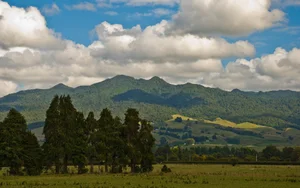
Published reconstructions of her journey include names such as Te Pirongia-o-Te Aroaro-ō-Kahu, Te Manga-Wāero-o-Te Aroaro-ō-Kahu, Te Kakepuku-o-Kahu, Te Whakamaru-o-Kahu, Hurakia-o-Kahu, Maungapau-o-Kahu, Rangitoto-o-Kahu, Pureora-o-Kahu and Te Puke-o-Kahu.
Not every place is attributed to Kahupeka in precisely the same way in every tradition. Local explanations may differ from those recorded in national reference works, and English translations do not always reproduce the full meaning of ancestral names. Nevertheless, the repeated association of Kahu or Kahupeka with places across the region forms one of the strongest elements of her historical memory.
Naming within these traditions was more than attaching labels to anonymous geography. A name could preserve an event, an environmental observation, an ancestor, a relationship or a personal experience. It could also contribute to the remembered connection between descendants and the land through which their ancestors had travelled.
The names associated with Kahupeka form a sequence. They remember climbing, shelter, clothing, food, illness, recovery, grief and affection. Read together, they preserve the outline of a journey long after the precise chronology of her life disappeared.
The landscape served as both a route and an archive.
Pirongia and Te Aroha
Two of the best-known places associated with Kahupeka are Pirongia and Te Aroha.
Te Ara gives the fuller traditional name of Pirongia as Te Pirongia-o-Te Aroaro-ō-Kahu, translated there as “the scented pathway of Kahu”. A nearby stream, Te Manga-Wāero-o-Te Aroaro-ō-Kahu, is connected with the washing of her dogskin cloak.
Other retellings associate Pirongia with illness or bodily experience during her journey. Some modern accounts suggest that Kahupeka was recovering from a miscarriage and experimented with plants to relieve her condition. This interpretation has become important in later presentations of her as a healer, but it is not equally prominent across the older published versions of her story.
Pirongia can therefore be securely connected with Kahupeka’s remembered journey, while the exact event preserved in the name remains less certain.
Kakepuku, south-west of Pirongia, presents a similar difficulty. Te Ara records Te Kakepuku-o-Kahu as “the hill over which Kahu climbed”. Another tradition associates the name with Rakatāura and his pregnant wife. Rather than choosing one account merely for narrative convenience, the different traditions can be acknowledged as part of the history attached to the landscape.
Te Aroha is likewise connected with more than one version of Kahupeka’s story. In the tradition of her journey after Uenga’s death, the name Te Aroha-o-Kahu is commonly understood as an expression of Kahupeka’s continuing love and grief. She is said to have looked back towards Kāwhia and remembered her husband.
In the account published by Ranginui Walker, however, Rakatāura named Te Aroha after Kahupeka’s death to express his love for her. The person naming the mountain and the relationship between the figures are different, but both traditions preserve an association between the place, Kahupeka and bereavement.
The variations cannot be combined into a single event. What remains striking is the persistence of the emotional meaning attached to the place.
Into the Central North Island
From the Waikato, Kahupeka’s remembered journey continued south into the central North Island.

At Te Whakamaru-o-Kahu, a name associated with shelter or protection, she is said to have considered settling. Another nearby place, Te Whakakākaho-o-Kahu, recalls the gathering of reeds, possibly for building a dwelling. The material was reportedly unsuitable, and she continued travelling.
Other names preserve increasingly difficult conditions. Maungapau-o-Kahu is associated with a shortage of food, while Pureora-o-Kahu is connected with recovery from illness. The route remembered in these names does not present Kahupeka as an invulnerable heroic explorer. She became hungry, tired and unwell. Her survival depended upon movement through real environments and upon recognising what those environments could provide.
Travelling through the interior required knowledge of water, food, shelter, weather and terrain. Routes had to be remembered and the relationship between different places understood. Kahupeka was not entering an empty or unknown country in the later European colonial sense of exploration. The North Island was already inhabited and socially connected, and Māori communities possessed extensive knowledge of its environments.
Her importance lies not in claiming that she “discovered” the central North Island. It lies in the way her own journey became part of the knowledge and memory attached to that landscape.
Environmental Knowledge and Rongoā Māori
Modern profiles frequently identify Kahupeka as an early practitioner or pioneer of rongoā Māori, the broad body of Māori healing knowledge and practice.
Royal Society Te Apārangi included her in its 2018 150 Women in 150 Words project and associated her story with native plants including harakeke, koromiko, kawakawa and rangiora. These plants became important within Māori practical and healing traditions, and Kahupeka’s remembered illness and recovery have encouraged interpretations of her journey as one involving medicinal experimentation.
The association is plausible, but the surviving traditions do not allow every modern claim to be stated with equal confidence. Te Pūnaha Matatini has noted that direct references to medicinal experimentation are relatively limited across the many versions of Kahupeka’s story. Some accounts also present Kahu travelling with Rakatāura rather than as a widowed woman treating herself during a solitary journey.
It is therefore safer to say that Kahupeka became associated with knowledge of native plants and with later histories of rongoā than to describe her as the inventor of Māori herbal medicine or the discoverer of specific remedies.
Rongoā was not the creation of one person. It developed through accumulated observation, practice and transmission across generations. Presenting Kahupeka as a solitary medical pioneer would impose a modern model of individual discovery upon a collective knowledge tradition.
Her journey nevertheless belongs within the wider history of environmental knowledge in Aotearoa. The place-name traditions repeatedly connect her experiences with shelter, food, illness and recovery. Whether or not particular medicinal claims can be traced to the oldest surviving versions, her story remembers knowledge as something gained and applied through lived contact with the environment.
The Final Journey
Tradition places the final stage of Kahupeka’s life in the forested country west of Lake Taupō.
After the illness associated with Pureora, she continued towards Te Puke-o-Kahu, a hill between the Rangitoto and Pureora forests. Te Ara’s reconstruction of her journey states that she died after climbing the hill. Other accounts suggest that she settled in the area before her death.
Her son Rakamaomao is said to have returned to Kāwhia. Beyond this, little survives concerning Kahupeka’s final days.
The location of her death is remembered more clearly than its date. There is no known year for her journey or death, and the designation “c. 15th century” remains a broad estimate based upon genealogical placement.
This imbalance between geography and chronology is characteristic of Kahupeka’s surviving story. The calendar has largely disappeared. The route remains.
Competing Traditions and Historical Evidence
The surviving accounts of Kahupeka differ in important details. Her relationship with Rakatāura is disputed between published traditions; her husband is named differently; some versions present a journey following bereavement while others place her with a male companion; and the attribution of individual place names is not always consistent.
The medicinal dimension of her story also varies considerably. Modern accounts have sometimes placed rongoā at the centre of her biography, while older published traditions more clearly emphasise her journey and the naming of the landscape.
These differences matter, but they do not leave historians with nothing to discuss. Across the principal traditions, several elements remain persistent: Kahupeka’s connection with Tainui, a major journey through the North Island interior, her association with numerous named places, and the preservation of personal experience through geography.
For this profile, the whakapapa and journey recorded by Pei Te Hurinui Jones provide the principal narrative because they offer the most detailed connected account. Alternative traditions are identified where they substantially alter the story.
The aim is not to make every version agree. It is to distinguish the recurring historical tradition from details that remain uncertain.
Recognition
For generations, Kahupeka’s principal recognition existed within the Tainui and Waikato traditions that preserved her name, ancestry and journey.
Her story later entered wider national histories of Aotearoa. Te Ara has presented her journey through both written discussion and a map of the places associated with her. Artist Cliff Whiting created an interpretation of Kahupeka naming the land, reproduced by Te Ara, which represents her relationship with landscape without pretending to be a contemporary portrait.
In 2018, Royal Society Te Apārangi included Kahupeka in its 150 Women in 150 Words project, recognising women associated with the development and expansion of knowledge in Aotearoa New Zealand. That profile particularly emphasised her connection with medicinal plants and helped bring her story to audiences beyond the communities in which her name had long been preserved.
Māori Television has also included Kahupeka within its Pūrākau series, presenting ancestral narratives to younger audiences.
Yet the most enduring form of recognition remains the geography itself. Pirongia, Te Aroha, Pureora and other places continue to carry traditions associated with her journey.
Legacy and Historical Significance
Kahupeka’s historical significance lies in the relationship between movement, memory and place.
Her life cannot be reconstructed with the chronological precision possible for a person who left letters or appears in dated administrative records. The surviving traditions do not reveal what she thought on a particular day, the exact route of every stage of her journey or the precise remedies she may have used when she became ill.
What they preserve is a different form of historical continuity. Kahupeka remained connected with a sequence of places extending across a substantial part of the North Island. The names associated with her recall physical movement and experiences of grief, shelter, hunger, illness and recovery. Whakapapa places her within Tainui history, while kōrero tuku iho preserved the relationships between the ancestor and the land.
Her story also requires care in the language of exploration. Kahupeka was not a European-style explorer entering supposedly unknown territory and claiming discovery. She travelled through an inhabited cultural landscape in which routes, communities and environmental knowledge already existed. Her remembered contribution was to become part of that landscape’s historical memory.
The same caution applies to rongoā. Kahupeka should not be described as the founder of Māori medicine on the basis of evidence that does not support such a claim. Her association with plants, illness and recovery is historically significant, but it belongs within a collective tradition of knowledge accumulated across generations.
Kahupeka is therefore important not because she can be made to fit a modern category such as explorer, scientist or physician. Her story shows how ancestry, environmental knowledge and geography could operate together as forms of historical memory.
The details of her life became uncertain. Her connection with the land endured.
Key Contributions
Key Contributions
- Became one of the most important Tainui ancestral figures associated with inland exploration and settlement traditions.
- Was remembered through a journey extending from Kāwhia across the Waikato and into the central North Island.
- Became connected with the naming of mountains, streams, forests and other landscape features.
- Preserved relationships between ancestry, place and historical memory through the traditions attached to her route.
- Contributed to the remembered environmental knowledge of routes, shelter, food, illness and recovery.
- Became associated in modern accounts with the history of rongoā Māori and native medicinal plants.
- Demonstrates how whakapapa, kōrero tuku iho and whenua can preserve historical knowledge outside written archives.
Key Dates
Kahupeka is believed to have lived several generations after the ancestral arrival and settlement traditions associated with the Tainui waka. The date is inferred from whakapapa and should not be treated as exact.
In the account preserved by Pei Te Hurinui Jones, Kahupeka descends from important Tainui ancestors and grows up near Karioi on the western coast of the North Island.
She marries Ue or Uenga and is said to have a son named Rakamaomao.
According to one principal tradition, Uenga’s death is followed by Kahupeka’s departure from Kāwhia and the beginning of her inland journey.
Kahupeka becomes associated with Pirongia, nearby waterways, Kakepuku and other named features. The precise explanations attached to individual names vary.
Her journey is connected with Te Aroha and with the memory of bereavement. A different tradition credits Rakatāura with naming the place after Kahupeka’s death.
Names associated with Kahupeka preserve traditions of shelter, gathering materials, hunger, illness and recovery as she moves into the central North Island.
She reaches Te Puke-o-Kahu, between the Rangitoto and Pureora forests, where tradition places the end of her life.
Royal Society Te Apārangi includes Kahupeka in its 150 Women in 150 Words project.
Did You Know?
Did You Know?
- Kahupeka’s name appears in several forms, including Kahu, Kahupeka, Kahupekapeka and Kahukeke.
- Her approximate fifteenth-century date comes from whakapapa rather than a contemporary written calendar.
- Her journey is associated with places extending from Kāwhia and Pirongia through the Waikato and into the central North Island.
- Place names connected with her preserve memories of climbing, clothing, shelter, hunger, illness, recovery and bereavement.
- Te Aroha is linked with Kahupeka in more than one tradition, although the identity of the person who named the place differs.
- Modern profiles often emphasise her connection with rongoā Māori, but the journey and named landscape are more consistently preserved in published traditions.
Evidence and Interpretation
Evidence and Interpretation
Strongly supported within published Tainui tradition
- Kahupeka was an important Tainui ancestress.
- She was associated with a major inland journey through the Waikato and central North Island.
- Numerous landscape features became connected with her name and experiences.
- One principal tradition places her journey after the death of her husband.
Supported, but with significant variation
- Her precise genealogy and relationship with Rakatāura.
- The name and identity of her husband.
- The attribution of individual place names, including Kakepuku and Te Aroha.
- The exact route and sequence of her journey.
Requiring cautious wording
- That Kahupeka suffered a miscarriage.
- That medicinal treatment was a principal purpose of her journey.
- That she personally discovered the healing properties of particular native plants.
- That she founded or pioneered Māori herbal medicine.
The surviving evidence supports a strong profile of Kahupeka as a Tainui ancestress associated with movement, named landscapes and environmental knowledge. More specific medical claims remain possible elements of later or less consistently preserved traditions and should be identified as such.
Further Reading
- Pei Te Hurinui Jones and Bruce Biggs — Ngā Iwi o Tainui: The Traditional History of the Tainui People
- Te Ara — “Waikato Tribes: Ancestors”
- Te Ara — “Kahupekapeka’s Journey”
- Royal Society Te Apārangi — “Kahupeka”
- Ranginui Walker — Ka Whawhai Tonu Matou: Struggle Without End
Image Credits
Mount Pirongia: Photograph of Mount Pirongia in the Waikato region. Confirm the original photographer and current Wikimedia Commons licence wording before publication.
Te Kawa hill and Kakepuku: Aerial photograph looking west across Te Kawa hill towards Kakepuku. Confirm the original photographer and current Wikimedia Commons licence wording before publication.
Help Keep These Stories Alive
If you enjoyed reading this profile and believe more overlooked voices deserve to be heard, you can help fund future research, writing, and free educational resources.
Every contribution—whether a one-off donation or monthly support—helps create new historical profiles, downloadable materials, and articles that remain freely available to everyone.
Thank you for helping history reach more people.
