

Micaela Bastidas
Historical Profile
The Strategist at the Heart of the Great Andean Rebellion
Introduction
Micaela Bastidas is often introduced as the wife of Túpac Amaru II. Although correct, that description is insufficient because it obscures the extent of her own authority within the enormous rebellion that erupted in southern Peru in November 1780.
She was married to José Gabriel Condorcanqui, an Andean kuraka who adopted the name Túpac Amaru II and became the most famous leader of the uprising. Their marriage, family and political partnership were central to the movement, but Micaela's importance did not depend solely upon her relationship with him. She organised supplies, recruited supporters, issued instructions, arranged the movement of people and resources, maintained communications across rebel territory and repeatedly assessed the military situation confronting the uprising.
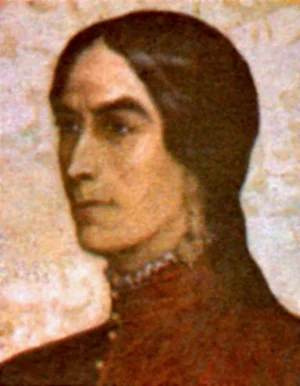
Surviving letters show Micaela warning about desertion, shortages, enemy reinforcements and the dangers created by delay. Túpac Amaru's own correspondence often addressed her as a trusted political and military colleague carrying substantial responsibilities of her own. The survival of these documents makes her unusually visible because historians can examine some of her decisions while the rebellion was actually unfolding rather than reconstructing her entirely through later accounts.
Micaela did not leave a memoir explaining the rebellion from beginning to end. The surviving letters represent only part of her correspondence, and many passed through scribes rather than necessarily being written in her own hand. They were produced during a rapidly changing military crisis, and some survived precisely because colonial authorities intercepted or preserved them as evidence. Even with these limitations, they reveal a leader working inside the practical machinery of rebellion.
Her concerns included ammunition, food, horses, money, intelligence and the loyalty of supporters. She instructed local authorities, managed movement through rebel-held territory and attempted to maintain a coalition containing Indigenous communities, mestizos, creoles, free and enslaved people, local officials and regional leaders whose interests did not always coincide. These were not secondary administrative details. They determined how long the uprising could operate and what its armies were capable of doing.
Her most famous disagreement with Túpac Amaru concerned Cusco. After the rebel victory at Sangarará in November 1780, Micaela urged rapid movement towards the city before colonial forces could reorganise. Túpac Amaru delayed, reinforcements reached Cusco and rebel momentum weakened. Later writers have sometimes reduced this disagreement to a simple verdict in which Micaela understood the war and her husband did not.
The surviving letters certainly demonstrate her urgency and strategic awareness, but they cannot tell us with certainty what would have happened had the rebels attacked Cusco immediately. Nor do they prove that Túpac Amaru's hesitation had no rational basis. Micaela's importance does not require her to be made infallible. The evidence establishes that she was thinking politically and militarily at the highest level of the rebellion and was prepared to argue strongly for the course she believed offered the movement its best chance.
The uprising was eventually defeated. Micaela, Túpac Amaru and members of their family were captured, tried and publicly executed in Cusco on 18 May 1781. Fighting nevertheless continued under other leaders until 1783, spreading across a vast area of the southern Andes and leaving a legacy later interpreted through changing ideas of Indigenous resistance, national independence and social revolution.
Micaela Bastidas should not be recovered by turning her into a flawless revolutionary heroine or by diminishing the importance of those around her. The surviving evidence supports a more historically substantial conclusion: she was one of the principal leaders of the largest anticolonial uprising in eighteenth-century Spanish America, and her correspondence allows historians to examine how she tried to make that rebellion function.
Birth and Family Background
Micaela Bastidas was born in 1744, traditionally on 23 June, in Pampamarca in the southern Andean region of the Viceroyalty of Peru. Her mother was Josefa Puyucahua, while her father is usually identified as Manuel Bastidas, although surviving information about him is limited and later accounts differ over his background.
Colonial descriptions sometimes identified Micaela using the term zamba, a category within the Spanish colonial caste system generally applied to people understood as having both African and Indigenous ancestry. Other documentary descriptions classified her or members of her family differently. These labels require caution because colonial racial classification was neither scientifically coherent nor consistently applied. Categories could change according to locality, legal purpose, reputation, family strategy and the judgement of priests or officials. A marriage record might describe someone differently from a judicial document or hostile political account.
It is therefore reasonable to connect Micaela firmly with the Indigenous Andean world and to acknowledge evidence suggesting African ancestry, while avoiding claims that every detail of her genealogy has been established. The uncertainty is itself historically revealing. Spanish colonial society attempted to rank people through categories of ancestry and legal status, yet the identities and family histories of individuals frequently resisted neat administrative classification.
Micaela appears to have spoken Quechua fluently and used Spanish within political and administrative communication. The extent of her formal education is unknown, and claims that she followed a particular curriculum or received a specific level of schooling often go beyond the surviving evidence. Her later correspondence and administrative work nevertheless demonstrate a developed understanding of political communication, organisation and the practical demands of regional administration.
Marriage to José Gabriel Condorcanqui
On 25 May 1760, while still in her mid-teens, Micaela married José Gabriel Condorcanqui in Surimana. Condorcanqui belonged to an Indigenous noble family and claimed descent from Túpac Amaru I, the last ruler of the Neo-Inca state at Vilcabamba, whom Spanish authorities executed in 1572. He later held the position of kuraka over the communities of Tungasuca, Pampamarca and Surimana.
The office of kuraka occupied an intermediary position within colonial Andean society. It carried local prestige and responsibilities towards Indigenous communities while also connecting its holder with the demands of Spanish government. Kurakas might collect tribute, organise labour, resolve disputes and represent communities before colonial authorities. The position could bring influence and wealth, but it also placed its holder between populations subjected to imperial demands and the officials responsible for enforcing them.
Micaela and José Gabriel had three sons: Hipólito, Mariano and Fernando. Their household was already connected with significant political, commercial and administrative networks before the uprising. José Gabriel operated as a muleteer and trader across regional routes, while his position as kuraka required familiarity with local authorities, communities and the movement of resources through the Andes.
Micaela's precise role in the family's commercial and political affairs before 1780 is difficult to reconstruct. Her later activities, however, show that she possessed the organisational knowledge necessary to manage people, provisions, money and correspondence across a considerable area. Such abilities are unlikely to have appeared suddenly when rebellion began and probably developed through years of participation in household, commercial and kuraka administration.
Colonial Pressure in the Southern Andes
The rebellion emerged from a region experiencing intense political and economic pressure. Spanish colonial rule in the Andes rested upon overlapping systems of taxation, forced labour, tribute, commercial regulation and local administration. Indigenous communities continued to face the burden of the mita, particularly the labour draft associated with the mines of Potosí, while corregidores imposed the forced distribution of goods through the reparto de mercancías.
Under the reparto, Indigenous communities could be compelled to purchase goods from colonial officials, often at inflated prices and regardless of local need. The system generated debt, resentment and extensive opportunities for corruption. Eighteenth-century Bourbon reforms, intended to strengthen royal authority and increase imperial revenue, could intensify existing pressures and disrupt established regional interests. Opposition was therefore not confined to one social group and could involve Indigenous communities, mestizos, traders, creoles and local elites for different reasons.
Before the uprising, José Gabriel Condorcanqui pursued legal challenges against aspects of colonial abuse. He opposed forced labour obligations and sought recognition of his noble claims, but petitions through colonial institutions produced limited results.
It would nevertheless be misleading to imagine that the rebellion began with a single, fully developed programme for Peruvian national independence. Its aims evolved as the movement expanded. Rebel proclamations condemned abusive officials, forced distribution, taxation and colonial exploitation, while leaders sometimes presented their struggle as loyal to the Spanish monarch but opposed to corrupt representatives. At other moments, the movement invoked Inca legitimacy and challenged the foundations of colonial authority more directly.
Participants could therefore join the uprising for very different reasons. Some wanted relief from tribute or forced labour, while others sought local political change, opposed peninsular Spaniards or hoped to attract American-born creoles into a wider coalition. Inca restoration, communal grievance, racial tensions and personal rivalries could all shape local participation.
Micaela operated within this unstable political environment. A major part of her work involved maintaining a movement whose supporters did not necessarily agree about what victory should ultimately mean.
The Seizure of Antonio de Arriaga
The uprising began publicly in November 1780 with the seizure of Antonio de Arriaga, the corregidor of Tinta. Arriaga represented many of the abuses associated with colonial local government. Rebel forces captured him, compelled him to issue orders that helped release funds and weapons, and executed him on 10 November.
José Gabriel Condorcanqui now openly adopted the name Túpac Amaru, deliberately connecting the rebellion with Inca royal memory. Arriaga's execution transformed a local confrontation into a direct challenge to colonial authority, and Micaela quickly became central to the organisation of the expanding movement.
Tungasuca developed into an important rebel centre from which Micaela coordinated supplies, messengers, recruitment, military equipment and communications. She dealt with officials and community leaders, issued passes and instructions, and attempted to ensure that rebel forces received food, weapons and other necessities.
The uprising depended upon the rapid movement of people, resources and information. Communities had to receive orders, supporters had to be summoned, animals and provisions had to be acquired, weapons and ammunition distributed, and intelligence returned quickly enough to remain useful. Micaela's work placed her at the centre of these interconnected systems and gave her a detailed view of the practical condition of the rebellion.
The Work of Rebellion
Historical narratives often concentrate upon battles because they create obvious turning points. Micaela's correspondence reveals the less visible work that made military action possible.
She organised the collection of provisions and attempted to prevent shortages while monitoring the movement of troops and supporters. Desertion was a persistent concern, as was the reliability of individuals who appeared to have joined the movement for immediate advantage rather than lasting commitment. Maintaining an army assembled through local mobilisation required constant attention to food, money, confidence and political loyalty.
Micaela also communicated with regional authorities and supporters about the treatment of different social groups. In December 1780, she instructed followers to attract creoles to the rebel banner and avoid harming them, presenting the movement as directed against abuses and European officials rather than against all people born in the Americas. The policy reflected an effort to broaden the coalition and prevent uncontrolled violence from driving potential supporters towards the colonial government.
Such instructions do not prove that the rebellion followed a consistent policy everywhere. Violence spread, local grievances shaped events and rebel authority varied considerably from place to place. Leaders could issue orders that followers ignored, misunderstood or adapted to local circumstances. The documents nevertheless show Micaela attempting to impose political direction and discipline upon the uprising because she understood that military numbers alone would not determine its success. The rebellion also required legitimacy and allies.
Letters of Love and War
The correspondence between Micaela and Túpac Amaru is among the most valuable evidence for understanding their partnership. Their letters combine affection, anxiety, instruction and argument, with personal endearments appearing alongside reports about troops, supplies and enemy movements. Marriage and political activity cannot always be separated neatly within these documents.
The National Library of Peru has described the surviving correspondence as a means of following both the course of the insurrection and Micaela's actions within it. Letters from Túpac Amaru frequently communicate with her as an organiser carrying major responsibilities rather than merely informing a spouse waiting at home.
Their partnership should not be romanticised as a modern relationship untouched by hierarchy or disagreement. Micaela became increasingly frustrated by what she regarded as Túpac Amaru's hesitation, warning that supporters would abandon the movement, money would run out and colonial forces would receive reinforcements. Their correspondence records substantial disagreements within a relationship of political dependence and shared responsibility.
The letters are particularly valuable because they were not written as later ceremonial praise. They contain the language of urgent political communication and show Micaela encouraging, complaining, threatening and commanding according to circumstance. Scholarship examining her correspondence has noted her willingness to reward obedience while also pressuring those who failed to fulfil rebel demands. Her authority was practical, direct and recognised by the people with whom she communicated.
Sangarará
On 18 November 1780, rebel forces won an important victory at Sangarará. Colonial troops and local supporters had gathered in the town's church, and the circumstances of the fighting and subsequent burning of the building became politically significant. Colonial authorities and clergy used the event to portray the rebels as enemies of religion, while Túpac Amaru rejected that characterisation and attempted to maintain the movement's Catholic legitimacy.
The victory nevertheless gave the rebels significant military momentum. Colonial authority in the region appeared vulnerable, Cusco was alarmed and the city's defenders required time to organise. Micaela believed the rebels should move rapidly towards Cusco before troops from elsewhere could reinforce it and before the movement's own cohesion weakened.
Her assessment was grounded in immediate practical concerns. Supporters who had gathered for a campaign could not be maintained indefinitely, while money and provisions were limited and military confidence depended partly upon visible success. Every delay gave the colonial government more time to prepare and increased the possibility that rebel forces would disperse.
Túpac Amaru did not immediately attack Cusco. Instead, rebel forces moved through other areas, recruiting supporters and extending their authority. His reasons remain debated. He may have hoped to widen the movement, secure the countryside, attract creole support or avoid an assault whose potential cost he feared. It is also possible that he overestimated the time available or underestimated the speed of the colonial response.
The evidence clearly shows Micaela arguing for a different course, but it does not allow the campaign to be rerun with a known alternative outcome.
The Argument Over Cusco
Micaela's letters concerning Cusco provide some of the clearest evidence of her strategic role. In one letter, she warned that colonial forces in the city would unite with reinforcements marching from Lima. She also complained that the supporters she had gathered could not be held indefinitely and that many were motivated by immediate advantage. Desertion had already begun.
Her reasoning reflected the different conditions under which rebel and imperial forces operated. Colonial authorities could draw upon established institutions, tax revenues, trained officers, defensive positions and wider imperial networks. Rebel armies depended much more heavily upon local mobilisation, supplies from communities and continued confidence that victory remained possible. A prolonged delay therefore risked weakening the rebels while allowing the colonial government to strengthen.
Later historians have often presented Micaela as the superior strategist because events appeared to confirm many of her warnings. That judgement has substance, but it still requires qualification. Some of her most urgent letters survive within the documentary record of a defeated rebellion, and hindsight naturally gives prophetic weight to warnings that later proved justified.
An immediate assault on Cusco might still have failed and could conceivably have shattered the rebellion at an earlier stage. The strongest conclusion is therefore not that Micaela could certainly have won the war, but that she recognised the strategic dangers of delay and argued her position with authority. Her voice belonged within the rebellion's central military debate.
Authority in Tungasuca
While Túpac Amaru moved with rebel forces, Micaela frequently remained at or operated from Tungasuca, directing an administrative centre whose importance extended far beyond that of a domestic headquarters. Messages and resources moved through networks under her authority, while she issued instructions and safe-conduct passes allowing people to travel through rebel-controlled areas.
These documents indicate that the movement was attempting to create its own mechanisms of government and territorial control. Scribes acting for Micaela issued passes within weeks of the uprising's beginning, demonstrating that her authority could be formalised through written documentation and recognised beyond her immediate household.
Micaela also participated in the mobilisation of troops. Evidence records her arriving at Yanaoca in late November with a substantial force, indicating that her activities were not confined to storing provisions or relaying her husband's instructions.
The distinction between logistics and strategy can become misleading when one is treated as inherently secondary to the other. Decisions about where food, money, messengers and troops should move directly affected the military options available to the rebellion. Micaela's administrative responsibilities therefore formed part of its strategic command rather than existing outside it.
Women in the Great Rebellion
Micaela was not the only woman to exercise authority during the uprising. Women participated throughout the Great Rebellion as organisers, messengers, recruiters, suppliers, intelligence gatherers, combatants and local leaders. Tomasa Tito Condemayta became one of the movement's most prominent commanders and supporters, while other women appear throughout trial records, correspondence and local testimony.
Research into the rebellion has demonstrated that female participation occurred at multiple levels rather than representing a handful of isolated exceptions. Micaela's exceptional visibility partly reflects her position within the leading family and the unusually extensive documentation connected with her prosecution.
Her prominence should not erase women for whom less evidence survives, but neither should widespread female participation be interpreted as proof that colonial Andean society offered general political equality. Rebellion can create roles that ordinary institutions restrict, while Indigenous and community structures may also have provided some women with forms of authority that Spanish colonial records represented incompletely.
Within the crisis of 1780–1783, leadership often depended upon trust, networks, resources and practical ability. Micaela possessed all of these and used them on a regional scale.
A Coalition Under Strain
The rapid expansion of the rebellion created political problems alongside military opportunities. Its leadership sought support from Indigenous communities, mestizos, creoles, enslaved people and others burdened by aspects of colonial rule. Túpac Amaru issued a proclamation offering freedom to enslaved people under specified circumstances, while rebel messages condemned forced labour and administrative abuse.
These groups did not share identical interests. Creole landowners might oppose peninsular officials while simultaneously fearing Indigenous mobilisation. Communities could join the uprising to settle local disputes, some supporters sought plunder and others expected the restoration of Inca political authority. Racial and social tensions could erupt into violence that threatened the leadership's broader strategy.
Micaela's instructions to protect creoles and attract them to the movement demonstrate her awareness of this danger. The rebellion needed large numbers of supporters but also had to prevent uncontrolled conflict from narrowing its political base.
Her efforts did not always succeed, and no leader could completely control an uprising spread across difficult terrain and involving thousands of participants. The gap between official policy and local action should not be mistaken for evidence that the leadership lacked a strategy. It demonstrates how difficult that strategy was to enforce.
The Move Towards Cusco
By the end of 1780, the rebel leadership finally moved towards Cusco. The delay had allowed colonial authorities to strengthen the city, and reinforcements, militia and defensive preparations had altered the military balance.
Rebel forces threatened and surrounded Cusco in early January 1781 but failed to capture it. The campaign subsequently entered a more difficult phase as colonial forces regained the initiative and rebel support came under increasing pressure from shortages, fear, political divisions and military reverses. Micaela continued working to supply and coordinate the movement while many of her earlier warnings about reinforcements and desertion became immediate realities.
It is tempting to treat Cusco as the single lost opportunity that determined the entire rebellion, but history rarely offers such clean turning points. Even if the city had fallen, the Spanish imperial government could have sent additional forces, rebel unity might still have fractured and control of Cusco would not automatically have resolved the movement's internal tensions or secured the entire Andes.
The city nevertheless possessed immense symbolic, administrative and strategic importance. Its failure to fall deprived the rebellion of a centre that might have strengthened both its legitimacy and access to resources. Micaela had recognised the urgency of the situation, although whether her proposed solution would have produced a different final outcome remains unknowable.
Retreat and Betrayal
After the failure around Cusco, colonial forces pursued the rebel leadership. The movement did not collapse immediately, but Spanish authorities increasingly used rewards, threats and existing divisions to weaken the networks upon which the uprising depended.
In April 1781, Micaela, Túpac Amaru and members of their family were captured following betrayal by individuals within or connected to the movement. Their capture exposed one of the fundamental vulnerabilities of insurgency: rebels depended heavily upon personal loyalty and local relationships, yet those same networks could fracture under fear, financial reward, coercion or changing political judgement.
Micaela was taken to Cusco, where colonial authorities treated her correspondence, orders and administrative activity as evidence of guilt. The documents that now allow historians to recognise the extent of her leadership were, in part, preserved because the colonial government used them to condemn her.
Trial
The proceedings against Micaela form part of an extensive surviving documentary record. The Peruvian Bicentennial collections preserve hundreds of pages relating to the trials of Micaela, her family and other rebel leaders, including testimony, accusations, interrogations and sentences.
These sources require careful interpretation because they were produced by a colonial government attempting to destroy the uprising and identify its networks. Trial testimony cannot be treated as transparent autobiography. Prisoners faced coercion, threats and the possibility of torture, while officials asked questions designed to establish guilt and expose additional participants. Statements could also be summarised or recorded through scribes, meaning that the categories and priorities of the court shaped the surviving record.
Even with these limitations, the accusations against Micaela confirm the breadth of her activities. She was questioned about her communications, orders and role in organising the rebellion because the authorities recognised her as a significant political actor. She was not prosecuted merely for being married to a rebel leader; the colonial case against her rested substantially upon the authority she had exercised herself.
The Sentence
The punishment imposed upon the rebel leadership was intended to achieve more than their deaths. Public executions in early modern states and empires were forms of political theatre designed to demonstrate the consequences of challenging authority. The condemned could be placed before crowds, forced to witness the deaths of relatives and companions, mutilated and physically dispersed through territories associated with rebellion.
Micaela was sentenced to death alongside Túpac Amaru, their son Hipólito and other principal participants, including Tomasa Tito Condemayta and Antonio Oblitas. Their execution was fixed for 18 May 1781 in Cusco's main square.
The location carried considerable political significance. Cusco had been the capital of the Inca Empire and remained an important centre of Spanish colonial authority. The rebellion had failed to capture the city, and the colonial government now used the same place to stage the destruction of its leading figures and the restoration of imperial order.
Execution
The executions of 18 May 1781 were deliberately brutal. Micaela was forced to witness the death of her son Hipólito, while Túpac Amaru was made to witness the killing of members of his family and companions.
Accounts describe an attempt to execute Micaela using a garrote. When the device failed to kill her quickly, a rope was used and further violence inflicted. The precise sequence varies between retellings, and some later narratives heighten particular details, but the public cruelty of the execution and its political purpose are securely documented.
Micaela was thirty-six years old when she died. Her execution does not require the invention of a final speech, a perfectly composed act of defiance or an inspirational martyrdom. The available evidence shows a woman subjected to state violence intended to destroy both her and the political authority associated with her leadership.
The remains of rebel leaders were subsequently mutilated and dispersed. Spanish officials hoped that physical destruction and public punishment would break the rebellion's authority, although fighting continued after the deaths of its most famous leaders.
The Rebellion Continues
The deaths of Micaela and Túpac Amaru did not end the uprising. Diego Cristóbal Túpac Amaru, Mariano Túpac Amaru, Miguel Bastidas and other leaders continued the struggle, while rebel forces remained active across the region between Cusco and Lake Titicaca and maintained connections with the Katarista movements in Upper Peru.
The later phase of the conflict became more radical and, in some areas, more violent. Fighting continued until 1783, demonstrating that the movement had expanded beyond the control or identity of the married couple who led its first phase.
This continuation complicates any attempt to narrate the rebellion entirely through Micaela and Túpac Amaru. They were central to its outbreak and early development, but the movement became a regional crisis involving communities, leaders and political aims that no individual could completely control. Micaela's death removed one of its most capable organisers without removing the conditions that had produced the uprising.
Was It a War for Independence?
Micaela is frequently described as a precursor of Peruvian independence. The description reflects her later position in national memory but can oversimplify the political movement she actually helped to lead.
The independent Republic of Peru did not exist in 1780, and the rebellion preceded the better-known Spanish American wars of independence by several decades. Its political language was complex. Some proclamations attacked colonial officials while expressing loyalty to the Spanish king, whereas others invoked Inca sovereignty, solidarity among American-born groups or a more fundamental rejection of Spanish power.
The movement also changed as it spread, and its participants did not necessarily agree upon the political system that should replace existing colonial government. Calling Micaela an independence leader is therefore understandable when discussing her later legacy, but it should not replace the specific eighteenth-century context of the uprising.
The evidence establishes that she opposed colonial abuses and became a senior leader of an armed movement that seriously threatened Spanish authority across the Andes. Her precise vision of the political order that should ultimately replace colonial rule remains less certain.
Micaela and Túpac Amaru
Later historical memory often struggles to represent political partnerships without placing one individual above the other. For many years, Micaela appeared primarily as the loyal wife who supported Túpac Amaru. More recent interpretations have rightly emphasised her leadership, although this can create a different simplification in which she becomes the true strategic genius and he the hesitant husband who ignored her.
Their correspondence supports a relationship of political importance and mutual dependence more clearly than it supports rivalry as the defining feature of their partnership. They worked together, relied upon one another and disagreed substantially over important decisions.
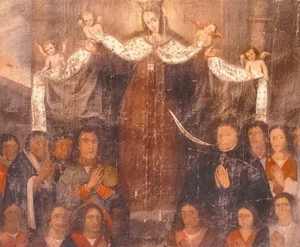
Túpac Amaru commanded forces, issued proclamations and embodied the dynastic claim carried by his adopted name. Micaela built and managed administrative, logistical and communication systems essential to the movement while also participating in strategic debate and troop mobilisation. Their responsibilities overlapped rather than dividing neatly into male military command and female domestic support.
The surviving letters record affection alongside impatience and political disagreement. Their marriage was neither separate from the rebellion nor the only relationship through which either exercised authority. Both leaders operated through wider Andean networks and depended upon thousands of individuals whose own decisions shaped the course of the uprising.
The Strategist Label
Micaela is now commonly described as the rebellion's great strategist. The title is useful when it directs attention towards her planning, logistics, intelligence and military judgement, but it becomes misleading if it suggests that she controlled every decision or possessed a complete plan for victory.
Her strongest documented strategic position concerned the need to move rapidly against Cusco. Later events gave considerable weight to her warnings about reinforcements, shortages and desertion. She also understood that troops had to be fed, supporters retained and information moved quickly if the uprising was to sustain its military strength.
These were strategic concerns rather than merely administrative duties. At the same time, Micaela made her decisions under conditions of uncertainty. She could not know the complete strength of colonial reinforcements, the reliability of every community or the future response of the wider Spanish Empire.
Describing her as a strategist should therefore restore the scale of her documented responsibilities without allowing hindsight to turn her into an infallible commander. Her importance rests upon the decisions she demonstrably made and the authority she demonstrably exercised.
Race, Class and Later Memory
Micaela's background has been interpreted differently across generations. She has been described as Indigenous, Afro-Indigenous, mestiza, zamba, Andean, Peruvian and revolutionary. Some of these descriptions are grounded in colonial documentation, while others reflect the political and cultural priorities of later societies.
Her possible African ancestry has often received less attention than her Indigenous identity, although some modern accounts have moved in the opposite direction and made categorical genealogical claims unsupported by the limited evidence concerning her father. A careful historical profile should acknowledge the possibility of African ancestry without pretending that her family history has been completely reconstructed.
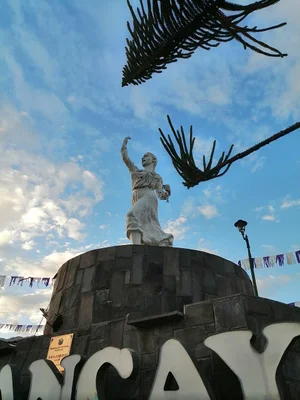
Micaela lived within a colonial society that attempted to classify people hierarchically and distribute rights, obligations and status according to ancestry, legal category, wealth and reputation. Her leadership crossed some of these divisions, although the rebellion itself did not abolish them.
Later national memory transformed Micaela into a symbol of Peru, while Indigenous, feminist and Afro-Peruvian interpretations have emphasised different aspects of her identity. These later meanings form an important part of her historical significance, but they should remain distinguishable from what can be established about the eighteenth-century woman herself.
The Survival of Her Letters
Micaela's surviving correspondence is central to modern understanding of her leadership. Without the letters, historians would still know that she was married to Túpac Amaru, prosecuted as a major rebel and executed by colonial authorities. The documentary record would nevertheless reveal far less about how she operated within the movement.
The letters show the rebellion under pressure and record disputes over timing, strategy, money, supplies, desertion and enemy reinforcements. They also demonstrate that local officials and commanders received instructions issued in Micaela's name.
The correspondence has significant limitations. Historians do not possess every message she sent, and some letters survive because colonial authorities intercepted them. Many were written through secretaries or scribes, making it difficult to separate Micaela's precise spoken wording from the conventions of written administration.
Language also matters. Micaela operated within a predominantly Quechua-speaking environment, while much of the surviving documentary evidence is in Spanish. Ideas may therefore have moved between languages before reaching the written page. Her letters cannot be treated as an entirely unmediated personal voice, but they remain extraordinary evidence of political leadership during an active rebellion.
What We Know — and What We Do Not
What We Know — and What We Do Not
Firmly Supported
- Micaela Bastidas was born in 1744 in the southern Andes of colonial Peru.
- Her mother was Josefa Puyucahua, and her father is traditionally identified as Manuel Bastidas.
- She married José Gabriel Condorcanqui in 1760.
- They had three sons: Hipólito, Mariano and Fernando.
- José Gabriel later adopted the name Túpac Amaru II and led the rebellion beginning in November 1780.
- Micaela held a central leadership role in the uprising.
- She coordinated supplies, correspondence, recruitment and movement through rebel-held territory.
- She issued instructions and safe-conduct documents.
- Her surviving letters demonstrate involvement in military and political decision-making.
- She urged rapid action against Cusco after the victory at Sangarará.
- She warned about colonial reinforcements, shortages and desertion.
- She was captured in April 1781.
- Colonial authorities tried her as a principal leader of the rebellion.
- She was executed in Cusco on 18 May 1781.
- The rebellion continued after her death until 1783.
Strongly Supported but Requiring Interpretation
- Micaela possessed authority broadly comparable to that of the movement's senior commanders.
- Her organisational experience before 1780 probably developed partly through the family's commercial and kuraka activities.
- Her recommendation to move rapidly against Cusco may have represented the rebellion's strongest available opportunity.
- She spoke Quechua fluently and used Spanish in political and administrative communication, often through scribes.
- Evidence supports the possibility that her ancestry included both Indigenous and African heritage.
- Her strategic judgement concerning delay and colonial reinforcement was significant.
Uncertain or Unknown
- The precise details of Micaela's childhood and education.
- The complete identity and ancestry of her father.
- How Micaela personally understood the colonial racial categories applied to her.
- Her exact role in family commerce before the rebellion.
- The full extent of her involvement in planning the initial seizure of Antonio de Arriaga.
- Whether an immediate assault on Cusco would have succeeded.
- The exact long-term political system she hoped the rebellion would establish.
- How she personally understood the relationship between loyalty to the Spanish king, Inca legitimacy and rejection of colonial rule.
- The complete wording of statements attributed to her during interrogation.
- Her private thoughts during imprisonment and execution.
Historical Confidence
Historical Confidence
Existence, family and role in the rebellion: ★★★★★
Micaela is documented through marriage and family records, extensive correspondence, rebel documents and colonial judicial proceedings.
Organisational and logistical authority: ★★★★★
Her letters and orders provide direct evidence that she organised supplies, communications, recruitment and movement across rebel territory.
Strategic role: ★★★★☆
Her arguments concerning Cusco and warnings about reinforcements and desertion demonstrate significant strategic judgement. The claim that her proposed course would certainly have produced victory cannot be tested.
Political aims: ★★★☆☆
The rebellion opposed colonial abuses and threatened Spanish authority, but its programme evolved and contained several political languages. Micaela's precise vision of the political order that should replace colonial rule remains uncertain.
Ancestry and colonial racial identity: ★★★☆☆
Her Indigenous background is clear, and evidence supports possible African ancestry or classification as zamba. Details of her paternal ancestry and the meaning of changing colonial classifications remain uncertain.
Private personality and emotions: ★★☆☆☆
The letters reveal urgency, affection, frustration and command, but they were written under political pressure and do not constitute a complete personal record.
Why Micaela Bastidas Matters
Micaela Bastidas changes how the practical work of rebellion can be understood. Political movements are frequently remembered through the individual whose name became their principal symbol, and Túpac Amaru's adopted name, connection with Inca royal memory and public execution made him one of the most enduring figures of resistance in the Americas.
The surviving evidence concerning Micaela reveals forms of leadership that are less easily represented in heroic narratives. Armies required provisions and ammunition, messengers had to move between communities, supporters needed to be retained and commanders depended upon information reaching them before circumstances changed. Micaela participated directly in managing these systems and recognised that administrative failure could destroy an uprising as effectively as defeat in battle.
She also understood the danger of losing momentum and argued for action before colonial forces could reorganise. Her communications with officials and communities show her attempting to discipline a politically diverse coalition while addressing the practical problems threatening the movement from within.
Her history challenges the assumption that a married woman's political authority must have been derivative. Micaela's position was undoubtedly connected with Túpac Amaru, just as his leadership depended upon her work, their family and wider regional networks. Their connection does not establish her subordination any more than recognising her authority requires diminishing his.
Most importantly, Micaela's letters prevent later memory from constructing her entirely through the words of others. They do not answer every question about her life or political ambitions, but they establish that she participated directly in the organisation and strategic direction of the rebellion.
Key Achievements
Key Achievements
- Served as one of the principal leaders of the Great Andean Rebellion of 1780–1783.
- Coordinated supplies, money, recruitment, communications and movement through rebel-held territory.
- Issued instructions and safe-conduct documents under recognised authority within the movement.
- Participated directly in strategic debate and repeatedly warned of the dangers created by delaying an advance on Cusco.
- Monitored shortages, desertion, enemy reinforcements and the reliability of supporters during an active military crisis.
- Attempted to broaden and discipline the rebel coalition, including efforts to attract creole support.
- Participated in troop mobilisation as well as logistics and administration.
- Left surviving correspondence that allows historians to examine leadership while the rebellion was unfolding.
- Was prosecuted by colonial authorities as a principal rebel leader on the basis of her own documented actions and authority.
Key Dates
Micaela Bastidas is born in Pampamarca in the southern Andes of the Viceroyalty of Peru.
She marries José Gabriel Condorcanqui in Surimana.
Their son Hipólito is born.
Their son Mariano is born.
José Gabriel assumes the kuraka responsibilities associated with Tungasuca, Pampamarca and Surimana.
Their youngest son, Fernando, is born.
José Gabriel pursues commercial, political and legal activities across the southern Andes. Micaela's precise role is incompletely documented, although her later activities demonstrate substantial administrative experience.
Rebel forces seize the corregidor Antonio de Arriaga.
Arriaga is executed. José Gabriel publicly adopts the name Túpac Amaru and the rebellion expands.
Rebel forces defeat colonial troops at Sangarará.
Micaela organises supplies, troops, correspondence and movement from rebel centres including Tungasuca. She urges rapid movement towards Cusco.
Her letters warn that delay will allow reinforcements to reach Cusco and cause rebel supporters to disperse.
Rebel forces fail to capture Cusco.
Colonial forces recover momentum while Micaela continues organisational and military activity.
Micaela, Túpac Amaru and members of their family are captured.
Micaela is questioned during colonial judicial proceedings against the rebel leadership.
Micaela Bastidas, Túpac Amaru, their son Hipólito and other senior rebels are publicly executed in Cusco.
The Great Rebellion continues under Diego Cristóbal Túpac Amaru, Mariano Túpac Amaru, Miguel Bastidas and other leaders.
Micaela becomes increasingly recognised in Peru as a principal leader of the rebellion rather than solely as the wife of Túpac Amaru.
Did You Know?
Did You Know?
- Micaela Bastidas was only thirty-six when she was executed.
- She married José Gabriel Condorcanqui before either had assumed the public roles for which they became famous.
- Their surviving letters combine personal affection with military, financial and political instructions.
- Micaela issued orders and safe-conduct documents under her own authority.
- She warned that rebel supporters would desert if the movement delayed too long before advancing on Cusco.
- Her correspondence anticipated the danger posed by colonial reinforcements.
- Micaela attempted to attract creoles to the rebellion and instructed followers not to harm them.
- She participated in troop mobilisation as well as logistics and administration.
- Colonial officials prosecuted her as a principal rebel leader rather than simply as a relative of Túpac Amaru.
- Their son Hipólito was executed alongside them in Cusco.
- Their younger sons Mariano and Fernando survived the executions, although both endured severe colonial punishment.
- The rebellion continued for nearly two years after Micaela's death.
- Some colonial records classified Micaela as zamba, suggesting Indigenous and African ancestry, although details of her paternal background remain uncertain.
- Her surviving correspondence allows historians to study decisions made during the rebellion rather than relying entirely upon later remembrance.
Further Reading
- Charles F. Walker, The Túpac Amaru Rebellion
- Lillian Estelle Fisher, The Last Inca Revolt, 1780–1783
- Leon G. Campbell, “Women and the Great Rebellion in Peru, 1780–1783”
- Ward Stavig and Ella Schmidt, studies of the correspondence and political subjectivity of Micaela Bastidas
- Alberto Flores Galindo, writings on Túpac Amaru and Andean rebellion
- Sara Beatriz Guardia, Micaela Bastidas: un fulgor que no cesa
- Comisión Nacional del Bicentenario de la Rebelión Emancipadora de Túpac Amaru, Colección Documental del Bicentenario de la Revolución Emancipadora de Túpac Amaru
- Biblioteca Nacional del Perú, digital resource Micaela Bastidas
- Lugar de la Memoria, la Tolerancia y la Inclusión Social, Túpac Amaru y Micaela Bastidas: memoria, símbolos y misterios
Legacy and Historical Significance
Micaela Bastidas is now recognised as one of the principal leaders of the Great Andean Rebellion of 1780–1783. For much of the movement's later remembrance, however, attention centred overwhelmingly upon Túpac Amaru II. His adopted name, connection with Inca royal memory and public execution made him the dominant symbol of the uprising, while Micaela was frequently described primarily as his wife, supporter or companion.
The surviving evidence does not support such a limited interpretation. Her letters, orders and administrative documents show that she exercised authority across logistics, recruitment, communication and military planning. She organised resources, issued instructions, monitored the condition of rebel forces and repeatedly warned of the strategic dangers created by delay. Colonial authorities prosecuted her as a central rebel leader because the evidence available to them demonstrated the scale of her involvement.
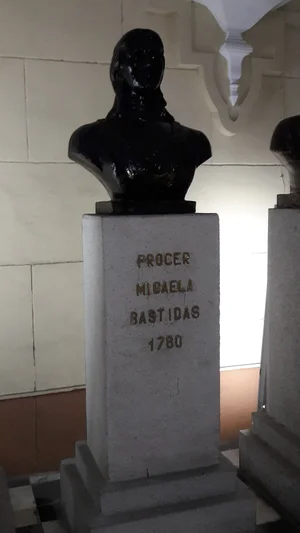
Her historical importance does not depend upon proving that her advice concerning Cusco would certainly have changed the rebellion's outcome. That question cannot be answered. What can be established is that she participated directly in high-level decision-making and understood the practical conditions upon which the movement's survival depended.
Micaela's correspondence is particularly valuable because it preserves leadership in action. The rebellion appears through her documents not only as a series of proclamations and battles, but as a constant struggle with shortages, unreliable supporters, delayed communication and the difficulty of maintaining a politically diverse coalition across a large and challenging landscape.
Later generations have interpreted Micaela as an Indigenous leader, an Afro-Indigenous woman, a revolutionary strategist, a precursor of national independence and a feminist symbol. These interpretations form part of her continuing cultural significance, but none should replace the specific eighteenth-century world in which she lived. Her leadership emerged within a colonial Andean society shaped by Indigenous authority, Spanish imperial rule, racial classification, forced labour, taxation and regional political networks.
The documentary record places Micaela Bastidas firmly within the command structure of the rebellion. She helped organise its resources, shape its strategic debates and sustain its ability to operate across the southern Andes. Her place in the history of the uprising rests not upon later efforts to elevate her beyond the evidence, but upon the authority and responsibilities that the surviving evidence already records.
Image Credits
Portrait representation of Micaela Bastidas: Later commemorative image. Confirm the original source, creator, date and current reuse terms before publication.
Túpac Amaru II and family: Later historical representation. Confirm the original work, creator, date and current reuse terms before publication.
Sculpture of Micaela Bastidas: Modern commemorative sculpture. Confirm the sculptor, location, photographer and current image licence before publication.
Commemorative image of Micaela Bastidas: Later representation associated with her place in Peruvian national memory. Confirm the original source, creator, date and current reuse terms before publication.
Help Keep These Stories Alive
If you enjoyed reading this profile and believe more overlooked voices deserve to be heard, you can help fund future research, writing, and free educational resources.
Every contribution—whether a one-off donation or monthly support—helps create new historical profiles, downloadable materials, and articles that remain freely available to everyone.
Thank you for helping history reach more people.
