

Sor Juana Inés de la Cruz
Historical Profile
Knowledge Within the Cloister
Introduction

In March 1691, Sor Juana Inés de la Cruz completed a long letter addressed to “Sor Filotea de la Cruz,” the supposed female religious correspondent who had publicly advised her to devote less attention to secular learning and greater attention to sacred study. Sor Filotea did not exist. The name had been adopted by Manuel Fernández de Santa Cruz, bishop of Puebla, when he arranged for the publication of Sor Juana’s theological critique of a sermon by the celebrated Portuguese Jesuit António Vieira.
Sor Juana’s reply became known as the Respuesta a Sor Filotea de la Cruz. Written in a formally respectful language of obedience and humility, it nevertheless offered a sustained defence of her intellectual life. She described her early desire to read, her study of Latin, her interest in subjects including rhetoric, logic, mathematics, music and natural philosophy, and the criticism she had encountered because forms of learning admired in men could be treated as improper in a woman.
The Respuesta was not a neutral autobiography. Sor Juana selected and organised episodes from her life while answering a bishop during a public religious controversy. Its autobiographical claims therefore require the same care as any other constructed historical source. Even so, the letter remains one of the most substantial surviving accounts in which an early modern woman explained how she had acquired knowledge and why she believed women possessed the capacity to learn.
By 1691, Sor Juana had become one of the most celebrated writers in the Spanish-speaking world. Her poetry, drama, religious literature and prose circulated in New Spain and Spain. Viceregal patrons promoted her work, and admirers praised her as the “Tenth Muse” and the “Phoenix of Mexico.” She achieved this reputation while living as a professed nun in the Hieronymite convent of San Jerónimo in Mexico City.
The convent gave Sor Juana institutional stability, access to books and participation in religious and intellectual networks extending beyond its walls. It also placed her under vows, internal discipline and ecclesiastical authority. Her career depended upon the interaction of family resources, court patronage, convent life, print culture and exceptional literary ability, while remaining vulnerable to institutions that could question how a nun should use her learning.
The central historical problem is therefore not whether Sor Juana should be described simply as a silenced woman or as a modern advocate born before her time. It is how she became an intellectual authority within seventeenth-century New Spain, how she defended that authority through the forms available to her, and why the position she had created became increasingly difficult to sustain during the final years of her life.
New Spain and the Colonial City of Letters
Sor Juana was born in the Viceroyalty of New Spain, the largest and most powerful Spanish territory in mainland North America. Mexico City stood at the centre of its political, religious and intellectual institutions. The viceroy represented the Spanish monarchy, while the archbishop, bishops, religious orders, cathedral chapters, university and tribunals exercised extensive authority over colonial society.
New Spain had been created through conquest, settlement, conversion and continuing colonial rule. Indigenous peoples remained the majority across much of the territory, while people of Spanish, African, Indigenous and mixed ancestry occupied positions shaped by legal status, wealth, lineage, occupation, gender and access to powerful institutions. These categories were not applied with complete consistency, but they contributed to unequal systems of labour, honour and opportunity.
Mexico City supported a highly developed culture of writing and education. It contained the Royal and Pontifical University of Mexico, religious colleges, convents, printing presses, cathedral music institutions, booksellers and private libraries. Writers in New Spain participated in the broader culture of the Spanish Baroque while responding to the languages, histories and religious conditions of the Americas.
Formal education remained strongly gendered. Universities and the highest levels of theological, legal and philosophical training were designed principally for men. Elite boys could study Latin, rhetoric, philosophy, law, medicine or theology within institutions to which women did not have equivalent access. Some women became literate through family education, convents or private instruction, but their education was generally expected to support religious devotion, domestic management and socially approved accomplishment rather than public intellectual authority.
Convents formed an important part of this educational and social landscape. They were religious institutions governed by vows, rules, internal offices and ecclesiastical oversight, but they could also provide women with access to books, music, writing, administration and networks of patronage. The circumstances differed considerably between communities, and convent life was not equally available to all women. Entry often required financial support or a dowry, meaning that female religious institutions reproduced many of the social inequalities of colonial society.
The daily functioning of convents also depended upon women whose lives survive less clearly than those of prominent professed nuns. Servants, lay sisters, enslaved women and workers supported religious communities but rarely entered the archive with the detail preserved for Sor Juana. Her intellectual opportunity therefore existed within institutional hierarchies that should not be overlooked.
For women from particular social backgrounds, religious life could nevertheless offer an alternative to marriage. It did not create unrestricted freedom, but it could provide greater continuity of study than the responsibilities of marriage, pregnancy, childcare and household management were likely to permit.
Sor Juana later explained that she chose the convent partly because she rejected marriage and wished to avoid obligations that would interfere with learning. Her statement does not mean that religious life was merely a disguise for secular scholarship. She took formal vows, participated in worship and produced substantial religious literature. Intellectual ambition and Catholic vocation were not necessarily opposing explanations of her life.
Family, Books and Early Learning
Sor Juana was born at San Miguel Nepantla, near the volcanoes Popocatépetl and Iztaccíhuatl, probably on 12 November in either 1648 or 1651. The uncertainty results from conflicting evidence.
Diego Calleja, the Jesuit who published an early biography after Sor Juana’s death, gave 12 November 1651 as her date of birth. A baptismal record dated 5 December 1648 was later identified for a girl named Inés described as a “daughter of the Church,” a phrase normally indicating birth outside marriage. Many scholars and institutions have accepted this record as Sor Juana’s, although the identification is not entirely conclusive.
The profile therefore retains the range 1648–1651 rather than presenting either year as secure.
Her mother was Isabel Ramírez de Santillana, a criolla woman born in New Spain into a landholding family associated with Panoayan and Nepantla. Her father is generally identified as Pedro Manuel de Asbaje y Vargas Machuca, a Spaniard from the Canary Islands. They were not married, and he appears to have played little sustained role in Sor Juana’s upbringing.
Sor Juana grew up principally within her mother’s extended family. Isabel managed property and had children through more than one relationship, demonstrating a degree of economic activity unusual enough to complicate simple accounts of female dependency in colonial society. The surviving evidence does not allow Sor Juana’s emotional understanding of her parents’ relationship to be reconstructed.
Her maternal grandfather, Pedro Ramírez de Santillana, possessed books at the family estate of Panoayan. The exact contents of the collection are unknown, but Sor Juana later remembered reading there, and her mature work demonstrates extensive familiarity with classical mythology, Spanish and Latin literature, theology, history, rhetoric, music and natural philosophy.
The best-known stories of her childhood come from the Respuesta. Sor Juana recalled following an older sister to lessons, persuading the teacher to instruct her without first informing her mother and learning to read at approximately three years of age. She also stated that she asked to be dressed as a boy so she could attend the university in Mexico City.
These are autobiographical claims made decades later during an intellectual defence, not independently documented childhood scenes. Their exact details cannot be verified. Their historical value lies in the consistent pattern Sor Juana constructed: she presented the desire to understand as a defining feature of her life from its earliest remembered stages.
Her education developed beyond formal institutions. She learned within a family possessing books and social connections, later received instruction in Latin, and eventually entered court and convent environments that expanded her access to conversation, commissions and intellectual exchange. Describing her simply as self-taught risks obscuring these resources, though her study remained far more self-directed than the institutional education available to elite men.
In the Respuesta, Sor Juana claimed that she received approximately twenty Latin lessons from the scholar Martín de Olivas before continuing independently. She also described cutting her hair and setting herself the condition that it should remain short if she failed to learn a predetermined amount of material within a fixed period.
The precise number of lessons cannot be corroborated, but the extent of her later Latin knowledge is clear from her writing. The anecdote reveals the disciplined intellectual identity Sor Juana wished to present: learning required sustained effort, self-correction and the refusal to accept limits imposed by inadequate access to formal schooling.
Her understanding of education was broad. Sor Juana argued that Scripture could not be interpreted properly without knowledge of language, history, law, music, mathematics, rhetoric and the natural world. She therefore rejected a narrow division between sacred and secular knowledge, presenting the disciplines as mutually supportive.
The Respuesta also describes how she continued reasoning when denied books. Sor Juana claimed that she observed ordinary physical processes, including changes in ingredients during cooking, and drew intellectual conclusions from them. Her remark that Aristotle might have written more had he cooked has become one of the most frequently quoted statements associated with her.
It should not be treated as evidence that she practised modern experimental science. It demonstrates more securely that Sor Juana considered ordinary material experience capable of generating intellectual questions and refused to accept that domestic activity was necessarily separate from philosophical observation.
Her learning emerged within colonial society rather than outside it. Sor Juana wrote primarily in Spanish and Latin, but some works include Nahuatl language or stylised speech associated with African-descended people. These texts provide evidence of the multilingual and racially diverse culture of New Spain, but they were written by an elite criolla author within conventions that often represented Indigenous and African voices for religious or comic performance.
They cannot be treated as direct testimony from the communities imitated.
The Viceregal Court
As a young woman, Juana moved to Mexico City and lived for a period with relatives, generally identified as María Ramírez and Juan de Mata. By the mid-1660s, she had entered the household of Leonor Carreto, Marchioness of Mancera, wife of Antonio Sebastián de Toledo, viceroy of New Spain from 1664 to 1673.
Juana served within the viceregal household, commonly described as a lady-in-waiting or court attendant. The court gave her access to officials, clerics, writers and educated visitors and placed literary skill within a culture of public ceremony and political representation.
Diego Calleja later described an event in which the viceroy arranged for Juana to be questioned by approximately forty learned men from different professions. According to his account, she responded with extraordinary success.
The episode is plausible in its central claim because Sor Juana’s learning clearly attracted attention at court, but no independent transcript or official record survives. Calleja’s biography was written to celebrate both her intellectual gifts and religious virtue. The exact number of examiners and the perfection of the performance therefore belong principally to his narrative.
Her courtly reputation is more securely demonstrated through poetry and patronage.
Leonor Carreto appears to have encouraged Juana’s writing and helped establish her within elite society. Sor Juana later composed poetry mourning Leonor’s death, suggesting that the relationship retained emotional significance after the vicereine left New Spain.
Court patronage offered opportunities but did not create independence. Juana’s position depended upon the favour of powerful people, and an unmarried young woman could not assume that court residence would provide a permanent or socially accepted future.
Marriage and religious life remained the principal recognised possibilities.
Sor Juana chose the convent.
Choosing San Jerónimo
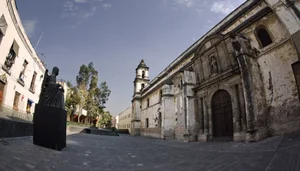
In August 1667, Juana entered the convent of San José, belonging to the Discalced Carmelites. The community followed a demanding form of religious observance, and she remained there only a few months before leaving, apparently because illness or the severity of its discipline made continued residence impractical.
The brief Carmelite period should not be treated simply as a failed experiment. It demonstrates that different religious orders offered very different forms of life and that the suitability of a convent depended upon health, discipline and institutional conditions as well as religious intention.
In February 1669, Juana entered the convent of Santa Paula of the Order of Saint Jerome, generally known as San Jerónimo, and became Sor Juana Inés de la Cruz. She remained there until her death.
The Hieronymite community followed a less physically severe regime than the Discalced Carmelites. Nuns from sufficiently wealthy backgrounds could possess furnished cells or apartments, maintain controlled property, receive approved visitors through the convent parlour and participate in literary and musical culture.
Sor Juana later explained that convent life offered a condition compatible with her rejection of marriage and her desire to continue studying. This choice should not be romanticised as complete intellectual liberation. She lived under vows of obedience, chastity and enclosure, participated in communal worship and remained subject to the authority of superiors, confessors and bishops.
At the same time, San Jerónimo gave her a stable setting in which sustained reading and writing were possible. She held administrative responsibilities associated with the convent’s records and finances and was considered for senior office, though she did not become prioress.
Her intellectual activity therefore existed alongside institutional work rather than replacing it.
Sor Juana developed an important personal collection of books and scholarly or musical instruments. Later accounts sometimes claim that her library contained approximately four thousand volumes. Its substantial size is strongly supported, but the exact number cannot be confirmed with certainty.
The famous portrait painted by Miguel Cabrera in 1750 shows Sor Juana seated among books, writing materials and scholarly objects. Because it was created more than half a century after her death, it should be understood as a visual construction of her intellectual reputation rather than a literal inventory of her cell.
The convent parlour allowed her to receive visitors and participate in discussions while maintaining enclosure. Through commissions, correspondence and patronage, San Jerónimo remained connected with the viceregal court, cathedral institutions and the wider literary world.
The convent restricted Sor Juana’s physical movement without ending her involvement in public culture. It provided intellectual space while preserving the authorities capable of limiting how that space was used.
Patronage and Publication

Sor Juana’s literary career depended substantially upon patronage. After Leonor Carreto, the most important patron of her mature years was María Luisa Manrique de Lara y Gonzaga, Countess of Paredes and Marchioness of La Laguna.
María Luisa arrived in New Spain in 1680 with her husband, Tomás Antonio de la Cerda, who served as viceroy until 1686. Sor Juana addressed the vicereine in poetry through names including Lysi or Lísida and developed a relationship combining friendship, literary admiration and patronage.
The emotional language of these poems has generated extensive modern interpretation. Some readers understand them as evidence of romantic or erotic love, while others emphasise early modern conventions of courtly praise and intense female friendship.
The poetry unquestionably expresses intimacy and admiration, but it does not provide enough evidence to reconstruct the private physical nature of the relationship or to assign Sor Juana a modern sexual identity. Literary convention, patronal obligation and personal affection could coexist without fitting later categories neatly.
María Luisa’s practical role is much clearer. She supported the circulation of Sor Juana’s work and helped bring it to print in Spain.
In 1689, Sor Juana’s first major collected volume appeared in Madrid under the title Inundación castálida. It contained secular and religious poetry, occasional verse and works associated with courtly patronage. The volume presented a woman from New Spain as an important author within the wider Spanish literary world.
A second collection appeared in Seville in 1692 and included dramatic and religious works. A third volume was published posthumously in 1700, together with Diego Calleja’s influential biography.
Print extended Sor Juana’s reputation far beyond Mexico City, but publication required networks of copying, selection, transport, finance, permission and patronage. She did not necessarily control every aspect of how her work was assembled or introduced to readers.
Prefatory praise presented her as a marvel of learning, the “Tenth Muse” and an exceptional woman from the Americas. Such celebration elevated Sor Juana while also preserving the assumption that a learned woman was extraordinary precisely because women were not expected to achieve comparable authority.
Her fame was substantial, but it remained mediated by patrons, editors and institutions.
Poetry, Theatre and Intellectual Inquiry
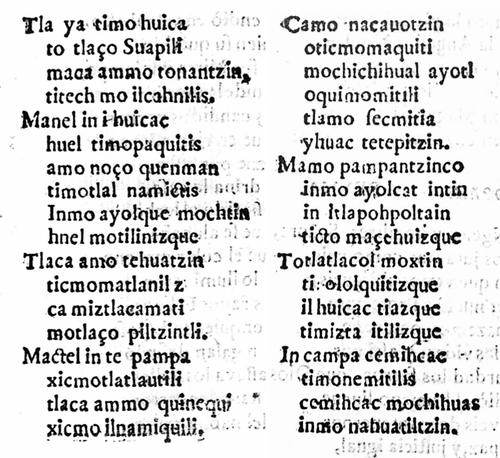
Sor Juana wrote within the elaborate literary culture of the Spanish Baroque. Her poetry uses learned allusion, wordplay, paradox, complex syntax and tightly controlled forms. She composed sonnets, romances, redondillas, décimas, religious verse and occasional poetry commissioned for public and courtly events.
One of her best-known poems begins “Hombres necios que acusáis,” often translated as “Foolish men who accuse.” It exposes the contradiction through which men condemn women for sexual behaviour that male expectations and demands help create.
The poem is important within the history of criticism directed at gendered double standards. It does not present a full political programme or demand a reorganisation of law and government. Its force lies in demonstrating the logical and moral inconsistency of men who punish women for meeting expectations men themselves impose.
Other poems examine love, jealousy, absence, beauty, reputation and the instability of judgement. Sor Juana frequently explores the distinction between appearance and reality and the mind’s ability to create suffering through interpretation.
Her most ambitious poem is Primero sueño, usually translated as First Dream. The work follows the intellect’s effort to understand the universe during sleep. The mind rises towards comprehensive knowledge, confronts the scale and complexity of existence and encounters the limits of its own powers before daylight returns.
The poem draws upon mythology, natural philosophy, optics, physiology and learned literary traditions. It does not offer a simple condemnation of curiosity or a final system of knowledge. It establishes more securely the breadth of Sor Juana’s learning and her sustained interest in the capacities and limitations of the human mind.
Calleja later reported that Sor Juana regarded Primero sueño as the work written most fully according to her own inclination rather than through commission. The statement belongs to early biographical tradition rather than a direct declaration within the poem, but the work occupies a distinctive place within her corpus.
Sor Juana also wrote theatre. Her comedy Los empeños de una casa, translated variously as The House of Desires or The Trials of a Noble House, uses concealed identities, misunderstanding and social performance within the traditions of Spanish Golden Age drama.
She collaborated with Juan de Guevara on Amor es más laberinto, a play based on the myth of Theseus. Collaboration was a recognised feature of commissioned theatre and does not diminish Sor Juana’s contribution.
Her religious dramas include autos sacramentales, allegorical works associated with Catholic feast culture and Eucharistic theology. El divino Narciso adapts the myth of Narcissus within a Christian framework and includes material concerning Indigenous religion.
The drama grants Indigenous figures intellectual and theatrical presence while ultimately remaining committed to Christian conversion. It therefore contains both serious engagement with pre-Hispanic religious culture and the missionary assumptions of colonial Catholicism.
Sor Juana’s villancicos were written for performance during cathedral festivals. They could incorporate Spanish, Latin, Nahuatl and stylised forms of speech representing African-descended or regional speakers. These works demonstrate her linguistic range and close connection with cathedral music culture.
They also preserve colonial conventions in which elite writers represented subordinate communities for performance before audiences controlled largely by Spanish and criollo institutions. Their historical significance includes both cultural mixture and unequal authorship.
Knowledge, Music and Scholarly Networks
Sor Juana’s interests extended far beyond literary composition. Her works contain references to arithmetic, geometry, astronomy, optics, medicine, natural philosophy and music. These subjects were not divided into modern specialised disciplines in precisely the form familiar today.
Music occupied an important place in her intellectual world. She wrote extensive texts intended for musical performance and is associated with a lost musical treatise known as El caracol, or The Snail. References to the work survive, but its text has disappeared.
Because the treatise is lost, claims concerning Sor Juana’s precise musical theory cannot be assessed directly. The title may refer to a spiral or circular organisation of musical relationships, but attempts to reconstruct its content remain speculative.
The loss of El caracol demonstrates that Sor Juana’s surviving corpus, though extensive, is incomplete. Some works vanished, and others reached later readers through editorial choices made by printers and collectors.
Her intellectual network included clerics, court figures, patrons and scholars such as Carlos de Sigüenza y Góngora, one of the most important learned men of seventeenth-century New Spain. The exact closeness of individual relationships is not always documented, but Sor Juana clearly participated in an intellectual culture extending beyond the convent.
Her own defence of interdisciplinary study appears most fully in the Respuesta. She argued that grammar, history, music, mathematics, law and natural philosophy could assist theological interpretation. Knowledge was not a series of isolated accomplishments but a set of connected methods required to understand difficult texts and the created world.
For a woman excluded from formal university study, this argument had practical consequences. Sor Juana could not accept that particular fields belonged exclusively to institutional specialists when those fields were necessary for the religious and philosophical understanding she sought.
Convent Life and Intellectual Space
San Jerónimo was not simply a private library or retreat. It was a religious and economic institution governed by communal obligations, internal hierarchy and ecclesiastical oversight.
Sor Juana participated in worship and administrative life. Her ability to read and write depended partly upon the labour of other women who maintained the convent, including servants and workers whose experiences rarely survive with comparable detail.
Books, instruments and personal furnishings existed within a legal structure governing convent property and individual possessions. Sor Juana’s library was substantial, but it was not wholly independent of the institution in which it was housed.
Much of her writing was commissioned. She composed verses for court celebrations, religious festivals, noble births, cathedral services and public ceremonies. Patronage was a normal condition of early modern literary work and should not be treated as evidence that commissioned writing lacked intellectual seriousness.
Sor Juana frequently used formal occasions to display learning and develop themes extending beyond the immediate commission. Her relationship with patrons was therefore both enabling and limiting: commissions gave her audiences and resources while requiring attention to the expectations of those funding or requesting the work.
The convent parlour provided an approved point of contact with visitors. Through it, Sor Juana could participate in conversation and maintain relationships with the viceregal and clerical worlds.
San Jerónimo therefore created a form of intellectual space within religious enclosure. It did not remove the power of confessors, bishops and superiors to judge whether a nun’s literary fame had become excessive or whether particular subjects were appropriate.
That tension became most visible in the controversy surrounding the Carta Atenagórica.
The Carta Atenagórica
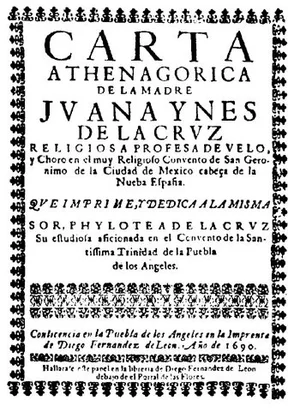
Around 1690, Sor Juana wrote a critique of a sermon delivered decades earlier by António Vieira, one of the most celebrated Jesuit preachers in the Portuguese-speaking world.
Vieira’s sermon addressed the greatest expression of Christ’s love. Sor Juana compared his interpretation with the views of major Church Fathers and developed an alternative theological argument.
The text demonstrated her ability to participate in learned religious reasoning. A professed nun in New Spain was not merely composing devotional verse but evaluating the theological argument of an internationally respected male preacher.
Sor Juana stated that the critique had been written at someone else’s request. The identity of the original requester is uncertain.
Manuel Fernández de Santa Cruz, bishop of Puebla, obtained the work and arranged for its publication in 1690 under the title Carta Atenagórica, approximately “Letter Worthy of Athena.” The publication appears not to have originated through Sor Juana’s own formal initiative, although the bishop may have understood his action partly as praise.
Fernández de Santa Cruz accompanied the work with the Carta de Sor Filotea de la Cruz. Writing through the persona of a female religious correspondent, he commended Sor Juana’s intelligence but advised her to devote greater attention to sacred study, humility and obedience.
The letter did not prohibit learning altogether. It questioned the direction and public use of her scholarship and reinforced a distinction between intellectual ability and the roles considered suitable for a nun.
The publication placed Sor Juana in a vulnerable position because a theological exercise had become a printed intervention accompanied by public correction from a bishop.
The controversy also developed within a wider ecclesiastical environment. Francisco de Aguiar y Seijas, archbishop of Mexico, was known for severe attitudes towards secular theatre and female public display, while Antonio Núñez de Miranda, Sor Juana’s former Jesuit confessor, had criticised aspects of her literary reputation.
The complete motives of these men cannot be reconstructed confidently. Fernández de Santa Cruz may have admired Sor Juana, wished to caution her, participated in clerical rivalry or combined several purposes.
The surviving texts establish the unequal structure of the exchange more clearly than the private motives behind it. A bishop arranged the publication of a nun’s theological argument, adopted the voice of another nun and publicly advised the real author how she should use her learning.
Sor Juana answered within the same religious culture.
The Respuesta a Sor Filotea
Sor Juana completed the Respuesta a Sor Filotea on 1 March 1691. The letter combines autobiographical narrative, scriptural interpretation, humour, historical precedent and formal submission to ecclesiastical correction.
Its respectful tone does not remove its intellectual force.
Sor Juana argued that the desire to learn had not originated in vanity. She described it as a persistent inclination present from childhood and continuing even when access to books was restricted.
She defended interdisciplinary learning as necessary for theological understanding and cited numerous learned women from biblical, classical and Christian history. These examples demonstrated that female scholarship was neither unnatural nor without precedent.
Sor Juana also engaged with Paul’s instruction that women should remain silent in churches. She distinguished public preaching from private study and considered circumstances in which women might properly teach other women.
Her argument remained cautious. She did not claim priestly authority, reject Catholic doctrine or demand universal access to ecclesiastical office. She repeatedly submitted her reasoning to correction and accepted the formal authority of the Church.
Within those limits, however, Sor Juana exposed the contradiction of expecting women to understand religion while denying them the education required for serious interpretation. She defended women’s capacity to learn and challenged the assumption that intellectual ambition was inherently improper in a woman.
The Respuesta is therefore central to the history of women’s education, though its significance should remain historically precise. Sor Juana did not formulate a modern theory of equal civil rights or propose a political movement organised around sex equality.
She argued within Christian tradition that women possessed rational capacities, that learned women had always existed and that education could support rather than undermine religious understanding.
The letter’s restraint was not evidence of intellectual weakness. It reflected the rhetorical conditions under which a nun could answer a bishop while remaining within the institution to which both belonged.
Confessors and Ecclesiastical Authority
The events of 1690–1691 were not the first occasion on which Sor Juana resisted criticism concerning her writing.
Antonio Núñez de Miranda, an influential Jesuit, had served as her confessor and spiritual adviser. A surviving letter, probably written around 1681, records Sor Juana ending or challenging that relationship after he criticised her literary activity and public reputation.
Sor Juana defended her conduct and questioned whether writing secular poetry represented the grave spiritual danger alleged. She rejected a form of spiritual guidance she considered harmful without rejecting the role of confession or religious authority in principle.
This document complicates the familiar story of a woman who remained passive until the Carta Atenagórica controversy. Sor Juana negotiated authority throughout her career, using deference, direct argument, patronage and withdrawal from particular relationships when necessary.
These methods did not give her complete independence. She remained dependent upon clerical permission, convent hierarchy and patrons, and a judgement made by powerful men could affect her ability to publish or continue particular forms of writing.
Her career therefore demonstrates both resistance and dependence rather than a simple progression from freedom to silence.
The Final Years
The years after the Respuesta remain the most difficult period of Sor Juana’s life to reconstruct.
One popular narrative presents a direct act of suppression: ecclesiastical authorities condemned her, forced her to abandon writing and compelled her to sell her library and instruments.
Another interprets the same events as a voluntary religious conversion in which Sor Juana rejected secular learning and embraced penitence.
The surviving evidence does not permit complete confidence in either version.
Sor Juana renewed devotional commitments and signed penitential documents during the early 1690s. One profession of faith includes a signature associated with the claim that it was written in her blood. Such practices belonged to Catholic penitential culture and cannot be interpreted simply as evidence either of coercion or of complete inner freedom.
Her books, instruments and other possessions were sold, transferred or otherwise dispersed, with proceeds reportedly directed towards charity or the poor. The exact size of the collection, the administrative process through which it was disposed of and the degree of Sor Juana’s control are uncertain.
There is substantial evidence that her public intellectual activity faced increasing pressure. Fernández de Santa Cruz had publicly advised restraint, Núñez de Miranda had criticised her literary identity, and Aguiar y Seijas represented a religious climate suspicious of secular performance and female fame.
Sor Juana’s most powerful patrons had also departed from New Spain or died, reducing the protection available to her.
These events occurred during a period of wider crisis. Crop failures, food shortages, disease and unrest affected Mexico City. A major riot in 1692 revealed severe political and economic tension. Religious institutions responded through charity, penitence and intensified devotion.
Sor Juana’s final decisions therefore developed within ecclesiastical pressure, changing patronage, social crisis and genuine religious commitment.
Her literary production diminished, but the evidence does not identify one precise moment at which a single authority issued a comprehensive prohibition. Some religious writing belongs to her later years, and the chronology of individual texts remains debated.
The strongest conclusion is that Sor Juana experienced serious pressure concerning the public use of her intellect, relinquished or lost control of books and instruments, and adopted intensified penitential practices. Historical evidence cannot determine the exact balance between coercion, obedience, changing conviction, illness and response to the suffering around her.
No surviving private diary explains how she understood each decision.
The uncertainty belongs to the history rather than representing a gap that can be filled confidently by later interpretation.
Death and Early Reputation
In 1695, disease spread through San Jerónimo. Sor Juana assisted sick women within the community and contracted the illness herself.
She died on 17 April 1695. Unlike her disputed year of birth, the date of her death is securely preserved.
Early accounts emphasise that she became ill while caring for other nuns. The broad circumstances are well supported, although later retellings sometimes develop them into an idealised devotional conclusion.
Sor Juana was buried at San Jerónimo. Her death occurred before the posthumous publication of a third volume of her writings in 1700.
Diego Calleja’s biography accompanied that collection and became one of the earliest major sources for her life. He presented Sor Juana as an intellectual prodigy, celebrated writer and exemplary religious woman, establishing patterns of interpretation that continued long afterwards.
The convent survived in altered forms before later political reforms transformed religious property and institutions in Mexico. Its former site is now associated with the Universidad del Claustro de Sor Juana.
By then, printed editions had already separated Sor Juana’s literary reputation from the physical survival of the convent in which she wrote.
Sources and Historical Evidence
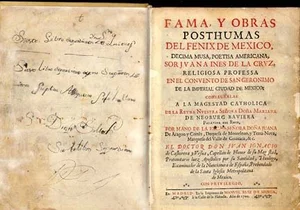
Sor Juana is exceptionally well documented through her own surviving works, though different parts of her biography rest upon sources of unequal strength.
Her poetry, plays, religious literature and prose establish the breadth of her authorship. Contemporary printed editions demonstrate that she achieved fame during her lifetime and that patrons in New Spain and Spain participated in presenting her work to readers.
The Respuesta a Sor Filotea is the most important source for her intellectual biography. It contains her own account of childhood learning, Latin study, reading, intellectual discipline and criticism.
Its first-person perspective makes it unusually valuable, but the letter was produced during controversy. Sor Juana selected episodes supporting her defence and organised them into a coherent history of intellectual vocation.
The Carta Atenagórica, the Carta de Sor Filotea and the Respuesta allow the public theological controversy to be reconstructed in unusual detail. They do not reveal every private conversation or the complete motives of those involved.
Convent profession documents and administrative records establish Sor Juana’s religious identity, institutional offices and later devotional commitments. Such documents record formal acts more clearly than private emotion.
Diego Calleja’s biography preserves material from people connected with Sor Juana and remains essential for episodes including the court examination and her final illness. It is also celebratory religious biography intended to present an exceptional and holy life. Dramatic scenes require corroboration where possible.
Portraits provide evidence for the development of her public image rather than simple visual biography. The portrait associated with Juan de Miranda may preserve a tradition closer to Sor Juana’s lifetime, although its precise date and relationship to earlier likenesses remain debated. Miguel Cabrera’s famous image was painted in 1750 and presents the established scholarly icon rather than an eyewitness reconstruction.
The final years remain the area of greatest uncertainty. Documents establish devotional actions and the disposal of possessions but do not explain the extent of private pressure or the way Sor Juana’s convictions changed.
A responsible interpretation must therefore distinguish between documented actions and disputed motives.
Historical Interpretation: The Many Sor Juanas

Sor Juana’s public image developed during her lifetime. Titles such as the “Tenth Muse,” the “Phoenix of Mexico” and the “Phoenix of America” celebrated her learning while presenting her as an exceptional phenomenon.
The praise did not produce a system in which women gained equal access to education. Exceptional status could confirm the assumption that comparable achievement in a woman was rare rather than demonstrate that institutional exclusion was unjust.
After Mexican independence, Sor Juana became increasingly important within national culture. A writer born in New Spain and recognised across the Spanish world could be presented as an early representative of Mexican intellectual achievement.
Religious interpretation emphasised the nun, Catholic writer and penitential figure. Literary history celebrated the Baroque poet and dramatist. Later scholarship examined her through philosophy, colonial studies, feminism and the history of sexuality.
Modern feminist interpretation has particularly strong foundations in her work. “Hombres necios” exposes male double standards, while the Respuesta defends women’s rational capacity and identifies a long history of learned women.
The term feminist should nevertheless be used with historical care. Sor Juana did not advocate a modern programme of equal political rights or reject Catholic hierarchy. Her arguments developed within seventeenth-century religious and intellectual structures.
Her poems to María Luisa have similarly produced important queer and literary interpretations. The texts preserve intense emotional attachment but do not reveal how Sor Juana privately understood or categorised the relationship. Assigning a definitive modern sexual identity would extend beyond the available evidence.
Descriptions of Sor Juana as a scientist arise from her knowledge of mathematics, optics, music and natural philosophy. Her intellectual range was genuine, but the professional institutions and disciplinary structures associated with modern science did not form the context of her career.
The most persistent controversy concerns her final withdrawal. Later narratives have alternately portrayed her as a victim forced into silence or a repentant nun freely abandoning worldly ambition.
The evidence supports institutional pressure and religious commitment without allowing either to explain every action independently.
Each of these interpretations identifies an important element of Sor Juana’s historical career. None alone accounts for the writer, nun, colonial intellectual, court poet and defender of women’s learning preserved in the surviving evidence.
What We Know — and What We Do Not
What We Know — and What We Do Not
Firmly Supported
- Sor Juana was born at San Miguel Nepantla during the middle of the seventeenth century and grew up principally within her mother’s family.
- Her parents were not married.
- She possessed exceptional literary and intellectual ability and acquired substantial knowledge of Latin and numerous learned subjects.
- Sor Juana lived for a period at the viceregal court and received the patronage of Leonor Carreto.
- She entered San Jerónimo in 1669 and remained a professed Hieronymite nun until her death.
- Sor Juana wrote poetry, drama, religious works, prose argument and villancicos.
- Her writings were published in Spain during her lifetime.
- María Luisa Manrique de Lara played an important role in promoting her work.
- The Carta Atenagórica, Carta de Sor Filotea and Respuesta a Sor Filotea document the major theological controversy of 1690–1691.
- Sor Juana’s books, instruments and possessions were dispersed during her final years.
- She died during an epidemic at San Jerónimo on 17 April 1695.
Strongly Supported but Requiring Interpretation
- Sor Juana was born in either 1648 or 1651.
- Access to books at Panoayan contributed significantly to her education.
- Her learning developed through self-directed study supported by family resources, Latin instruction, court experience and intellectual networks.
- She chose convent life partly because it offered greater continuity of study than marriage.
- Her personal library was substantial, although its precise size is uncertain.
- Her relationship with María Luisa combined patronage, friendship and intense emotional intimacy.
- The Respuesta defends women’s intellectual capacity while remaining framed within Catholic obedience.
- Sor Juana faced increasing institutional and spiritual pressure concerning her writing during the early 1690s.
Uncertain or Unknown
- Which proposed birth year is correct.
- Whether every childhood anecdote in the Respuesta occurred exactly as described.
- The precise form of the court examination recorded by Calleja.
- The exact number and contents of the books in Sor Juana’s library.
- The private nature of her relationship with María Luisa.
- The original contents of the lost musical work El caracol.
- Who first requested the critique of Vieira.
- The complete motives of Fernández de Santa Cruz in publishing it.
- The extent of private pressure applied by senior ecclesiastical figures.
- Whether Sor Juana intended permanently to abandon literary writing.
- The precise balance between coercion, conviction and negotiation in the disposal of her books and instruments.
- Her private understanding of her final devotional commitments.
Historical Confidence
Historical Confidence
Existence, Religious Career and Death: ⭐⭐⭐⭐⭐
Sor Juana’s identity, profession at San Jerónimo, literary activity and death are documented through her own works, convent records, printed editions and early biography.
Birth Year: ⭐⭐⭐
Calleja gives 1651, while a baptismal record has led many scholars to prefer 1648. The identification of that record remains plausible but not conclusive.
Literary Authorship: ⭐⭐⭐⭐⭐
The attribution of Sor Juana’s major poetry, drama and prose is exceptionally strong and supported by contemporary publication.
Education and Intellectual Range: ⭐⭐⭐⭐⭐
Her surviving writing demonstrates extensive engagement with literature, theology, philosophy, music and natural inquiry. The precise chronology of her early education is less certain.
Court and Viceregal Patronage: ⭐⭐⭐⭐⭐
Her relationships with Leonor Carreto, María Luisa Manrique and the viceregal court are well documented through poetry, publication and contemporary records.
Court Examination: ⭐⭐⭐
The event is preserved principally through Calleja’s celebratory biography. A learned examination is plausible, but its exact form cannot be independently verified.
Library and Instruments: ⭐⭐⭐⭐
Sor Juana’s possession of a substantial scholarly collection is strongly supported. The frequently repeated total of approximately four thousand books remains uncertain.
Theological Controversy: ⭐⭐⭐⭐⭐
The surviving texts permit the public exchange of 1690–1691 to be reconstructed in detail, though the private intentions of individual participants remain debated.
Forced Silencing: ⭐⭐⭐
There is strong evidence of institutional pressure, diminished public literary activity and the disposal of books and instruments. No surviving document establishes a single comprehensive order that explains every later action.
Private Relationships and Sexual Identity: ⭐⭐
The poetry preserves intense emotional attachment but does not establish a modern sexual identity or the physical nature of Sor Juana’s relationships.
Key Contributions
Key Contributions
- Spanish Baroque Literature: Sor Juana produced one of the most significant bodies of poetry, drama and prose associated with the Spanish Baroque and established New Spain as a major centre of Spanish-language literary culture.
- Defence of Women’s Learning: The Respuesta a Sor Filotea defended women’s intellectual capacity, identified historical precedents for learned women and exposed contradictions within restrictions upon female education.
- Philosophical Reflection on Knowledge: Primero sueño and the Respuesta examine the ambition, methods and limitations of human understanding.
- Theatre and Religious Drama: Sor Juana adapted major Spanish dramatic forms to the cultural and religious conditions of New Spain.
- Criticism of Gendered Double Standards: Poems including “Hombres necios” analyse contradictions within the moral expectations imposed upon women.
- Colonial Intellectual History: Her work preserves evidence for the multilingual, religiously complex and socially hierarchical culture of seventeenth-century New Spain.
- Cathedral and Musical Literature: Her villancicos contributed to religious and musical performance across New Spain.
- Female Authorship and Print Culture: Sor Juana achieved international publication through courtly and transatlantic patronage at a time when women lacked equivalent access to universities and formal scholarly institutions.
- Intellectual Self-Representation: The Respuesta preserves one of the most substantial early modern accounts by a woman of the development and social consequences of her own learning.
Key Dates
Sor Juana is born at San Miguel Nepantla. Her precise birth year remains disputed.
She grows up within her maternal family and gains access to books associated with Panoayan.
Juana moves to Mexico City and continues her education.
She enters the household of Leonor Carreto at the viceregal court.
Juana enters the Discalced Carmelite convent of San José but leaves after a short period.
She enters the Hieronymite convent of San Jerónimo and becomes Sor Juana Inés de la Cruz.
Her poetry and commissioned religious works establish a growing reputation in New Spain.
Sor Juana contributes to celebrations surrounding the arrival of Tomás de la Cerda and María Luisa Manrique de Lara.
Her relationship with María Luisa becomes central to her literary patronage.
Sor Juana writes a forceful letter challenging the spiritual direction of Antonio Núñez de Miranda.
Los empeños de una casa is associated with performance during this period.
Inundación castálida, her first major collected volume, is published in Madrid.
Fernández de Santa Cruz publishes the Carta Atenagórica accompanied by the Carta de Sor Filotea.
Sor Juana completes the Respuesta a Sor Filotea.
A second major volume of her works is published in Seville.
Food shortages, disease and unrest affect Mexico City while Sor Juana’s public literary activity diminishes.
Surviving documents and early accounts associate these years with renewed penitential commitments and the disposal of Sor Juana’s books, instruments and other possessions. The precise circumstances remain disputed.
Sor Juana dies during an epidemic at San Jerónimo.
A posthumous volume appears with Diego Calleja’s influential biography.
Did You Know?
Did You Know?
- Sor Juana’s birth year remains disputed between 1648 and 1651.
- Her parents were not married, and she grew up principally within her mother’s family.
- She later claimed that she learned to read at approximately three years of age, although the story survives through her retrospective account.
- Sor Juana said she once asked to be dressed as a boy so she could attend the university in Mexico City.
- She described cutting her hair when she failed to learn material as quickly as she intended.
- Before entering San Jerónimo, she spent a short period with the Discalced Carmelites.
- Sor Juana held administrative responsibilities connected with the convent’s records and finances.
- Her library may have contained thousands of books, although its precise size cannot be confirmed.
- Her first major collected volume was published in Madrid with support from María Luisa Manrique de Lara.
- Primero sueño follows the mind’s attempt to understand the universe.
- The bishop who publicly advised Sor Juana wrote under the female pseudonym “Sor Filotea de la Cruz.”
- Her lost musical treatise is usually called El caracol.
- Miguel Cabrera’s famous portrait was painted more than fifty years after her death.
- Sor Juana died during an epidemic after assisting sick members of her convent.
Further Reading
- Sor Juana Inés de la Cruz, Respuesta de la poetisa a la muy ilustre Sor Filotea de la Cruz
- Sor Juana Inés de la Cruz, Carta Atenagórica
- Sor Juana Inés de la Cruz, Primero sueño
- Sor Juana Inés de la Cruz, Los empeños de una casa
- Sor Juana Inés de la Cruz, El divino Narciso
- Sor Juana Inés de la Cruz, Obras completas, edited by Alfonso Méndez Plancarte and Alberto G. Salceda
- Electa Arenal and Amanda Powell, eds. and trans., The Answer / La Respuesta
- Anna More, ed., Sor Juana Inés de la Cruz: Selected Works
- Octavio Paz, Sor Juana Inés de la Cruz, or The Traps of Faith
- Stephanie Merrim, Early Modern Women’s Writing and Sor Juana Inés de la Cruz
- Frederick Luciani, Literary Self-Fashioning in Sor Juana Inés de la Cruz
- Asunción Lavrin, Brides of Christ: Conventual Life in Colonial Mexico
- Margo Glantz, studies of Sor Juana’s biography and intellectual identity
- Antonio Alatorre, studies and editions of Sor Juana’s writings
- Georgina Sabat de Rivers, studies of Sor Juana, gender and Baroque literature
- Studies of María Luisa Manrique de Lara and viceregal patronage
- Research on the Carta Atenagórica, the Respuesta and Sor Juana’s final years
- Studies of convent culture, women’s education and print in colonial New Spain
Legacy and Historical Significance
Sor Juana Inés de la Cruz became one of the most important writers of the seventeenth-century Spanish world through a career shaped by the institutions of colonial New Spain.
Her intellectual development did not follow the university education available to elite men. Family access to books, self-directed study, Latin instruction, courtly conversation and convent networks provided different forms of learning, none equivalent to a formal academic career but together sufficient to support an extraordinary range of scholarship.
The viceregal court and convent of San Jerónimo were especially important. Court patronage gave Sor Juana an audience and established her literary reputation, while the convent provided the continuity of residence required for sustained reading and writing. European publication carried her work beyond New Spain.
These opportunities remained conditional. Patronage could disappear, publication required institutional approval and convent life remained subject to ecclesiastical authority. Sor Juana’s public intellectual position depended upon structures that could support her work at one moment and restrict it at another.
Her literary contribution was extensive. She wrote accomplished poetry across numerous forms, produced comedy and religious drama, contributed to cathedral performance and developed one of the most ambitious philosophical poems of the Spanish Baroque in Primero sueño.
The Respuesta a Sor Filotea gives her significance beyond literary achievement. It preserves an early modern woman’s explanation of how she learned and why women’s education mattered. Sor Juana used Christian history, Scripture, logic, humour and personal experience to demonstrate that female intellectual capacity was compatible with religious devotion.
Her argument did not demand modern political equality. It confronted a more immediate contradiction: women could be expected to understand and practise religion while being discouraged from acquiring the knowledge required for serious interpretation.
The controversy surrounding the Carta Atenagórica demonstrates how unstable female intellectual authority could remain. Sor Juana was celebrated as exceptional and published internationally, yet a bishop could still publicly define the limits within which her learning should operate.
Her final years reveal the limits of the surviving record as well as the limits of her institutional position. Documents establish intensified penitential practice, reduced public literary activity and the dispersal of her books and instruments. They do not reveal the exact balance between external pressure, religious commitment and personal decision.
That uncertainty should not be resolved by choosing the most dramatic later narrative.
Sor Juana’s historical significance does not depend solely upon whether her final silence was forced. Her writings had already demonstrated the intellectual possibilities available to a woman who was excluded from the principal institutions of higher learning yet capable of mastering and reshaping the culture those institutions claimed to govern.
Her work also preserves the complexity of colonial authorship. Sor Juana was a criolla writer operating within systems of Spanish imperial, racial and religious hierarchy. She represented Indigenous and African-descended voices without speaking directly for the communities portrayed and participated in Catholic literary forms connected with conversion.
These limitations form part of her historical world rather than cancelling the importance of her achievement.
Sor Juana became an intellectual authority through literary ability, religious identity, disciplined study and patronage. The conditional nature of that authority explains both the height of her fame and the vulnerability of her final position.
Her death ended her participation in the debates surrounding her work, but print had already ensured that those debates would continue. Through her poetry, drama, philosophical writing and defence of women’s learning, Sor Juana remains one of the clearest surviving examples of how intellectual authority could be created, contested and preserved within the institutions of early modern colonial society.
Image Credits
Portrait attributed to Fray Miguel de Herrera: Sor Juana Inés de la Cruz (1732), via Wikimedia Commons. Public domain. Painted after Sor Juana's death and not an authenticated likeness from life.
Portrait by Miguel Cabrera: Retrato de Sor Juana Inés de la Cruz (1750), via Wikimedia Commons. Public domain. A later construction of her scholarly reputation rather than an exact record of her convent cell.
Posthumous “Phoenix of Mexico” collection: Historical printed title page celebrating Sor Juana as the Phoenix of Mexico and Tenth Muse, via Wikimedia Commons. Public domain.
Carta Atenagórica: Historical printed title page, via Wikimedia Commons. Public domain.
Former Convent of San Jerónimo: Photograph by Eneas de Troya, via Wikimedia Commons. Licensed under CC BY 2.0. The photograph shows the former convent where Sor Juana lived from 1669 until her death in 1695; the modern statue in the foreground is a later commemorative addition.
Fama y obras póstumas del Fénix de México: Historical title page of the posthumous collection, via Wikimedia Commons. Public domain.
Nahuatl tocotín: Historical printed page associated with Sor Juana's multilingual performance writing, via Wikimedia Commons. Public domain.
Explore Related Profiles
Help Keep These Stories Alive
If you enjoyed reading this profile and believe more overlooked voices deserve to be heard, you can help fund future research, writing, and free educational resources.
Every contribution—whether a one-off donation or monthly support—helps create new historical profiles, downloadable materials, and articles that remain freely available to everyone.
Thank you for helping keep independent historical research and educational resources freely available.
